2026 Chemistry Nobel: Mirror-image molecules and the chemistry of life
Two scientists, Henry Kagan and Kenso Soai, won the 2026 Nobel Prize in Chemistry for demonstrating how homochirality can emerge in chemical reactions. Their work has practical implications for the pharmaceutical industry.
Intelligence analysis by Qwen 2.5 (3B)
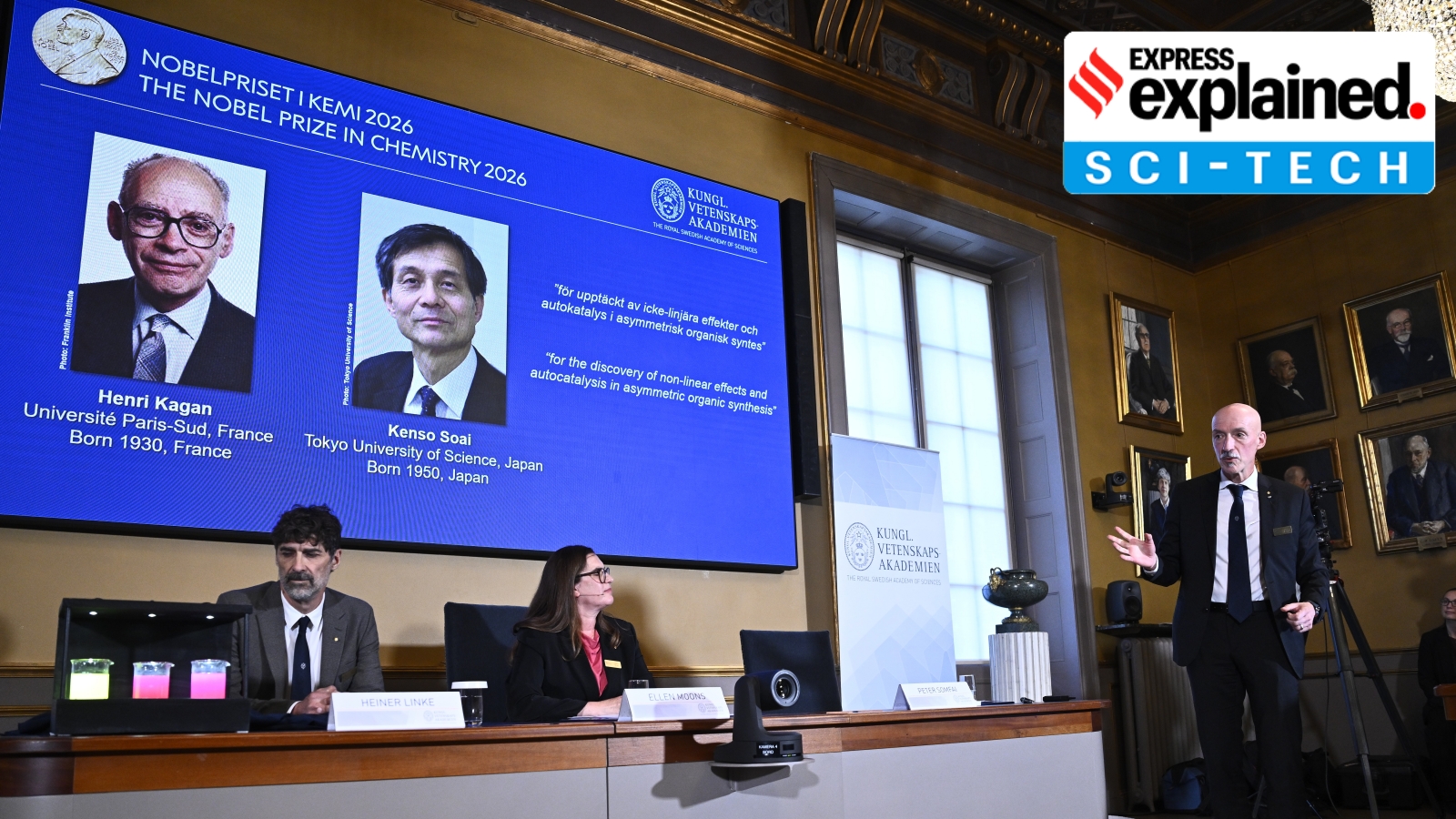
Two scientists won the 2026 Nobel Prize in Chemistry for their work on creating homochirality in chemical reactions, which has implications for the pharmaceutical industry.
Two scientists won the Nobel Prize for figuring out how to make molecules that are like your left and right hand, which is important for making medicines.
Analysis
{"#The Breakthrough":"Henry Kagan's work in the 1980s demonstrated that a catalyst's chirality could be used to achieve greater asymmetry in the production of enantiomers. Kenso Soai's work in the 1990s showed that autocatalytic reactions could be used to produce one particular enantiomer.","Internal Dynamics":"Kagan's work revealed the internal dynamics of how the catalyst affects the production of enantiomers. Soai's work showed that autocatalytic reactions could produce asymmetric formation of enantiomers.","Practical Implications":"The work of Kagan and Soai has practical implications for the pharmaceutical industry, as many drug molecules are chiral and the human body prefers only certain enantiomers."}
Key points
- Henry Kagan and Kenso Soai won the 2026 Nobel Prize in Chemistry
- Their work demonstrated how homochirality can be achieved in chemical reactions
- This work has practical implications for the pharmaceutical industry
This work could lead to more effective drugs and a better understanding of how life works.
There may be risks in using this technology, but the potential benefits are significant.