30 hours on, rescuers race against time to find man trapped under boulder after Mumbai landslide
Rescuers in Mumbai are racing against time, over 30 hours after a landslide in Kurla's Gaushiya chawl, to find Saddam Hussain Shaikh trapped under a massive boulder.
Intelligence analysis by Gemini 2.5 Flash
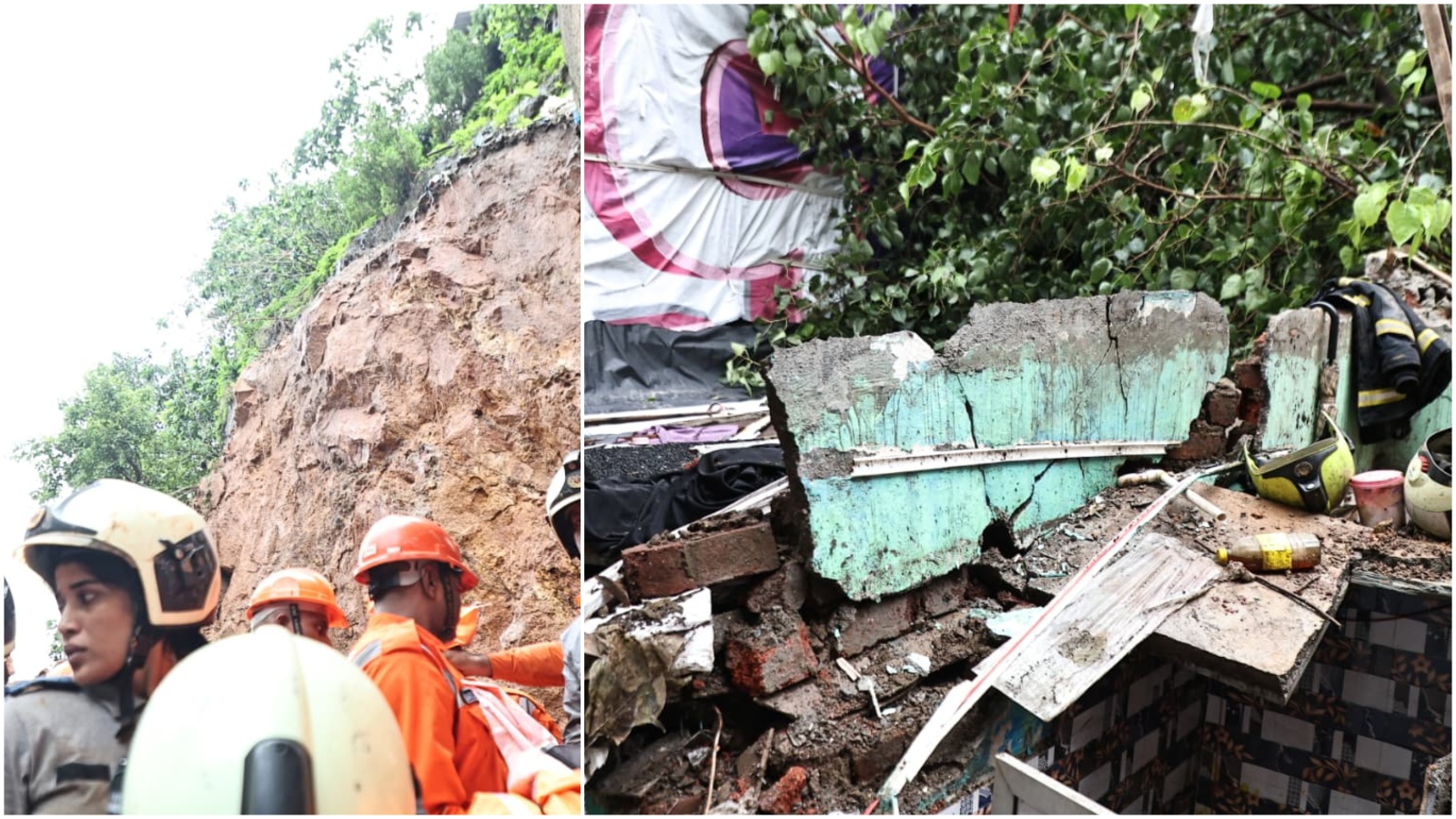
A devastating landslide in Mumbai's Kurla area has claimed seven lives, with rescue operations ongoing for over 30 hours to locate Saddam Hussain Shaikh, who remains trapped under a large boulder. The challenging terrain, narrow passages, and unstable ground are severely hindering rescue efforts, forcing personnel to use manual tools as heavy machinery cannot access the site.
Imagine a big pile of dirt and rocks sliding down a hill and squishing some houses. That's what happened in Mumbai. Now, brave helpers are trying to find a man named Saddam who is stuck under a really big rock. It's super hard because the paths are tiny, the ground is wobbly, and they can't use big machines, so they have to dig with their hands and small tools, like trying to dig a giant hole with a spoon.
Analysis
The ongoing rescue operation in Mumbai's Kurla area underscores the precarious living conditions prevalent in many of India's rapidly expanding urban centers. The landslide at Gaushiya chawl, which has already claimed seven lives, reveals the vulnerability of communities residing on unstable slopes, often due to a lack of safer housing alternatives. The incident serves as a stark reminder of the urgent need for robust infrastructure development and relocation strategies for at-risk populations, particularly as climate change intensifies extreme weather events like heavy rainfall.
Gaushiya Chawl
The tragedy at Gaushiya chawl is a grim illustration of the dangers associated with informal settlements built on challenging terrain. The hillock above the chawl collapsed, burying several homes and trapping residents. This area, characterized by its dense population and mountainous landscape, presents significant obstacles for emergency services. The lack of proper road access means that heavy machinery, crucial for clearing large debris, cannot reach the site, forcing rescuers to rely on manual methods. This limitation not only slows down the operation but also puts the rescue personnel at greater risk.
The inherent instability of the ground after the landslide further complicates efforts, making it difficult for rescuers to move safely and effectively. The incident brings into focus the broader issue of unauthorized constructions on vulnerable land, a common problem in many Indian cities where rapid urbanization outpaces planned development. Addressing these structural vulnerabilities requires a multi-faceted approach involving stricter enforcement of building codes, provision of affordable and safe housing, and community-level disaster preparedness programs.
Saddam Hussain Shaikh
The plight of Saddam Hussain Shaikh, trapped for over 30 hours beneath a huge boulder, epitomizes the human cost of such disasters. His prolonged entrapment highlights the extreme difficulties faced by rescue teams in confined and unstable environments. Officials from the National Disaster Response Force (NDRF) and Mumbai Fire Brigade (MFB) have openly stated that the chances of survival in such conditions, especially after an extended period, are very low. The manual effort required to cut through massive boulders with small equipment is not only arduous but also time-consuming, diminishing hopes for those trapped.
This individual case draws attention to the critical window for rescue operations in landslides, which is often very narrow. The longer a person remains trapped, particularly under heavy debris, the lower their chances of survival due to injuries, lack of oxygen, and exposure. The focus on Saddam Hussain Shaikh's rescue, despite the grim prognosis, reflects the unwavering commitment of emergency services, even in the face of overwhelming odds. It also serves as a poignant reminder of the personal tragedies that unfold within larger disaster events.
Ravindra Ambulgekar
Ravindra Ambulgekar, the Chief Fire Officer (CFO) of the Mumbai Fire Brigade, has articulated the immense challenges confronting the rescue mission. He noted that the operation has been significantly slowed because personnel must use shovels and their hands to dig through the rubble. The site's location, nearly 2 km from the nearest vehicle-accessible point at the base of the hill, means rescuers must trek up and down slopes, transporting equipment and supplies manually. This logistical nightmare severely impedes the speed and efficiency of the operation, making an already difficult task even more arduous.
Ambulgekar's statements underscore the need for better pre-disaster planning and infrastructure in vulnerable areas. While the immediate focus is on rescue, the long-term implications point to the necessity of creating accessible routes for emergency services in such settlements. The manual nature of the work, combined with the unstable ground and the sheer size of the boulders, creates a dangerous environment for the rescuers themselves. Their dedication, despite these formidable obstacles, is commendable, but it also highlights systemic issues that need to be addressed to prevent similar tragedies and facilitate more effective responses in the future.
Key points
- A landslide in Mumbai's Kurla area has killed seven people and trapped others under rubble.
- Saddam Hussain Shaikh has been trapped under a large boulder for over 30 hours, with rescue efforts ongoing.
- Rescue operations are severely hampered by narrow lanes, unstable ground, and the inability to use heavy machinery.
- Personnel from NDRF and Mumbai Fire Brigade are manually cutting through boulders and debris using small equipment.
- Officials state that the chances of survival for someone trapped under such conditions for a prolonged period are very low.
Given the challenging terrain, the use of manual tools, and the extended period of entrapment, the chances of Saddam Hussain Shaikh's survival are critically low, as acknowledged by rescue officials. The inherent instability of the ground also poses ongoing risks to the rescue personnel, potentially leading to further complications or injuries during the operation.