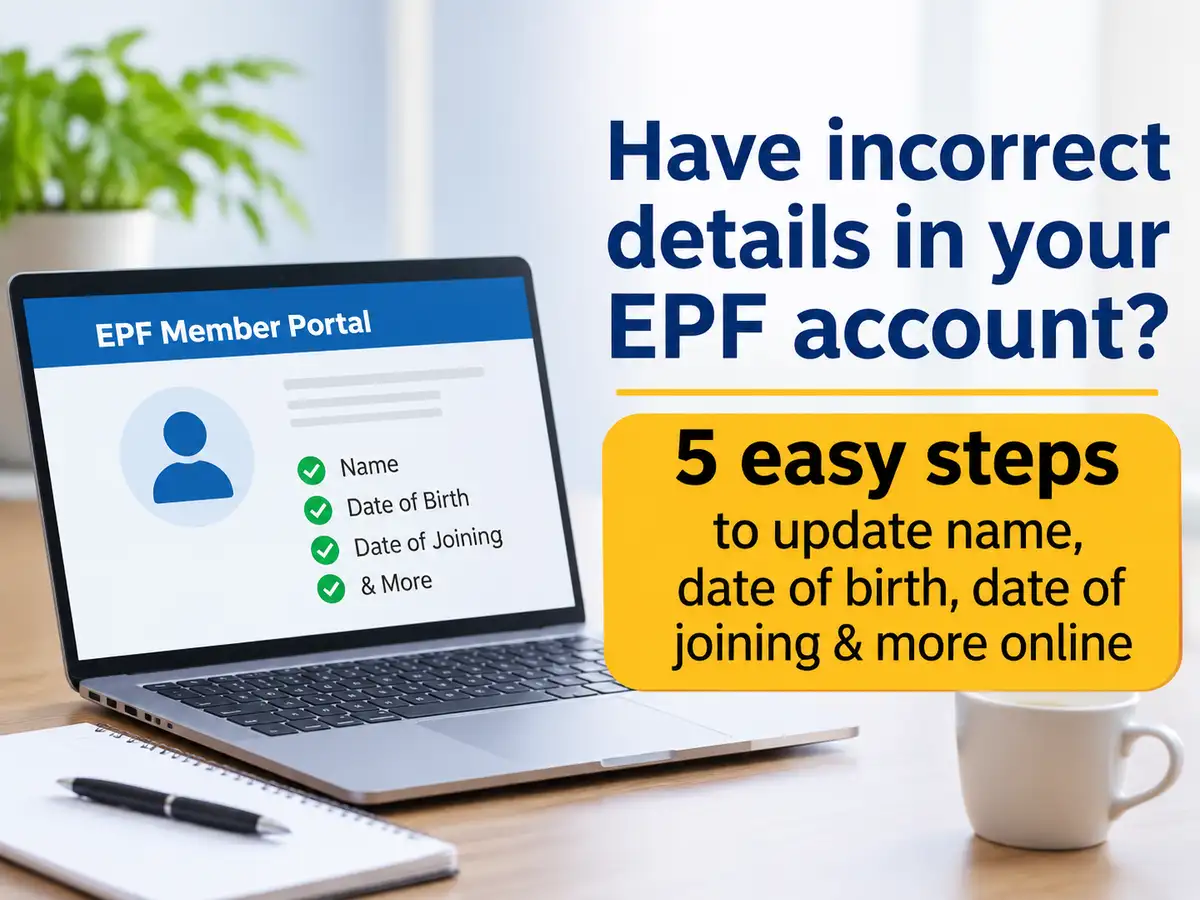
5 easy steps to update your EPF information online
The Employees' Provident Fund Organisation (EPFO) has introduced an online joint declaration facility to help members correct errors in their EPF accounts, including names, dates of birth, and joining dates.
Intelligence analysis by Gemini 2.5 Flash Lite
EPF members can now rectify discrepancies in their personal and employment details, such as names, dates of birth, and joining dates, through an online joint declaration facility on the EPFO portal. The process requires employer verification before final approval by the EPFO office, ensuring accuracy for future fund transfers and claims.
Imagine your EPF account is like a school record book. If your name or birthday is written wrong, it can cause problems later. Now, EPFO lets you fix these mistakes online, like sending a corrected note to your teacher. Your boss has to check it, and then the EPFO office makes the final change, so everything is right for when you need your money.
Analysis
EPFO Member Portal
The Employees' Provident Fund Organisation (EPFO) has significantly streamlined its services by introducing an online joint declaration facility, accessible through its Unified Member Portal. This digital initiative empowers Universal Account Number (UAN) holders to proactively manage and correct inaccuracies within their provident fund accounts without the need for extensive physical visits or paperwork. The portal serves as a central hub for employees to update a range of personal and employment-related information, ensuring that their records are accurate and up-to-date, which is crucial for seamless financial transactions related to their retirement savings.
Joint Declaration Facility
The core of this enhancement lies in the 'Joint Declaration' option available under the 'Manage' tab. This feature allows members to initiate correction requests for details such as their name, date of birth, gender, parents' names, and even employment dates like joining and exit. The process is designed to be user-friendly, requiring the employee to log in, select their Member ID, specify the fields needing correction, enter the accurate information, and upload supporting documents in PDF format. This digital approach not only saves time but also enhances transparency in the correction process, making it more accessible to a wider employee base across India.
Employer Verification and EPFO Approval
Crucially, the online correction request is not automatically finalized. Once submitted by the employee, the request is routed to their employer for verification and approval via email. This employer-led validation step is a critical safeguard to maintain the integrity of the data held by EPFO. Following employer approval, the request is then forwarded to the regional EPFO office for final processing and authorization. This multi-stage approval mechanism ensures that all changes are legitimate and properly authenticated, thereby preventing fraudulent alterations and ensuring that the corrected details accurately reflect the employee's official records, ultimately facilitating smoother PF transfers, withdrawals, and pension claims.
Key points
- EPFO now offers an online joint declaration facility to correct EPF account details.
- Members can update personal information like name, date of birth, and parents' names.
- Employment details such as date of joining and exit can also be corrected online.
- Correction requests require employer verification before final approval by the EPFO office.
- Accurate EPF records are essential for smooth PF transfers, withdrawals, and pension claims.
The enhanced online joint declaration facility is expected to significantly reduce the administrative burden on both employees and EPFO, leading to faster processing of corrections. This improved efficiency can prevent delays in crucial financial transactions like fund transfers and withdrawals, ensuring employees have timely access to their savings and pension benefits.
Despite the online facility, the process still relies on employer verification, which could lead to delays if employers are unresponsive or inefficient. Inaccurate supporting documents or a mismatch between employee records and submitted proofs could also result in rejection, requiring employees to restart the correction process.