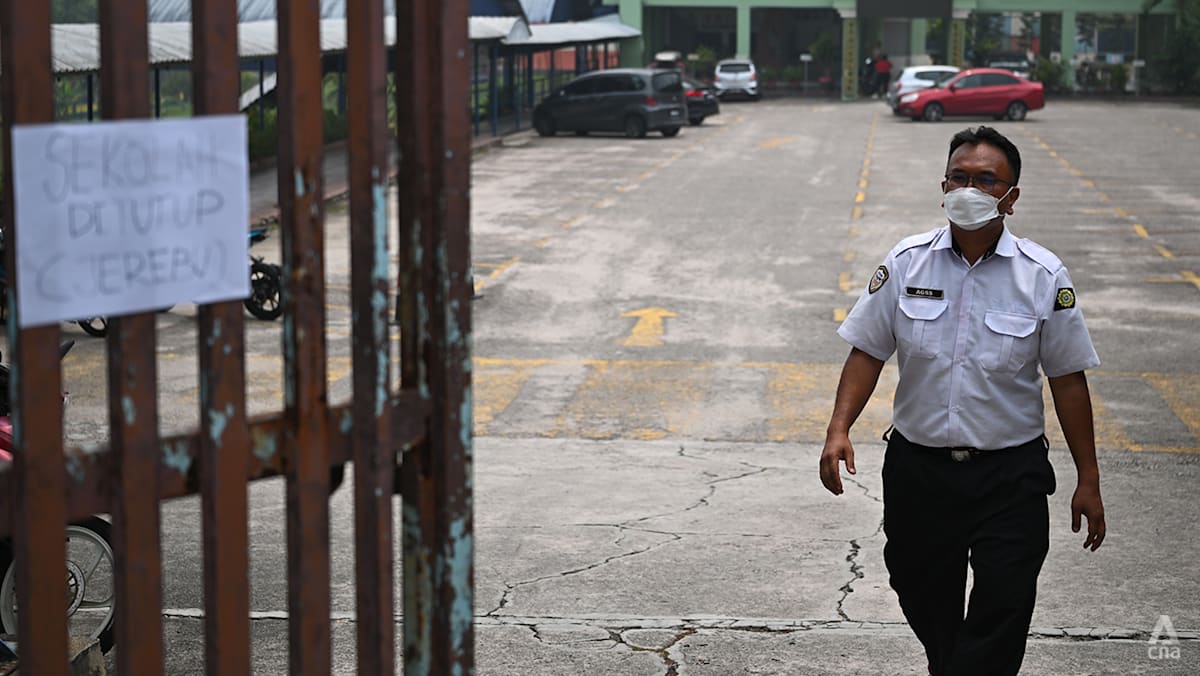
5.9-magnitude aftershock hits eastern Indonesia as deaths from initial earthquake climbs to 54
A 5.9-magnitude aftershock hit Indonesia's Flores island on Aug. 17, two days after a magnitude 7.7 earthquake rattled six regencies. At least 54 deaths, 199 injured, and 9,963 people displaced by the quake.
Intelligence analysis by Llama

A 5.9-magnitude aftershock struck Indonesia's Flores island, causing further destruction and displacement. The quake has resulted in at least 54 deaths, 199 injuries, and 9,963 displaced people. Rescue efforts are ongoing, with landslides cleared and roads reopened to previously isolated villages.
Imagine you're living in a place where earthquakes are very common. One day, a big earthquake hits, and then a few days later, a smaller but still strong earthquake happens. This is what's happening in Indonesia's Flores island, where people are trying to recover from the initial earthquake and now dealing with another aftershock.
Analysis
Indonesia's Earthquake Prone Region
Indonesia sits on the Pacific Ring of Fire, a horseshoe-shaped region where roughly 90 per cent of all earthquakes recorded occur due to seismic activity. This makes the country prone to earthquakes and tsunamis, with some of its deadliest natural disasters occurring in the region.
The Impact of the Aftershock
The 5.9-magnitude aftershock that hit Indonesia's Flores island on Aug. 17 has caused further destruction and displacement. At least 54 deaths, 199 injured, and 9,963 people displaced by the quake. The aftershock has also caused landslides, which have blocked roads and isolated villages.
Rescue Efforts
Rescue efforts are ongoing, with landslides cleared and roads reopened to previously isolated villages. However, communication disruptions and power outages continue to hamper search efforts. The Trans-Flores Highway, an approximately 700km road, had sections blocked by landslides. At least 995 aftershocks have been recorded by authorities, with 46 felt by residents, said the National Disaster Management Agency’s chief for disaster prevention, Abdul Muhari.
Prior Disasters
Flores itself has experienced some of Indonesia's deadliest natural disasters, including a 7.7-magnitude earthquake and tsunami in 1992 that killed 2,500 people, reported The Bangkok Post. In 2018, a magnitude 7.5 earthquake triggered a tsunami on the island of Sulawesi, killing more than 4,340 people. The Boxing Day earthquake of 2004, which struck off the coast of Sumatra, measured a magnitude of 9.1; it triggered a tsunami that killed around 230,000 people in a dozen countries.
Key points
- A 5.9-magnitude aftershock hit Indonesia's Flores island on Aug. 17, two days after a magnitude 7.7 earthquake rattled six regencies.
- At least 54 deaths, 199 injured, and 9,963 people displaced by the quake.
- Rescue efforts are ongoing, with landslides cleared and roads reopened to previously isolated villages.
- Communication disruptions and power outages continue to hamper search efforts.
- The Trans-Flores Highway, an approximately 700km road, had sections blocked by landslides.
If the rescue efforts are successful, and the displaced people receive the necessary aid, the situation in Indonesia's Flores island could improve. The government and aid organizations are working together to restore electricity and communications, and deliver aid to remote villages.
The situation in Indonesia's Flores island could worsen if the aftershocks continue to cause destruction and displacement. The lack of communication and power in some areas could hinder rescue efforts, and the number of casualties and injuries could increase.