A 600-mile road trip (and data) proves EV charging doesn’t suck anymore
A recent road trip covering over 600 miles showed significant improvements in EV charging infrastructure, with reliable and efficient charging stations available along the way.
Intelligence analysis by Llama
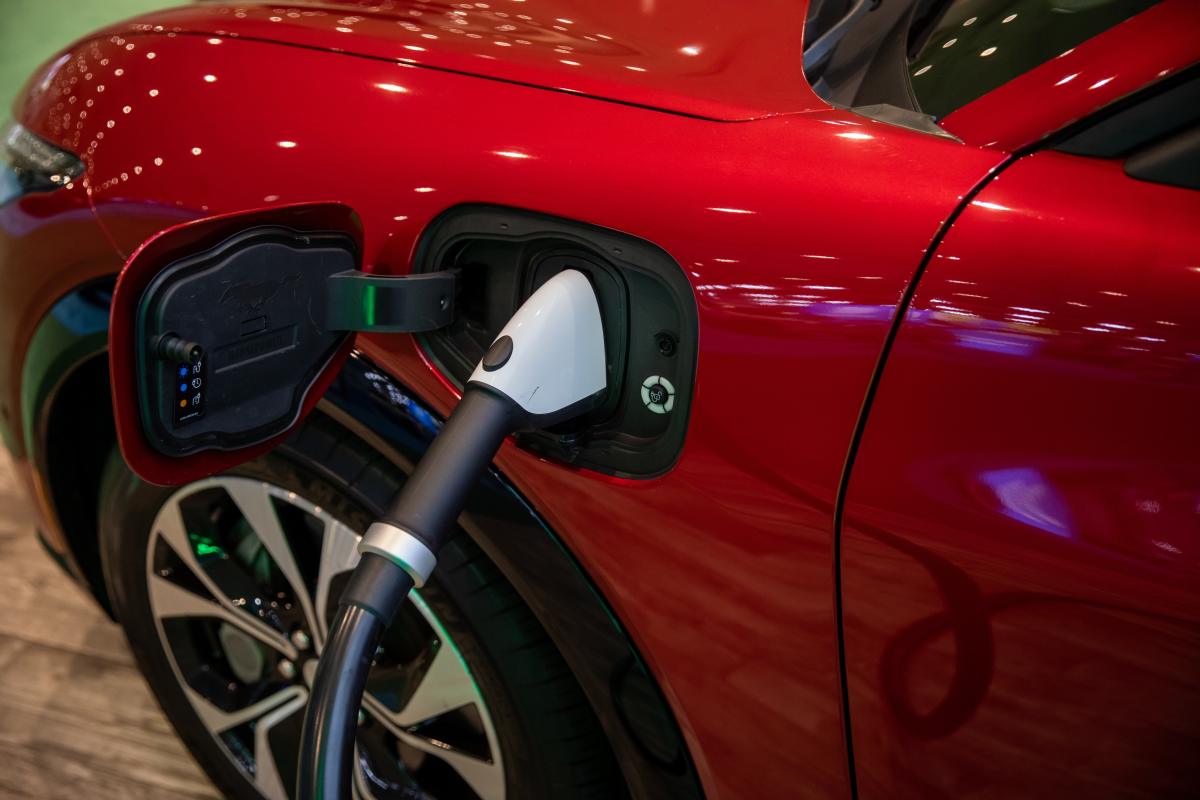
A recent road trip to Montreal demonstrated the significant improvements in EV charging infrastructure, with reliable and efficient charging stations available along the way. The author's experience was nearly flawless, with only one minor issue at a charging station. The data suggests that fast charging in the US has improved by leaps and bounds, with a nearly 10-point increase in re…
Imagine you're on a road trip in an electric car. You need to charge the car's battery, but you're not sure where to find a charging station. A special app called A Better Route Planner helps you find the best charging spots along the way. The app takes into account things like the weather, the car's battery, and the charging stations themselves. It's like having a personal navigator to help you find the best charging spots!
Analysis
A 600-mile road trip and the state of EV charging today
In the minds of prospective EV buyers, charging looms large. Just over half of those surveyed by AAA last year said that public charging infrastructure was a key concern. Those concerns aren’t unfounded. EV fast charging has historically been lackluster. In 2023, after a disastrous road trip, I drafted an EV fast-charging “bill of rights,” outlining seven improvements charging networks needed to make to turn things around.
What a difference a few years can make. During a recent road trip, I was surprised by how much the situation has improved. With one small exception, my charging experience was flawless.
A near-perfect experience
This summer’s road trip to Montreal covered more than 600 miles. We had intended to use our Kia EV9, which will travel nearly 300 miles on a charge, but the Kia is in the shop because of a broken air conditioner. Instead, we drove our Audi e-tron, which has a range of about 220 miles per charge. Despite the disparity, the e-tron handled the trip with aplomb.
Rangemaxxing might sound nice, but it isn’t necessary. To find chargers, I used A Better Route Planner (ABRP), an app that optimizes charging stops by accounting for everything from prevailing winds and temperature to vehicle specs and battery degradation. You can use a Bluetooth OBD reader to feed live data from the car to ABRP, but I found the app to be pretty accurate without one.
Data reveals big improvements
Thankfully, the EV charging infrastructure looks very different today. My experiences in 2023 and 2026 are anecdotes, of course. But the available data suggests they are representative of a broader trend: fast charging in the U.S. has improved by leaps and bounds.
Image Credits: Tim De Chant / TechCrunch
Back in July 2023, the country had about 32,000 DC fast chargers, according to the Joint Office of Energy and Transportation . At the time, many of those chargers were restricted to Tesla drivers. (Tesla announced plans to open its network in 2023, but it took more than a year for widespread access.) Today, EV drivers can use most of Tesla’s network. Continued expansion by Tesla and other companies has helped push the total to more than twice the number of DC fast chargers available in 2023.
What’s more, they’re more reliable. My nearly flawless trip last week appears to be the norm, not the exception. Since last year, reliability has improved nearly 10 points, from 85 to the mid-90s, on Paren’s reliability index , which includes metrics such as successful charging sessions and station downtime. Tesla’s network remains dominant, according to Paren, but other networks are growing quickly.
That competition has undoubtedly helped improve charging experiences across the board. Gaps in the network still exist and EV chargers still break. But more chargers are being added every month and the broken ones are being repaired more quickly than in the past. It’s not perfect, but I’m genuinely surprised by how much better fast charging has become. Someone should tell the holdouts what they’re missing.
Key points
- EV charging infrastructure has improved significantly in the US, with more reliable and efficient charging stations available.
- The number of DC fast chargers has increased from 32,000 in 2023 to over 60,000 today.
- Reliability has improved by nearly 10 points since last year, with successful charging sessions and station downtime metrics showing significant improvement.
- Tesla's network remains dominant, but other networks are growing quickly, leading to increased competition and improved charging experiences.
The improvement in EV charging infrastructure is a significant step towards making long-distance travel in electric vehicles more convenient and accessible. As more charging stations are added and existing ones become more reliable, the adoption of electric vehicles is likely to increase, leading to a reduction in greenhouse gas emissions and a more sustainable transportation system.
Despite the improvements in EV charging infrastructure, there are still gaps in the network and charging stations can break down. Additionally, the cost of charging an electric vehicle can be higher than filling up a gas-powered car, which may deter some people from switching to electric vehicles.