A flag goes up: After the Naxals moved out
The Indian Express travels to Kondapalli village in Chhattisgarh's Bijapur district to see what happens when the State finally moves in after the Maoists moved out.
Intelligence analysis by Llama
The State is back in Kondapalli, establishing itself through a string of visible markers of development — roads, panchayat bhawans, an anganwadi, an upper primary school and a road. The village, once a Maoist stronghold, is now slowly opening up to the outside world.
Imagine a village in a forest where people lived in fear because of a group called the Maoists. The government was trying to help, but the Maoists were stopping them. Now, the government is back in the village, and things are slowly changing. People are starting to feel safer, and the village is opening up to the outside world.
Analysis
The End of an Era in Kondapalli
For years, Kondapalli served as the base for Battalion No. 1, the armed unit of the Maoists. The village school shut down, the bus service was halted, and people lived in fear, caught between security forces and the Maoists. Ahead of Independence Day, The Indian Express travels to the village in Chhattisgarh's Bijapur district to see what happens when the State finally moves in.
The village, once a Maoist stronghold, is now slowly opening up to the outside world. A cellphone tower was erected on the edge of the village in December last year, bringing in the first signs of change. The steel tower, which rises above the mud houses and small shops, was among the first few signs of change in a village that was until two years ago deep in the Maoist heartland.
The State is back in Kondapalli, establishing itself through a string of visible markers of development — roads, panchayat bhawans, an anganwadi, an upper primary school, and a road. Along the Red Corridor, Kondapalli was part of the Maoists' South Bastar division and served as a base for Battalion 1, the most dreaded unit of the armed People's Liberation Guerrilla Army.
Located 79 km from Bijapur, it was where roads wound deep into the dense jungles of sal, teak, and bamboo, where government offices and the school building stood empty, and the buses never came. That changed in November 2024, when the Central Reserve Police Force (CRPF) announced that it was establishing a forward base in Kondapalli.
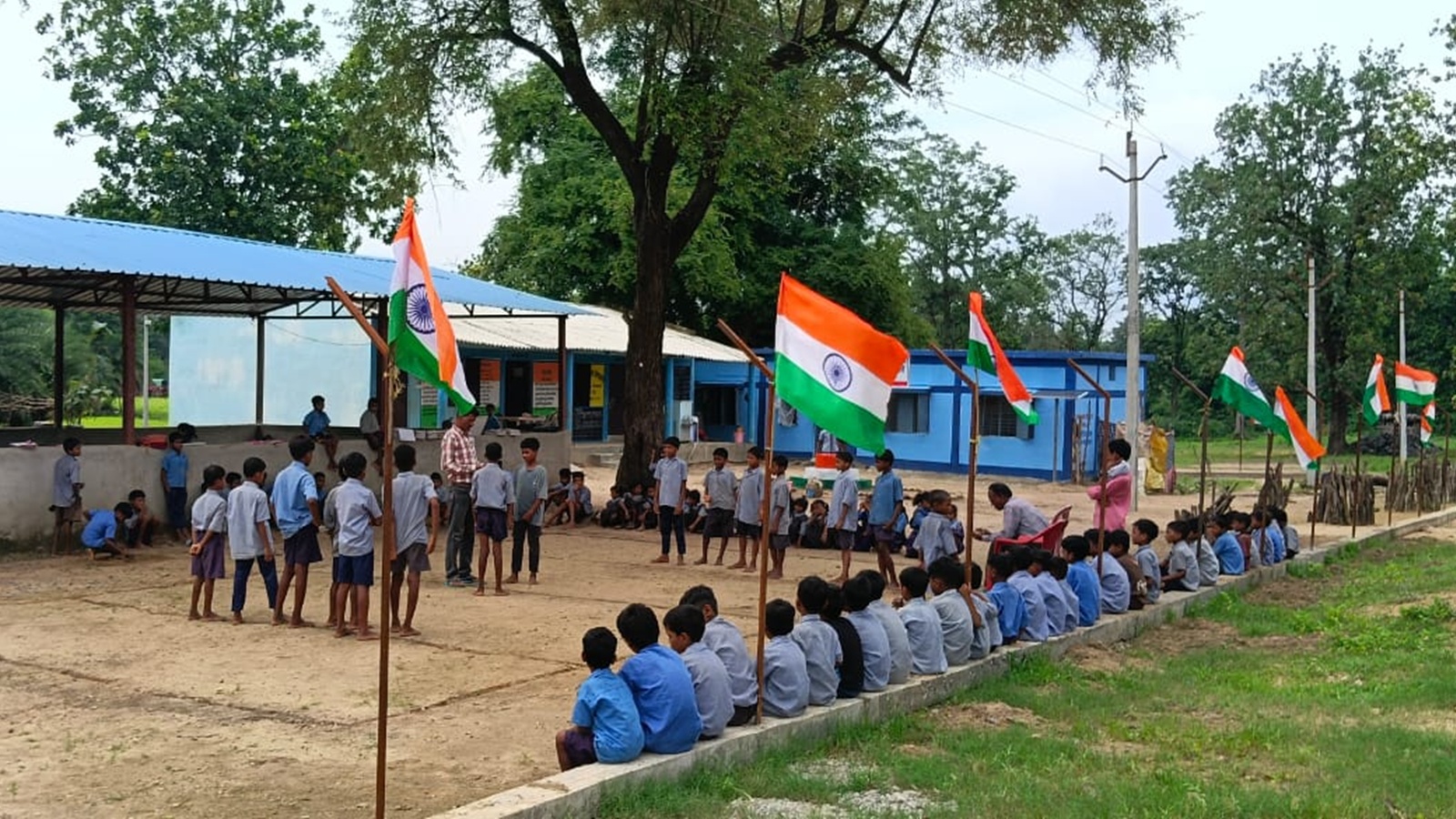
Around the block in Kondapalli village, a new school building stands, with Tricolours fluttering in the open compound, days ahead of Independence Day. The school, which was shut down for years, has been reopened, and children are now attending classes. The village, once a Maoist stronghold, is now slowly opening up to the outside world.
Hunga Muchaki, a former Maoist commander, says little. When he speaks, he does so haltingly — unsure of the question asked of him, probably suspicious of the outsider who wants to know more about him. In his 28 years, most of it as a Maoist, rarely has anyone asked him what he wanted for himself, his wife, his daughters, about his dreams.
As a Maoist commander, Muchaki had resisted government intervention; but now, five months after surrendering and opening a kirana store in his Kondapalli village, Muchaki is unapologetic as he demands from the State what he sees as rightfully his. Former Maoist commander Hunga Muchaki at his shop, which he set up with money he got as part of the state's rehabilitation policy.
The phone came to Kondapalli, in Chhattisgarh's Bijapur district, in December last year, when a cellphone tower was erected on the edge of the village. The steel tower, which rises above the mud houses and small shops, was among the first few signs of change in a village that was until two years ago deep in the Maoist heartland.
Kondapalli was part of the Maoists' South Bastar division and served as a base for Battalion 1, the most dreaded unit of the armed People's Liberation Guerrilla Army. Located 79 km from Bijapur, it was where roads wound deep into the dense jungles of sal, teak, and bamboo, where government offices and the school building stood empty, and the buses never came.
That changed in November 2024, when the Central Reserve Police Force (CRPF) announced that it was establishing a forward base in Kondapalli. Around the block in Kondapalli village, a new school building stands, with Tricolours fluttering in the open compound, days ahead of Independence Day.
The school, which was shut down for years, has been reopened, and children are now attending classes. The village, once a Maoist stronghold, is now slowly opening up to the outside world. Hunga Muchaki, a former Maoist commander, says little. When he speaks, he does so haltingly — unsure of the question asked of him, probably suspicious of the outsider who wants to know more about him.
In his 28 years, most of it as a Maoist, rarely has anyone asked him what he wanted for himself, his wife, his daughters, about his dreams. As a Maoist commander, Muchaki had resisted government intervention; but now, five months after surrendering and opening a kirana store in his Kondapalli village, Muchaki is unapologetic as he demands from the State what he sees as rightfully his.
Key points
- The State is back in Kondapalli, establishing itself through a string of visible markers of development — roads, panchayat bhawans, an anganwadi, an upper primary school, and a road.
- The village, once a Maoist stronghold, is now slowly opening up to the outside world.
- Hunga Muchaki, a former Maoist commander, has surrendered and opened a kirana store in his Kondapalli village.
- The villagers, who were once caught between security forces and the Maoists, may now have a chance to live a more normal life.
The State's efforts to establish itself in Kondapalli and nearby villages may lead to a more peaceful and prosperous region. The villagers, who were once caught between security forces and the Maoists, may now have a chance to live a more normal life.
However, the process of rebuilding and reconciliation may be slow and challenging. The villagers may still face difficulties and uncertainties as they try to adjust to their new reality.