A nation like no other
This opinion piece celebrates Saudi Arabia's National Day by tracing its history from the First Saudi State to the present, highlighting the nation's enduring resolve and unity despite adversity. It emphasizes that the Kingdom's strength lies in its foundational purpose, …
Intelligence analysis by Gemini 2.5 Flash
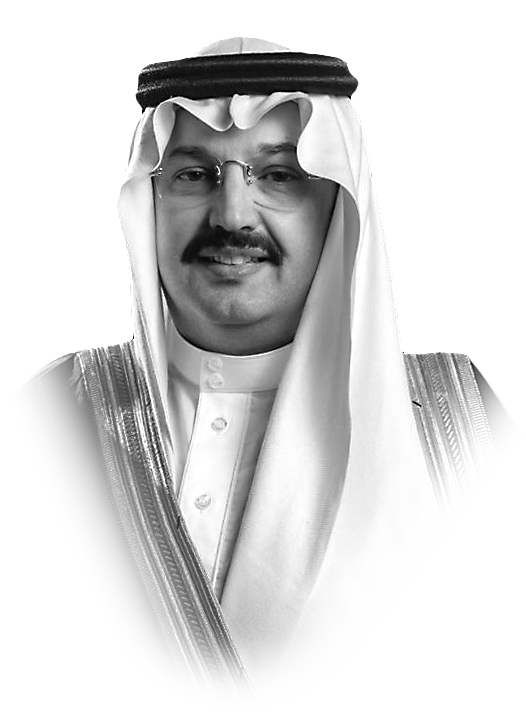
The article, penned by Prince Turki bin Talal bin Abdulaziz, reflects on Saudi Arabia's historical journey, emphasizing its resilience and unwavering purpose since the founding of the First Saudi State in 1727. It argues that despite periods of scarcity and conflict, the nation's commitment to unity, security, and justice, guided by its spiritual foundations, has allowed it to overcom…
Imagine Saudi Arabia is like a really old tree that grew in a tough desert. Even when it was small and didn't have much water, its roots were super strong because the people who planted it had a clear idea of what they wanted: a safe, fair place for everyone. Over hundreds of years, some branches broke, but the main trunk always stayed strong, and new branches grew. Now, it's a huge, strong tree with lots of new growth, but it's still standing on those same strong roots and ideas from long ago.
Analysis
Diriyah
The article begins by recounting the establishment of the First Saudi State in Diriyah in 1727 by Imam Mohammed bin Saud. This initial undertaking was not merely about territorial expansion but about uniting divided lands and establishing a society where people could find security and have their rights protected. Despite its fall in 1818, the author posits that the state's purpose, deeply rooted in the hearts of its people, endured beyond its physical structure.
This historical perspective underscores a core theme of Saudi resilience: the idea of the state as an enduring concept rather than just a physical entity. The reestablishment of the state by Imam Turki bin Abdullah in 1824, only a few years after Diriyah's fall, serves as early proof that adversity could not defeat the foundational purpose. This narrative frames the Saudi experience as one of continuous renewal driven by an unwavering collective will.
King Abdulaziz
The article highlights King Abdulaziz's pivotal role in 1902, when he set out to recapture Riyadh, initiating the reunification of the country. This act is presented not just as reclaiming a city but as reclaiming the entire project of the Saudi state, driven by a unity of resolve. His journey, which culminated in the proclamation of the Kingdom of Saudi Arabia on September 23, 1932, is depicted as a testament to immense will overcoming scarce means.
King Abdulaziz's vision was to build a strong, firmly established state focused on the peace and well-being of its people, with resolve as its shield and decisiveness its sword. The article contrasts the limited capabilities available to him then with the modern infrastructure and economy of today, emphasizing that the foundational spirit of determination and purpose remains constant. This historical account serves to legitimize the current leadership's ambitions by linking them to a legacy of overcoming challenges.
Mohammed bin Salman
The piece concludes by connecting the historical narrative to the contemporary era under King Salman and Crown Prince Mohammed bin Salman. It asserts that the current period represents a "new chapter of the same story," where Saudi Arabia's capabilities, horizons, and ambitions have significantly expanded. However, the author stresses that the fundamental foundation of the nation remains unchanged.
This continuity is crucial to the article's message, suggesting that modern advancements and ambitious projects like Vision 2030 are not a departure from, but rather an evolution of, the core principles established by the forefathers. The inherited legacy is framed as a trust and a responsibility, implying that the current leadership is steadfastly guided by the same enduring purpose of justice, mercy, and service to the people, ensuring the nation's continued resilience and prosperity.
Key points
- Saudi Arabia's history is characterized by enduring resolve and unity, overcoming scarcity and conflict since 1727.
- The First Saudi State, founded in Diriyah, established a purpose of uniting people and protecting rights, which persisted despite its fall.
- King Abdulaziz's reunification of the country, culminating in the Kingdom's proclamation in 1932, exemplified overcoming limited means with great will.
- The nation's compass has remained unchanged through successive crises, guided by principles of justice, mercy, and faithfulness.
- Under King Salman and Crown Prince Mohammed bin Salman, Saudi Arabia continues this legacy with expanded capabilities while maintaining its foundational purpose.
The article suggests that Saudi Arabia's deep-rooted purpose, founded on justice and service, ensures its continued resilience and prosperity despite global changes. This strong foundation, combined with expanded capabilities and ambitions under current leadership, points to a future where the nation can achieve its goals and maintain stability.