A new peak in US-China tech rivalry? Tibet drone hub launches on Mount Everest
Beijing has launched a drone research hub in Tibet near Mount Everest to exploit its high-altitude advantage in the US-China tech rivalry. The Plateau Drone R&D Application Centre is China's first research and application platform dedicated to drones operating at high alt…
Intelligence analysis by Llama
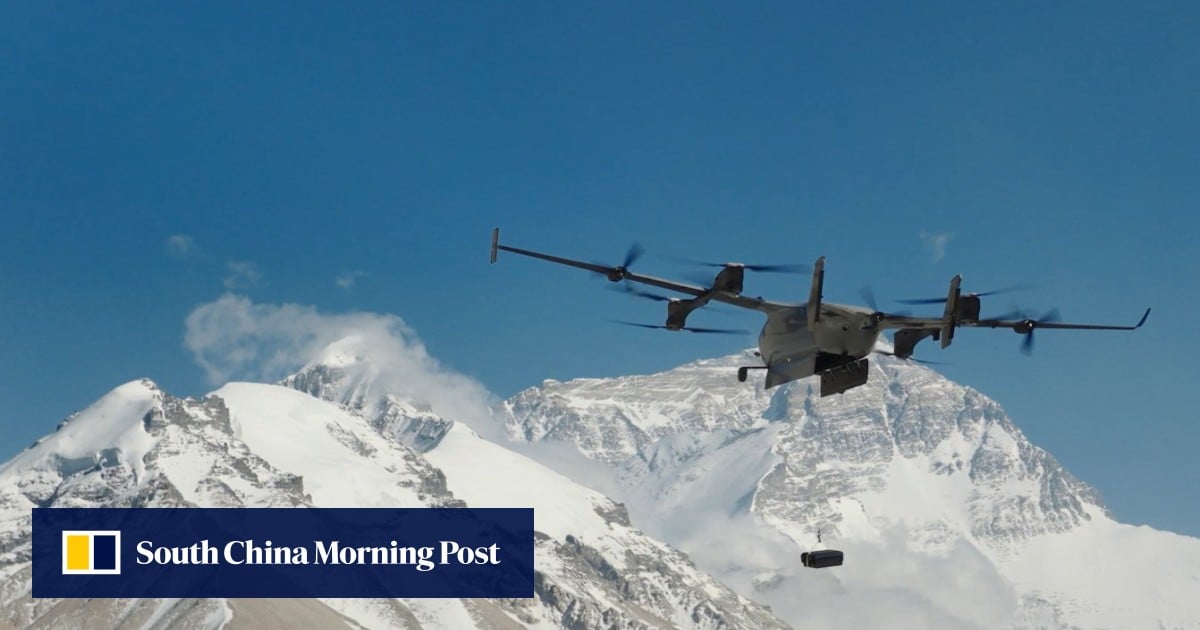
China has launched a drone research hub in Tibet near Mount Everest to gain an edge in the US-China tech rivalry. The centre is dedicated to drones operating at high altitude and supports Beijing's push for low-altitude economic development.
Imagine a high-tech research centre in Tibet near Mount Everest. This centre is like a super-advanced lab where scientists can test and develop special drones that can fly really high. China is building this centre to be a leader in drone technology and to show the world what it can do.
Analysis
A new peak in US-China tech rivalry? Tibet drone hub launches on Mount Everest
The recent launch of the Plateau Drone R&D Application Centre in Tibet near Mount Everest marks a significant development in the ongoing competition for technological dominance between the US and China. The centre represents China's first research and application platform dedicated to drones operating at high altitude, a key area of advantage for the country. This move is part of Beijing's broader push for low-altitude economic development and industrial growth across autonomous regions, including Tibet.
The centre's establishment is a strategic response to the US's growing presence in the region. The US has been actively promoting its own drone technology in the region, and China is keen to counter this move. The centre will support the development of high-altitude drones for various applications, including search and rescue, environmental monitoring, and disaster response.
Why Tibet? Tibet's high-altitude terrain provides a unique environment for testing and developing high-altitude drones. The region's harsh climate and limited infrastructure make it an ideal location for testing the limits of drone technology. By establishing a research hub in Tibet, China can leverage its geographical advantage to develop cutting-edge drone technology.
Implications for the US-China tech rivalry The launch of the Plateau Drone R&D Application Centre in Tibet marks a new peak in the US-China tech rivalry. China's efforts to gain an edge in high-altitude technology will likely be met with a strong response from the US. The centre's establishment will have significant implications for the US-China tech rivalry, with both sides vying for dominance in the region.
Key points
- China has launched a drone research hub in Tibet near Mount Everest to gain an edge in the US-China tech rivalry.
- The Plateau Drone R&D Application Centre is China's first research and application platform dedicated to drones operating at high altitude.
- The centre will support the development of high-altitude drones for various applications, including search and rescue, environmental monitoring, and disaster response.
If the Plateau Drone R&D Application Centre is successful, it could lead to breakthroughs in high-altitude drone technology, enabling China to better respond to emergencies and disasters in the region. This could also create new opportunities for economic development and industrial growth in Tibet.
However, the centre's establishment may also lead to increased tensions with the US, which could result in a new round of competition and rivalry in the region. This could have negative implications for regional stability and security.