A rare CME shift: Hedge funds abandon structural shorts to bet on a bitcoin rally
Hedge funds on the Chicago Mercantile Exchange (CME) have flipped their bitcoin futures positions to net long, a significant shift after years of maintaining structural shorts.
Intelligence analysis by Gemini 2.5 Flash
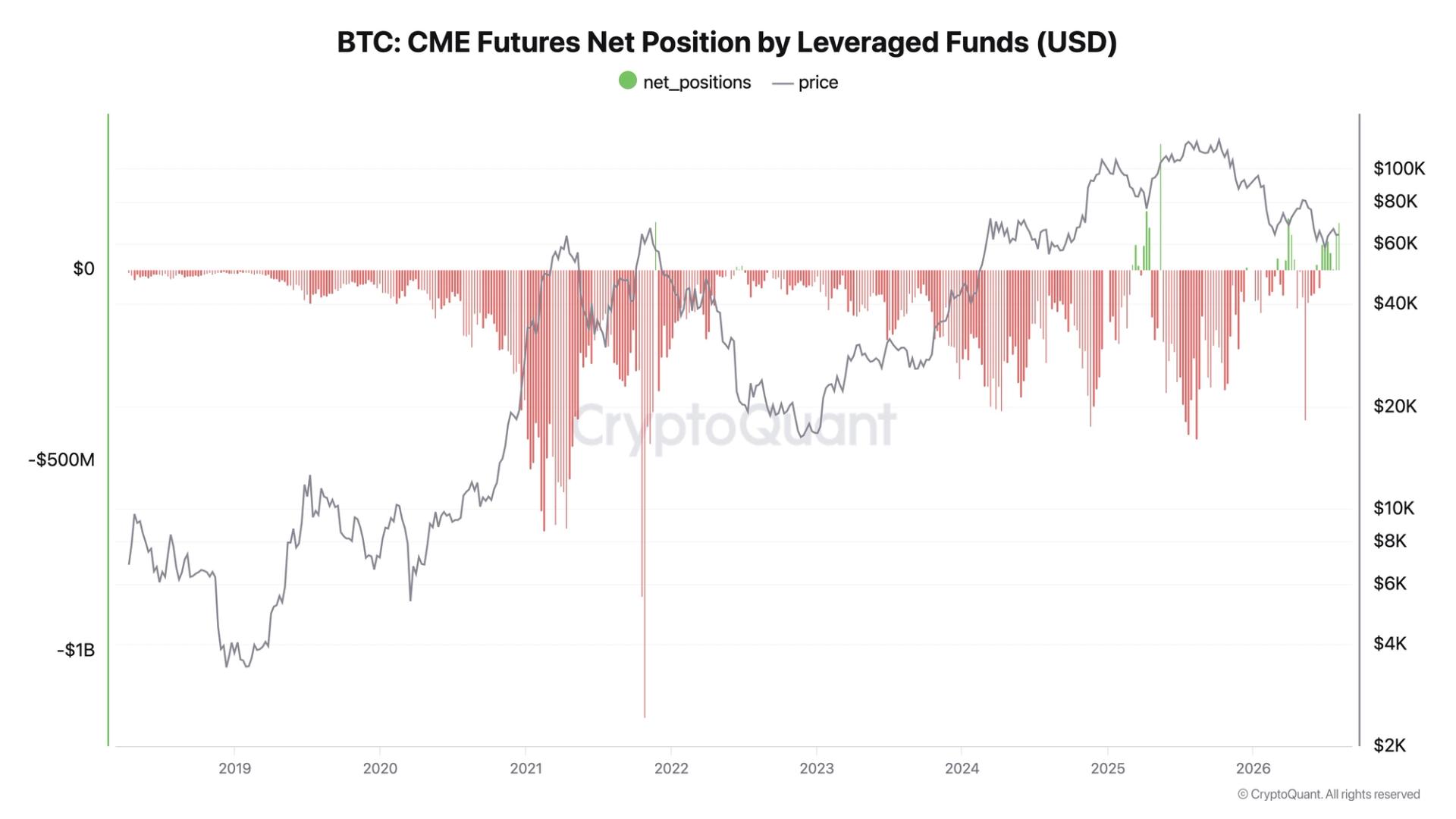
This rare change in institutional positioning, observed by CryptoQuant CEO Ki Young Ju, indicates that professional traders are increasingly betting on bitcoin's price appreciation. The shift is largely driven by the declining profitability of the traditional 'basis trade,' which involved selling futures against spot holdings, as futures yields now fall below U.S. Treasury rates.
Imagine big investors used to make small, safe profits by betting that a special digital coin called Bitcoin wouldn't go up much. But now, the old safe bet isn't as good because other safe investments, like government savings bonds, pay more. So, these big investors are changing their minds and are now betting that Bitcoin *will* go up a lot, like switching from playing defense to offense in a game, hoping to score big.
Analysis
Ki Young Ju
Ki Young Ju, the CEO of blockchain data analytics firm CryptoQuant, has highlighted a pivotal shift in the behavior of leveraged funds on the Chicago Mercantile Exchange (CME). His analysis reveals that these institutional players have transitioned from a long-standing net short position in Bitcoin futures to an aggregate net long stance. This observation is particularly noteworthy because it represents a departure from years of consistent structural short positioning.
Ju's statement, "The suits are now betting on bitcoin’s upside," underscores the significance of this change. It suggests that sophisticated financial entities, traditionally focused on arbitrage or hedging strategies, are now taking a more direct, bullish view on Bitcoin's future price trajectory. This shift could be interpreted as a strong vote of confidence from a segment of the market known for its calculated and often conservative approach.
Basis Trade
Historically, hedge funds maintained a net short position on CME Bitcoin futures primarily due to the 'basis trade.' This market-neutral strategy involved simultaneously buying spot bitcoin or exchange-traded funds (ETFs) and selling futures contracts. The profit from this trade was derived from the premium between futures and spot prices narrowing over time, rather than from the underlying price movement of Bitcoin itself.
This strategy allowed funds to generate returns with relatively low risk, as it was designed to be immune to Bitcoin's volatility. For years, this activity kept hedge funds' reported futures positioning consistently negative. However, the economic viability of this once-popular trade has diminished, prompting a re-evaluation of strategies among institutional investors.
U.S. Treasury Notes
The primary catalyst for the abandonment of the basis trade is the declining yield offered by Bitcoin futures compared to traditional safe-haven assets. The annualized three-month Bitcoin futures basis has fallen to approximately 3%, which is now below the roughly 3.8% yield available on two-year U.S. Treasury notes. This yield differential makes the basis trade significantly less attractive.
With lower returns and the inherent additional funding, margin, and execution risks associated with maintaining basis positions, traders have less incentive to continue this strategy. The superior, lower-risk yield offered by U.S. Treasuries has effectively siphoned capital away from the Bitcoin basis trade, leading to the unwinding of these positions and the subsequent flip to a net long stance as funds seek more direct exposure to potential price appreciation.
Key points
- Hedge funds on the CME have turned net long on Bitcoin futures, a rare shift after years of structural short positioning.
- This change indicates professional traders are increasingly betting on Bitcoin price increases.
- The traditional 'basis trade,' which involved selling futures against spot holdings, has become less attractive.
- The annualized three-month Bitcoin futures basis has fallen to approximately 3%, below the 3.8% yield on two-year U.S. Treasury notes.
- The move from structural shorts to net long supports Bitcoin's recovery narrative and is seen as a significant institutional bullish signal.
The shift by hedge funds to a net long position on CME Bitcoin futures suggests growing institutional confidence in Bitcoin's upside potential, which could provide a strong tailwind for further price appreciation. This change from a market-neutral stance to a directional bet indicates a more bullish sentiment among sophisticated investors, potentially attracting more capital into the crypto market.
Market signals
- BTC Hedge funds have flipped net long on CME bitcoin futures, indicating a shift towards betting on price increases and signaling institutional bullish sentiment.
AI-generated analysis of potential market relevance. Not financial advice.