A Stronger Rajya Sabha Is Key to Solving the Delimitation Challenge
India's delimitation dispute can be resolved by reforming the Rajya Sabha to protect federal balance. The current system favors populous states, while smaller states are marginalized.
Intelligence analysis by Llama 3.3 70B
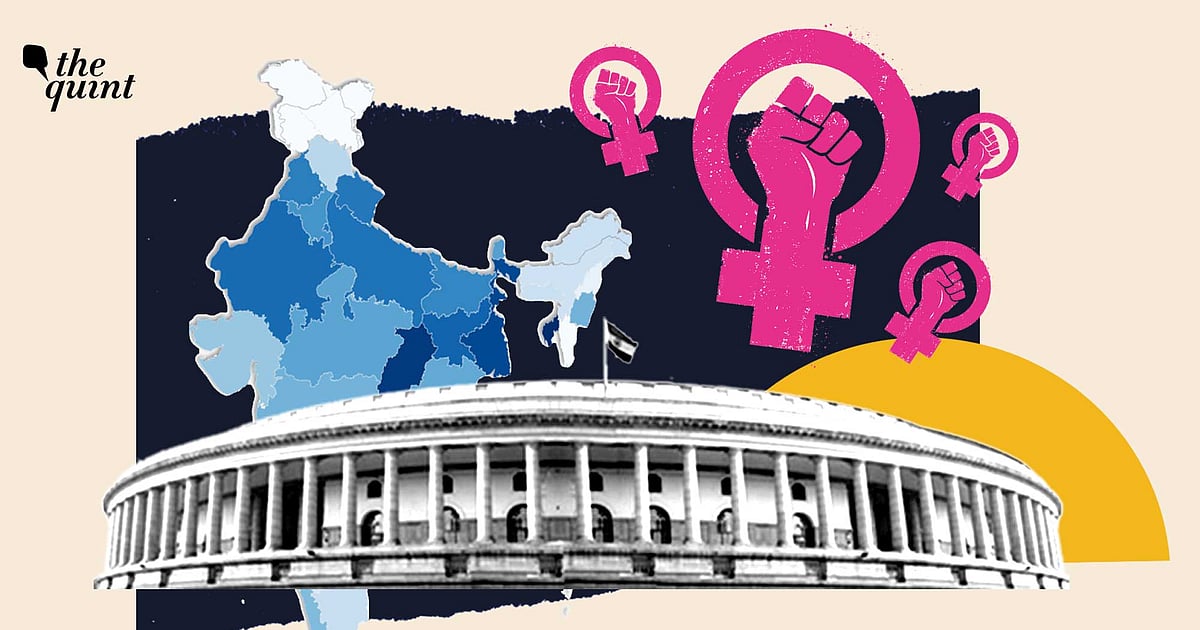
The Rajya Sabha should be reformed to give states equal representation, regardless of population size, to protect their interests and prevent dominance by larger states.
Imagine India as a big family with many siblings. Each sibling has a different number of children, but they all want a say in how the family is run. The Rajya Sabha is like a council of elders that helps make sure each sibling has a fair say, regardless of how many children they have.
Analysis
Introduction to Delimitation Disputes
The delimitation dispute in India is a complex issue that has significant implications for the country's federal structure and national unity. The current system, which favors populous states, has led to concerns among smaller states that they will be marginalized. To address these concerns, the Rajya Sabha should be reformed to give states equal representation, regardless of population size.
The Rajya Sabha was envisioned as the Council of States, but its composition closely mirrors the population-based logic of the Lok Sabha. This has prevented the upper house from fulfilling its intended federal role. A reformed Rajya Sabha, with equalized or carefully weighted state representation, would protect the interests of smaller and less populous states.
The Need for Constitutional Reform
Implementing this reform would require a multi-step constitutional strategy. First, Parliament should decouple Rajya Sabha representation from strict population-based formulas. One possible approach would be to give every state equal representation. Another way is to assign every state a baseline number of seats, supplemented by additional seats based on a population-based slab subject to an upper cap.
Such a system would prevent any single state from dominating the chamber. Second, the Rajya Sabha's powers must be strengthened. At present, Money Bills can effectively bypass the upper house. In a post-delimitation environment, where fiscal transfers and revenue-sharing arrangements are likely to become even more contentious, the Rajya Sabha should be granted either joint authority or mandatory review powers over key financial legislation affecting Centre-State relations.
A Grand Federal Bargain
Together, these reforms would create a grand federal bargain. The north would receive representation in the Lok Sabha proportional to its population, while the south, west, and smaller states would gain stronger institutional safeguards in the Rajya Sabha. Such an approach is not merely politically pragmatic; it is a matter of fairness. States should not be penalized for successfully advancing national goals such as population stabilization, healthcare, and social development.
A stronger Rajya Sabha would also help shift the national conversation away from a divisive North-versus-South framework. Instead of becoming a regional contest, the debate would be transformed into a question of institutional balance of powers. A repurposed Rajya Sabha could also then be better used for checks on the majoritarianism of the Lok Sabha.
Key points
- Delimitation dispute has significant implications for India's federal structure and national unity
- Rajya Sabha should be reformed to give states equal representation, regardless of population size
- Constitutional reform is needed to decouple Rajya Sabha representation from population-based formulas
A reformed Rajya Sabha could lead to a more balanced and representative federal system, where all states have a meaningful voice. This could strengthen national unity and promote more effective governance.
However, implementing such reforms could be challenging and may face opposition from larger states. If not done carefully, it could lead to further marginalization of smaller states and exacerbate existing regional tensions.