A White House teleprompter operator reportedly won big betting on presidential speeches
A White House teleprompter operator was placed on leave after allegedly making over $100,000 betting on presidential speech lengths on Kalshi.
Intelligence analysis by Llama
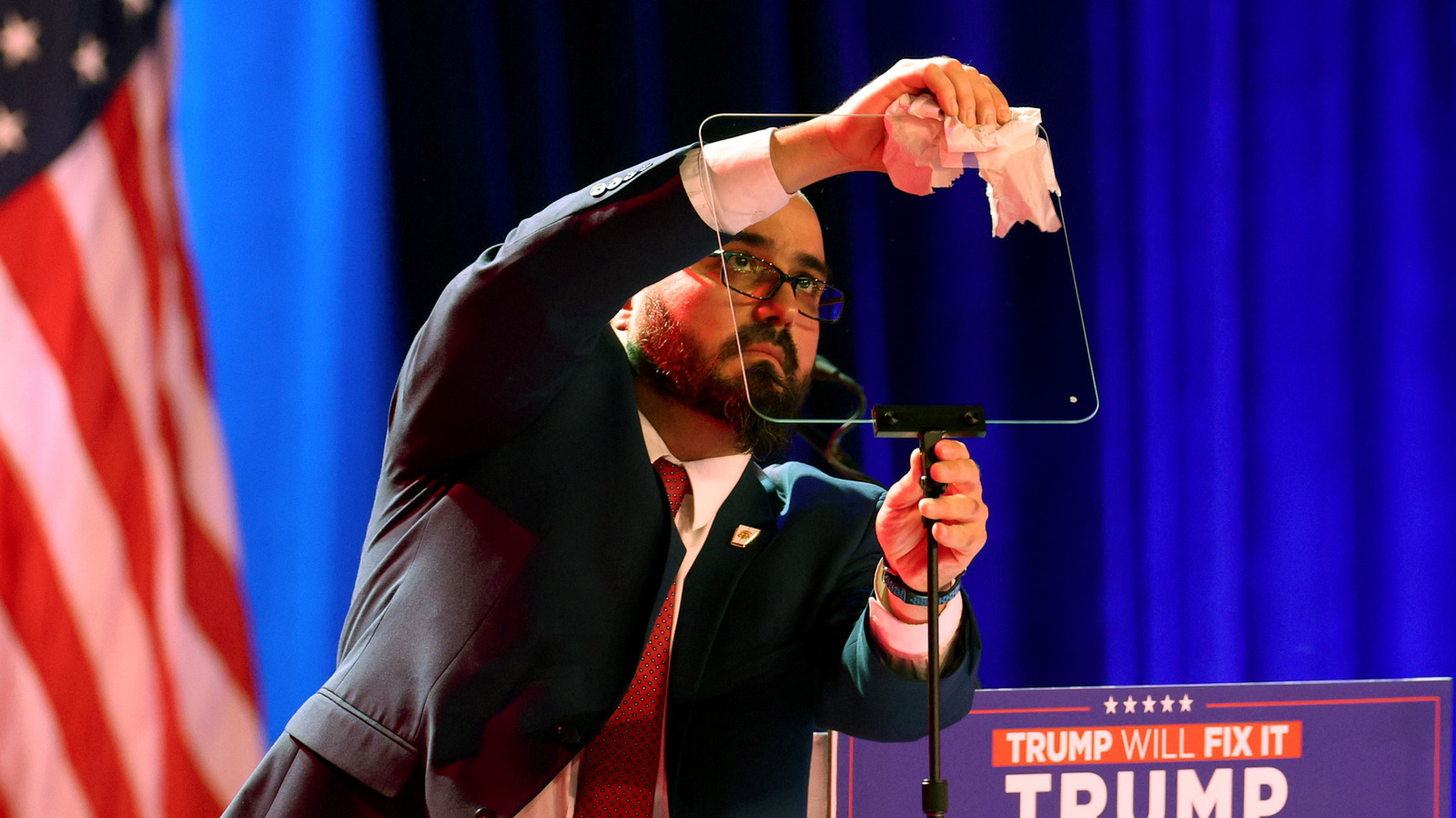
Gabriel Perez, President Trump's teleprompter operator, was placed on administrative leave after reportedly betting over $100,000 on the length of presidential speeches through Kalshi, raising questions about insider trading on prediction markets.
Imagine if you knew how long a movie would be before anyone else, and you could bet money on it. That's kind of what happened — a person who helps the President read his speeches used that secret info to win over $100,000 betting on speech lengths, and now he's in trouble.
Analysis
An Operator With Inside Knowledge
Gabriel Perez's role as President Trump's teleprompter operator gave him a vantage point few people in the country could match. ABC News reports that Perez "typically has the final eyes on nearly all of the president's prepared remarks," meaning he had advance knowledge of how long a speech was likely to run — exactly the kind of information that would give a bettor a significant edge on a platform like Kalshi. According to the report, Perez allegedly wagered on more than a dozen presidential addresses, including the State of the Union, a World Economic Forum speech in January, and a Medal of Honor ceremony in March, netting more than $100,000. The pattern was apparently obvious enough that Kalshi's own systems flagged suspicious activity: the platform reportedly noticed that Perez withdrew bets whenever Trump deviated from his prepared script, which would have invalidated his informational advantage. He has since been placed on unpaid administrative leave, and White House Press Secretary Karoline Leavitt called the behavior "deeply unfortunate" and a "disgrace."
Kalshi's Growing Pains
This is not the first insider-trading headache for Kalshi. In April 2026, the prediction market introduced new rules barring politicians and athletes from betting on events they were directly involved in, and later suspended three political candidates who violated those rules. The platform followed up in June with a broader policy requiring users to disclose their employer before placing certain types of bets — a direct response to the kind of conflict the Perez case represents. Yet the incident suggests these safeguards may not be enough. The fact that a low-level White House staffer could allegedly exploit his position for six-figure gains points to a deeper structural problem: when the value of a bet depends on information held by a small number of people, the platform needs mechanisms beyond voluntary disclosure to detect and prevent abuse. Kalshi did flag the trades, which suggests its surveillance systems are working to some degree — but only after the bets were already placed and settled.
A Regulatory Gray Zone
The Perez case also lands in the middle of a jurisdictional fight over who actually gets to police prediction markets. The Commodity Futures Trading Commission oversees Kalshi as a designated contract market, but several states have tried to ban or restrict the platform within their borders. A US Circuit Court of Appeals recently sided with Kalshi, ruling that New Jersey had no right to ban the platform — a decision that consolidates regulatory authority at the federal level. CFTC officials have reportedly offered to settle with Perez if he returns his winnings, suggesting the agency is willing to treat this as a relatively contained enforcement matter rather than a landmark case. Whether that approach sets a sufficient deterrent precedent — or simply teaches sophisticated insiders to be more careful next time — remains an open question for the still-nascent prediction market industry.
Key points
- White House teleprompter operator Gabriel Perez was placed on unpaid leave after allegedly making $100,000+ on Kalshi bets tied to presidential speech lengths
- Perez had advance access to Trump's prepared remarks through his teleprompter role, giving him an informational edge
- Kalshi flagged the suspicious trades and referred them to the CFTC, and officials are reportedly willing to settle if Perez returns the winnings
- Kalshi has introduced new policies in 2026 to bar politicians, athletes, and certain employees from insider-related bets
- A federal appeals court recently ruled that states cannot ban Kalshi, leaving the CFTC as the primary regulator
Kalshi's ability to flag suspicious trades and refer them to the CFTC suggests the platform's surveillance systems are already functioning. The incident could accelerate stronger disclosure rules and give regulators a test case to build clearer insider-trading guardrails for prediction markets.
Even with new disclosure policies in place, the case shows that low-level insiders with specialized knowledge can still exploit these markets for six-figure gains. A quick settlement that simply returns winnings may not deter future insider activity, leaving prediction markets exposed to recurring abuse.