About 60,000 migrants arrive in Ceuta in 24 hours, Spanish territory's leader says
Approximately 60,000 migrants crossed into Spain's North African enclave of Ceuta from Morocco in 24 hours, leading to chaotic scenes and diplomatic tensions. Spain has deployed troops, and European leaders have expressed concern over the unprecedented influx.
Intelligence analysis by Gemini 2.5 Flash
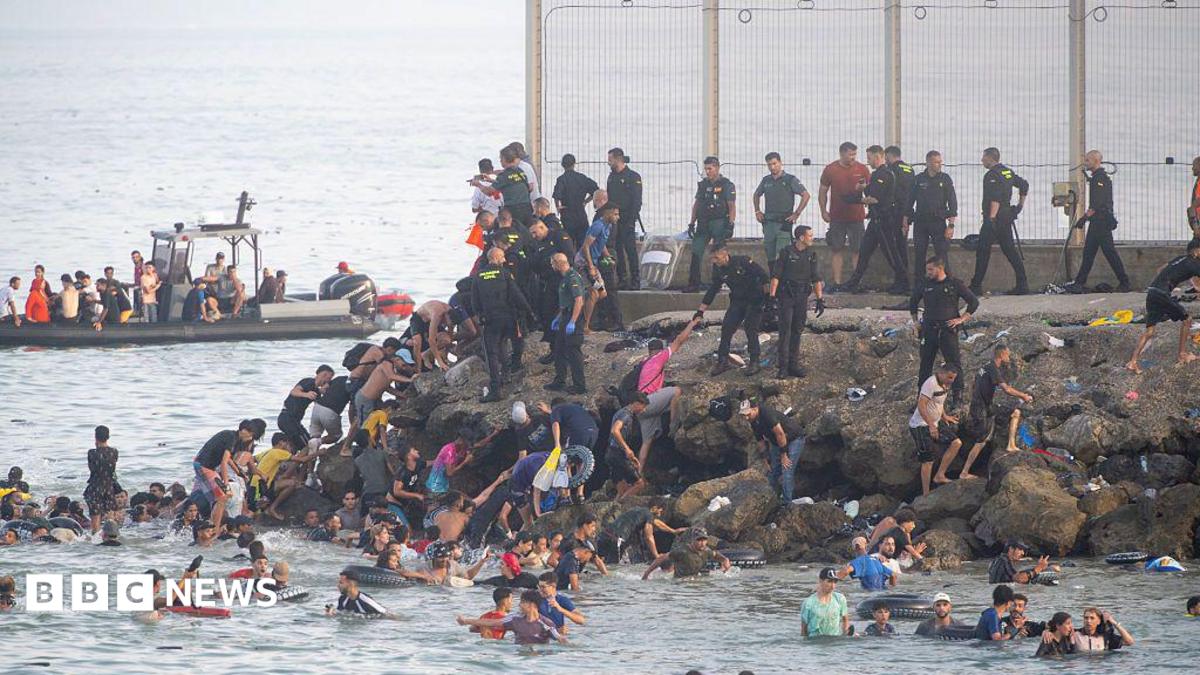
Ceuta, a Spanish territory bordering Morocco, experienced an unprecedented surge of around 60,000 migrants in a single day, overwhelming local resources and prompting Spain to deploy its armed forces. The influx follows a Spanish Supreme Court ruling on migrant returns and coincides with renewed diplomatic friction between Spain and Morocco, with European leaders voicing alarm over bo…
Imagine a small town that suddenly has almost as many new visitors as its own residents, all arriving at once from a nearby country. That's kind of what happened in Ceuta, a Spanish town next to Morocco, where thousands of people, including many kids, arrived in just one day. It caused a lot of chaos and made the town's leader very worried, especially since some people even died trying to get there. Now, Spain is sending soldiers to help, and other countries in Europe are watching closely, wondering how to manage so many people arriving at once.
Analysis
An Unprecedented Humanitarian and Security Crisis
The Spanish North African enclave of Ceuta has been plunged into an acute crisis following the arrival of an estimated 60,000 migrants from Morocco within a 24-hour period. This massive influx, described by Ceuta's President Juan Jesús Vivas as "unsustainable," represents approximately 70% of the city's total population of 83,600. The sheer scale of arrivals, including at least 7,000 minors, has overwhelmed local services and led to chaotic scenes, with reports of deaths during the crossing and widespread fear among residents. Spain's Interior Ministry, while citing slightly lower figures of 50,000 arrivals, confirmed that over 25,000 people had already been returned to Morocco, with departures occurring at a rate of 150 per minute.
Catalysts: Court Rulings and Diplomatic Strain
The immediate trigger for this surge appears to be a recent Spanish Supreme Court ruling that migrants intercepted at sea cannot be summarily returned to Morocco, a decision Prime Minister Pedro Sánchez suggested was manipulated by "criminal networks." However, the crisis is also deeply rooted in long-standing diplomatic tensions between Spain and Morocco, particularly over the sovereignty of Western Sahara. A similar, though smaller, influx of 8,000 migrants occurred in 2021 following a dispute over this very issue. Sánchez's recent visit to Algeria, which backs independence for Western Sahara, may have reignited these diplomatic frictions, potentially influencing Morocco's border control posture. The article notes that it was unclear where Moroccan border guards were during the initial crossings, raising questions about their role in facilitating or failing to prevent the mass movement.
European Alarm and Future Implications
The events in Ceuta have sent ripples across Europe, with leaders expressing grave concern over the implications for border security. Italy's right-wing Prime Minister Giorgia Meloni described the images as "shocking" and warned of a security threat to Europe, even suggesting Italy might consider suspending the Schengen zone agreement with Spain. The UK Prime Minister and French President have offered assistance to Spain, which has responded by deploying its armed forces to reinforce security in Ceuta and its sister city, Melilla. This crisis underscores the vulnerability of the EU's only land borders with Africa and highlights the urgent need for coordinated European responses to migration challenges, balancing humanitarian obligations with national security concerns. The situation is likely to intensify debates on migration policy, border management, and diplomatic relations between the EU and North African states.
Key points
- Approximately 60,000 migrants crossed into Ceuta from Morocco in 24 hours, overwhelming the Spanish enclave.
- Ceuta's president described the situation as "unsustainable," noting the arrivals amounted to 70% of the city's population.
- Spain's Prime Minister Pedro Sánchez called the influx an "attack" and deployed armed forces, vowing to return illegal migrants.
- The surge follows a Spanish Supreme Court ruling on migrant returns and coincides with renewed diplomatic tensions between Spain and Morocco over Western Sahara.
- European leaders, including Italy's Prime Minister Giorgia Meloni, expressed alarm, with some suggesting tighter border controls and potential impacts on the Schengen zone.
The crisis could prompt renewed diplomatic efforts between Spain and Morocco, potentially leading to more structured and humane migration agreements. Increased European cooperation might also result in better support for frontline territories like Ceuta, ensuring both security and humanitarian aid for those in need.
The massive influx risks exacerbating humanitarian conditions in Ceuta, straining local resources and potentially leading to further loss of life. It could also intensify diplomatic disputes between Spain and Morocco, and fuel anti-immigrant sentiment across Europe, leading to stricter, less humane border policies.