After Apple’s launch of its foldable iPhone, what are the caveats for Chinese buyers?
Apple has launched its first foldable smartphone, the iPhone Duo, priced from US$1,999, aiming to compete in China's large foldable phone market currently dominated by Huawei.
Intelligence analysis by Gemini 2.5 Flash
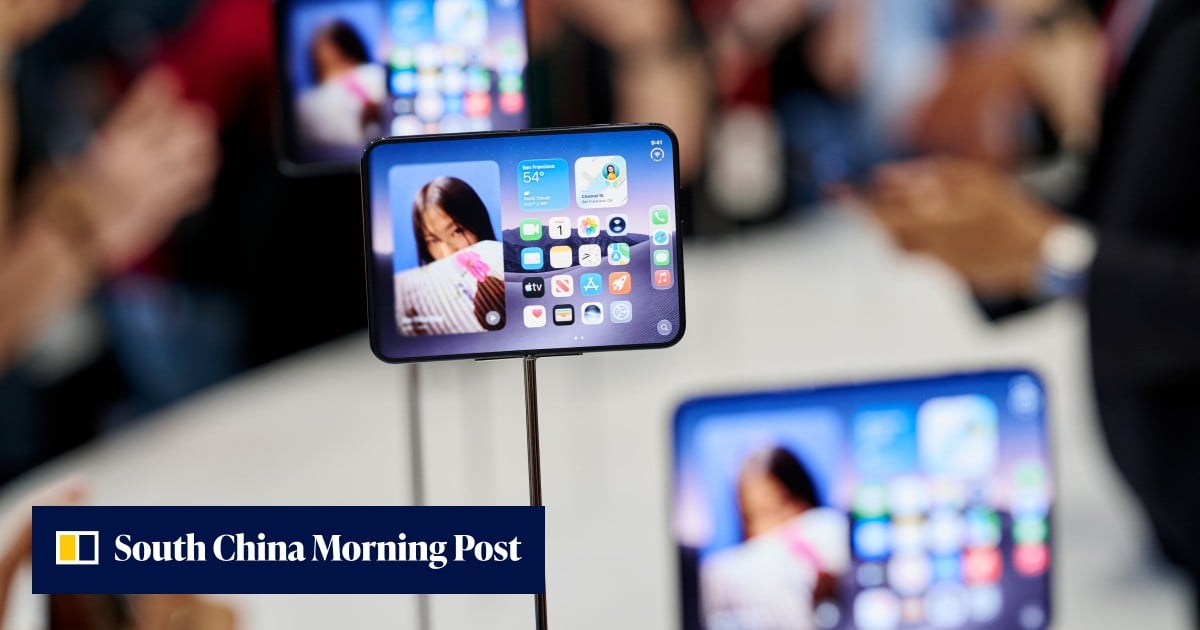
Apple's new iPhone Duo, a premium foldable device, marks its entry into the competitive foldable smartphone market, particularly targeting Chinese consumers. Despite its late arrival, Apple aims to set a new standard for the category, though its high price point and existing market dominance by local players like Huawei present challenges for Chinese buyers.
Apple just made a super cool new phone called the iPhone Duo that folds in half like a passport! It's really expensive, like a fancy toy, and Apple hopes it will be the best folding phone ever. But in China, where lots of people already have folding phones from other companies, it might be tricky for Apple to convince everyone to buy their new one.
Analysis
iPhone Duo
Apple officially unveiled the iPhone Duo, its inaugural foldable smartphone, at its annual product launch event in Cupertino, California. Presented by CEO John Ternus, the device is characterized by its sleek, passport-style design, aiming to redefine the user experience within the foldable phone category.
This launch signifies Apple's strategic move to position foldability as a complete premium experience, rather than merely an experimental hardware feature. Despite entering the market years after many rivals, Apple intends for the iPhone Duo to establish a new benchmark against which all competitors will now be measured.
US$1,999
The iPhone Duo carries a starting price of US$1,999, making it Apple’s most expensive iPhone to date. This pricing is notably lower than initial industry estimates, even amidst rising component costs, suggesting a deliberate strategy to make the premium device more accessible within its high-end segment.
In mainland China, the device starts at 15,999 yuan (US$2,384), with the top-tier model reaching 26,499 yuan. This aggressive pricing strategy underscores Apple's ambition to penetrate the world's largest and most competitive foldable phone market by offering a high-end product that, while expensive, is positioned to deliver a superior experience.
Huawei Technologies
Apple's entry into the foldable market directly challenges the established dominance of local players in China, most notably Huawei Technologies. Huawei currently holds a significant share of China's foldable phone market, which is recognized as the largest globally, presenting a formidable competitive landscape for Apple.
The article highlights that Apple is attempting to break into this market where Huawei has a substantial head start and strong brand loyalty. The success of the iPhone Duo in China will depend heavily on its ability to differentiate itself and overcome the entrenched positions of existing market leaders.
Key points
- Apple has launched its first foldable smartphone, the iPhone Duo, at its annual product event.
- The iPhone Duo is priced starting at US$1,999, making it Apple's most expensive iPhone yet, but cheaper than some industry estimates.
- Apple aims to position the iPhone Duo as a premium experience, setting a new standard for foldable phones.
- The company is attempting to break into China's foldable phone market, which is the world's largest and currently dominated by Huawei Technologies.
- Caveats for Chinese buyers include the high price and the strong competition from established local brands.
Apple's strong brand loyalty and premium positioning could enable the iPhone Duo to capture significant market share in China, setting a new standard for foldable phones despite its late entry. Its competitive pricing relative to industry estimates could also attract a substantial number of high-end buyers.
Apple faces an uphill battle in China's already saturated foldable market, where local giants like Huawei have a strong foothold and established consumer base. The high price point, even if competitive for Apple, might still deter many Chinese consumers, limiting its overall market penetration.


