Ahsan Iqbal Warns of Water Weaponization Under Indus Waters Treaty
Pakistan's Federal Minister for Planning, Development and Special Initiatives, Ahsan Iqbal, has warned that India's decision to place the Indus Waters Treaty in abeyance has created a serious new security challenge for Pakistan. He stated that water could now be used as a…
Intelligence analysis by Llama
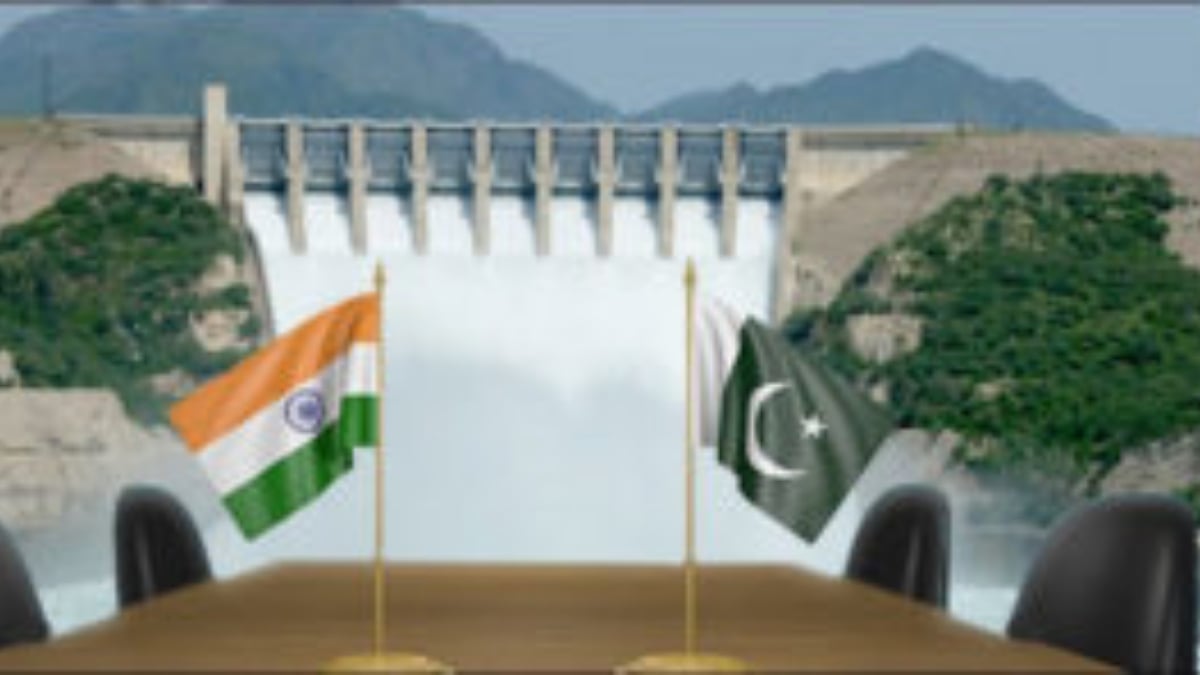
Pakistan's Ahsan Iqbal has warned that India's decision to hold the Indus Waters Treaty in abeyance has created a new security challenge for Pakistan. He stated that water could now be used as a tool of political pressure, and Pakistan is responding by accelerating the construction of major reservoirs.
Imagine if someone had control over the water you needed to grow food, and they could turn it off or on whenever they wanted. That's what's happening in Pakistan right now, and it's a big problem.
Analysis
Water as a Tool of Political Pressure
Ahsan Iqbal, Pakistan's Federal Minister for Planning, Development and Special Initiatives, has warned that India's decision to place the Indus Waters Treaty in abeyance has created a serious new security challenge for Pakistan. He stated that water could now be used as a tool of political pressure, and this is a significant concern for Pakistan's water security.
Accelerating Reservoir Construction
Pakistan is responding to this new security challenge by accelerating the construction of major reservoirs, including the Diamer-Bhasha and Mohmand dams. These two projects are expected to provide about six million acre-feet of additional storage capacity once completed. Ahsan Iqbal noted that Pakistan had not built a major new reservoir for four to five decades and therefore had significant ground to make up.
Diplomatic Channels
Islamabad is also pursuing all available diplomatic channels to prevent the dispute from escalating into conflict. Ahsan Iqbal stated that Pakistan could not ignore the issue but argued that South Asia needed to focus on development, poverty reduction, health and education rather than another cycle of confrontation. He also pointed to the region's low level of economic integration, despite the benefits that greater connectivity has brought to other parts of the world.
Key points
- Pakistan's Ahsan Iqbal has warned that India's decision to hold the Indus Waters Treaty in abeyance has created a new security challenge for Pakistan.
- Pakistan is responding by accelerating the construction of major reservoirs, including the Diamer-Bhasha and Mohmand dams.
- Islamabad is pursuing all available diplomatic channels to prevent the dispute from escalating into conflict.
If Pakistan can successfully accelerate the construction of major reservoirs, it may be able to mitigate the impact of India's decision to hold the Indus Waters Treaty in abeyance. Additionally, pursuing diplomatic channels to prevent the dispute from escalating into conflict could also lead to a positive outcome.
If India continues to hold the Indus Waters Treaty in abeyance, it could lead to a significant decrease in Pakistan's water security, potentially causing food and water shortages. Additionally, the dispute could escalate into conflict, leading to further instability in the region.