AI chipmaker Biren projects up to 22-fold revenue surge amid China’s hi-tech boom
Chinese AI chipmaker Biren Technology projects a 2,107% revenue surge in the first half of 2026, driven by strong market demand for general-purpose GPUs. The company's net loss is expected to narrow to between 320 million and 400 million yuan.
Intelligence analysis by Llama
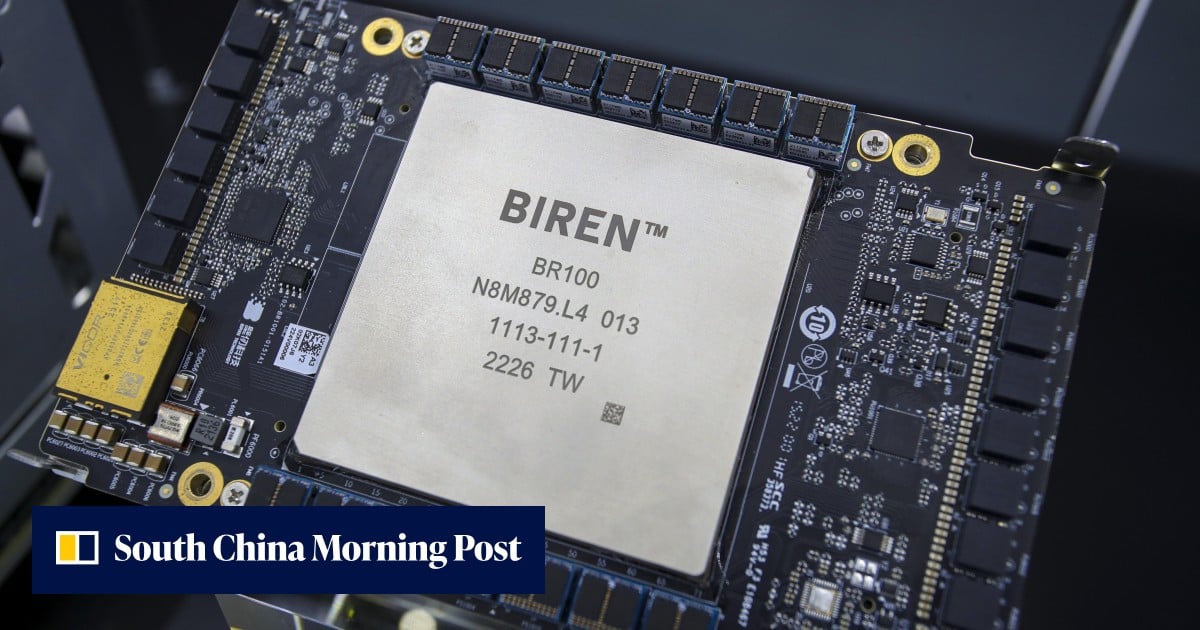
Biren Technology, a Shanghai-based GPU maker, expects a 2,107% revenue surge in the first half of 2026 due to accelerating commercialisation and strong market demand for general-purpose GPUs. The company's net loss is expected to narrow to between 320 million and 400 million yuan.
Imagine you have a super powerful computer that can do lots of things at the same time. That's what Biren Technology's GPUs can do. They're in high demand because lots of companies want to use them to make their computers faster and more powerful. This is good news for the company and the whole AI industry.
Analysis
Biren Technology's Revenue Surge: A Sign of China's AI Boom
Biren Technology's projected revenue surge of up to 2,107% in the first half of 2026 is a testament to the growing demand for AI hardware in China. The company's general-purpose GPUs are in high demand, driven by the commercialisation of AI applications. This trend is expected to continue, with more Chinese firms investing in the development of AI chips.
The revenue surge is also attributed to the concentration of high-end product deliveries in the second half of 2025. This has resulted in a relatively low financial baseline for the first half of 2026, making the year-on-year growth appear even more impressive. However, the company's net loss is expected to narrow to between 320 million and 400 million yuan, indicating a more stable financial position.
The upbeat forecast underscores broader momentum across the AI industry. As Chinese firms push for technological self-sufficiency, chip designers are capitalising on booming demand amid a rapid infrastructure buildout. This trend is expected to continue, with more Chinese firms investing in the development of AI chips and the growth of the AI industry as a whole.
Implications for the AI Industry
The revenue surge at Biren Technology has significant implications for the AI industry. The growing demand for AI hardware in China is driving investment in the development of AI chips, which is expected to continue. This trend is expected to have a positive impact on the growth of the AI industry as a whole, with more Chinese firms investing in the development of AI chips and the growth of the AI industry.
Conclusion
In conclusion, Biren Technology's projected revenue surge of up to 2,107% in the first half of 2026 is a testament to the growing demand for AI hardware in China. The company's general-purpose GPUs are in high demand, driven by the commercialisation of AI applications. This trend is expected to continue, with more Chinese firms investing in the development of AI chips and the growth of the AI industry as a whole.
Key points
- Biren Technology projects a 2,107% revenue surge in the first half of 2026.
- The company's net loss is expected to narrow to between 320 million and 400 million yuan.
- The revenue surge is driven by strong market demand for general-purpose GPUs.
- The company's GPUs are in high demand due to the commercialisation of AI applications.
If Biren Technology's revenue surge continues, it could lead to even more investment in the development of AI chips. This could drive further growth in the AI industry, with more companies investing in AI research and development.
However, if the demand for AI hardware slows down, Biren Technology's revenue could decline. This could also impact the growth of the AI industry as a whole, with less investment in AI research and development.