AI share sell-off drags South Korea’s stock market down to six-month low; UK growth beats forecasts in August
Global markets are experiencing a significant sell-off in tech and AI-related stocks, pushing South Korea's KOSPI index to a six-month low. Meanwhile, the UK economy showed unexpected resilience, with GDP growth exceeding forecasts in August.
Intelligence analysis by Gemini 2.5 Flash Lite
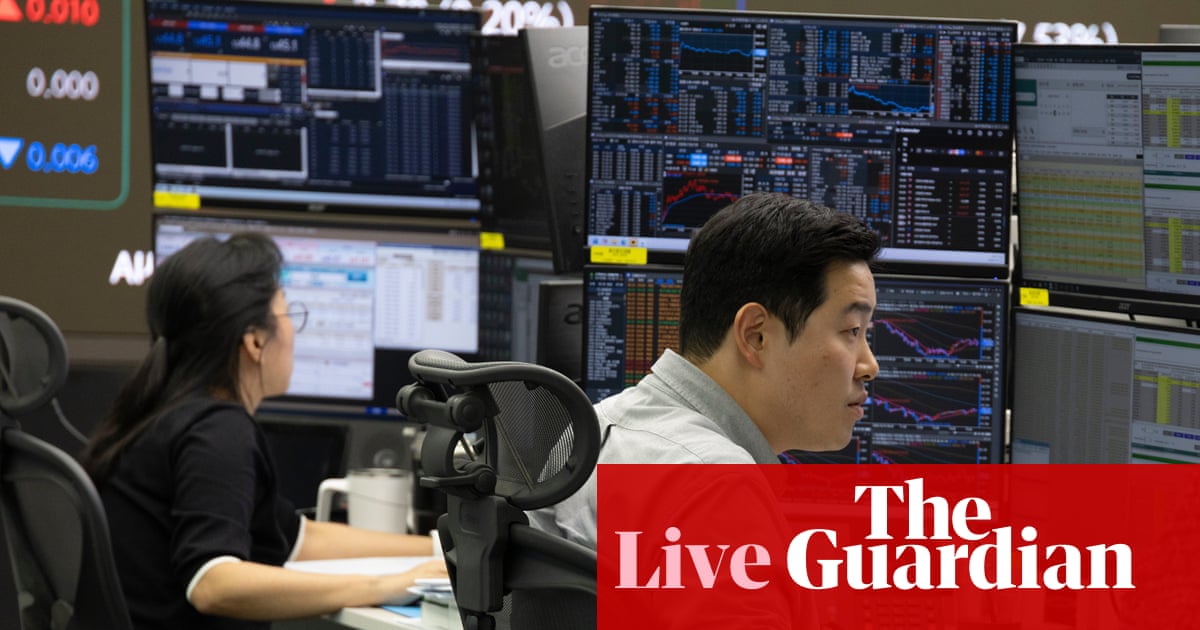
A sharp decline in AI and chip stocks, driven by US inflation concerns and doubts about AI spending, is causing widespread market jitters, particularly impacting South Korea's KOSPI. Concurrently, the UK economy demonstrated surprising strength, with August GDP figures surpassing expectations, potentially influencing future interest rate decisions.
Imagine a big party where everyone was excited about a new video game (AI). But then, some grown-ups said the cost of things is going up (inflation), so they might have to charge more for the game. This made people worried and they started selling their game tickets (stocks) really fast, especially for the companies making the game. Meanwhile, in another country (UK), the party was doing better than expected, which made some people feel a little more hopeful.
Analysis
AI Share Sell-Off
The global technology sector, particularly companies heavily invested in artificial intelligence, is facing a significant downturn. This sell-off appears to be triggered by a confluence of factors, including rising US inflation figures (reported at 3.7%) which increase the likelihood of further interest rate hikes by the Federal Reserve. Investors are becoming increasingly concerned that the anticipated surge in enterprise spending on AI infrastructure may not materialize as strongly as previously projected, leading to a reassessment of valuations for AI-linked stocks. This sentiment has directly impacted major players, with companies like Samsung Electronics and SK Hynix experiencing substantial drops in their share prices, dragging down South Korea's KOSPI index to a six-month low. The ripple effect is evident across Asian markets, with Japan's Nikkei 225 also showing considerable losses.
UK Economic Resilience
In contrast to the global tech slump, the UK economy has presented a picture of unexpected resilience. The latest Gross Domestic Product (GDP) figures for August revealed that the economy continued to grow, defying earlier forecasts of a slight contraction. This positive surprise, attributed in part to growth in manufacturing and computer programming sectors, suggests that the UK economy may be more robust than anticipated. Such data could influence the Bank of England's monetary policy decisions, potentially increasing the likelihood of an interest rate hike in November. Analysts from PwC have indicated that the UK is on track to be the second-fastest-growing G7 economy this year, underscoring a narrative of persistent economic strength despite broader global headwinds.
Market Reactions and Investor Sentiment
The divergent economic signals are creating complex market dynamics. While the tech sell-off is driving a flight to perceived safety, leading to a fall in UK bond yields as investors buy up gilts, the UK's stronger-than-expected growth data could temper some of the broader market pessimism. The fall in bond yields, with 10-year gilt yields dropping by 10 basis points, is partly a consequence of the tech slump, as reduced AI capital expenditure could theoretically decrease the supply of new debt. However, the underlying concern about inflation and potential interest rate hikes in the US continues to cast a shadow over risk assets. Investors are closely watching for further evidence of disinflation and how central banks will navigate the delicate balance between controlling inflation and supporting economic growth.
Key points
- Global tech and AI stocks are experiencing a significant sell-off, leading to market declines.
- South Korea's KOSPI index has fallen to a six-month low due to the chip stock rout.
- US inflation at 3.7% increases the likelihood of further Federal Reserve interest rate hikes.
- The UK economy unexpectedly grew in August, beating forecasts and potentially influencing the Bank of England's policy.
- UK bond yields have fallen amid the semiconductor sell-off and broader market uncertainty.
The UK's unexpected economic growth in August could signal a more robust recovery than anticipated, potentially leading to greater stability and confidence in its markets. If the global tech sell-off is a temporary correction and AI spending eventually meets expectations, it could pave the way for a more balanced market environment with sustainable growth across sectors.
Persistent US inflation could force aggressive interest rate hikes, further dampening global economic activity and exacerbating the tech stock sell-off. The UK's positive August GDP might be a temporary anomaly, with the economy still vulnerable to broader global slowdowns and the impact of higher borrowing costs.