Airbus Tests World's Longest-Range A350 in Record 24-Hour Flight
Airbus has completed a record-breaking test flight with its special A350-1000ULR aircraft, flying nonstop from Melbourne, Australia, to Toulouse, France, in 24 hours and 24 minutes, covering 23,076 kilometres.
Intelligence analysis by Llama
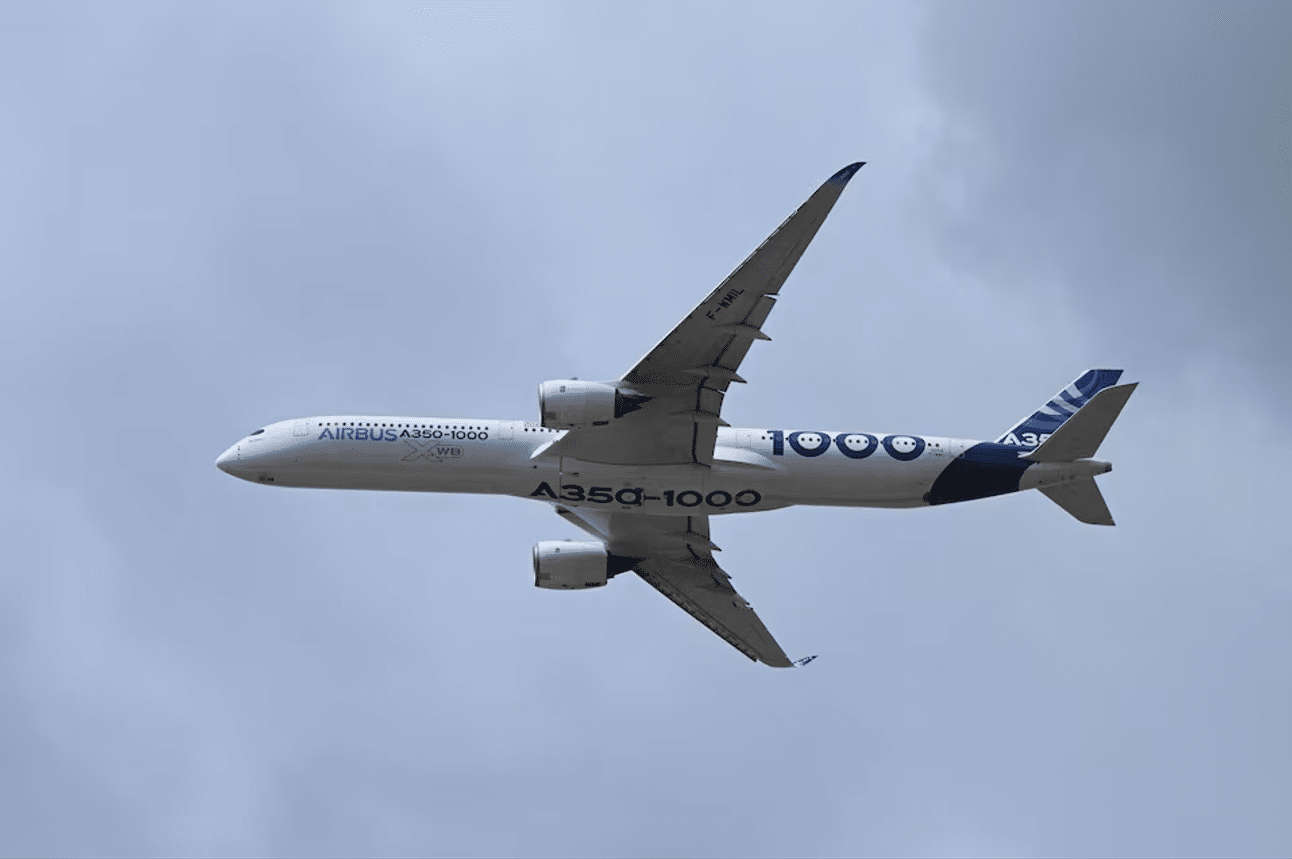
Airbus has successfully tested its A350-1000ULR aircraft on a record-breaking 24-hour flight from Melbourne to Toulouse, covering a distance of 23,076 kilometres. The test proves the plane can handle very long journeys of around 22 hours.
Imagine a plane that can fly from Australia to France without stopping, covering a distance of over 23,000 kilometres. That's what Airbus has just achieved with its special A350-1000ULR aircraft. The plane has a special tank that lets it fly much farther than normal models, and it's designed for Qantas' Project Sunrise, which aims to provide nonstop flights from Sydney to London and later to New York.
Analysis
A Record-Breaking Flight: Airbus Tests the Limits of the A350-1000ULR
Airbus has successfully completed a record-breaking test flight with its special A350-1000ULR aircraft, flying nonstop from Melbourne, Australia, to Toulouse, France, in 24 hours and 24 minutes. This achievement marks a significant milestone in the development of commercial airliners, with the A350-1000ULR covering a distance of 23,076 kilometres, the longest distance ever flown by a commercial airliner.
The test flight was conducted to check the fuel system, cabin quietness, and fresh air flow of the aircraft. The A350-1000ULR is built for Qantas' Project Sunrise, which aims to provide nonstop flights from Sydney to London and later to New York. The successful flight proves that the plane can handle very long journeys of around 22 hours, making it an ideal candidate for these long-haul flights.
The A350-1000ULR has an extra rear fuel tank of about 20,000 litres, which allows it to fly much farther than normal models. During the flight, the jet crossed the Pacific Ocean, parts of North America, the Atlantic Ocean, and Europe, with passengers and crew seeing two sunsets and two sunrises. The test flight was a significant success, and Airbus is now one step closer to making these long-haul flights a reality.
The Road Ahead: Qantas' Plans for Nonstop Flights
Qantas plans to use 12 of these planes for nonstop flights from Sydney to London starting in late 2027, and later to New York. These will be the world's longest regular passenger routes, with the A350-1000ULR providing a comfortable and efficient travel experience for passengers. The successful flight marks a big step toward ending the long travel times between Australia and the northern hemisphere, and Qantas is now one step closer to making this a reality.
The Implications of This Achievement
The successful flight of the A350-1000ULR has significant implications for the aviation industry. It proves that commercial airliners can handle very long journeys, making it possible for airlines to offer nonstop flights to destinations that were previously out of reach. This achievement will also have a positive impact on the economy, with the A350-1000ULR providing a comfortable and efficient travel experience for passengers. The successful flight of the A350-1000ULR is a significant milestone in the development of commercial airliners, and it will have a lasting impact on the aviation industry.
Key points
- Airbus has successfully tested its A350-1000ULR aircraft on a record-breaking 24-hour flight from Melbourne to Toulouse.
- The plane covered a distance of 23,076 kilometres, the longest distance ever flown by a commercial airliner.
- The test flight was conducted to check the fuel system, cabin quietness, and fresh air flow of the aircraft.
- Qantas plans to use 12 of these planes for nonstop flights from Sydney to London starting in late 2027, and later to New York.
If this development plays out positively, it could lead to the introduction of nonstop flights from Sydney to London and New York, making travel between Australia and the northern hemisphere faster and more efficient. This could also lead to an increase in tourism and trade between the two regions, boosting the economy.
However, there are also potential risks associated with this development, such as increased competition for airlines and potential disruptions to the global supply chain. Additionally, the high cost of operating these long-haul flights could make them unaffordable for many passengers.