Aircraft Crashes Into World's 10th Tallest Building in Beijing
A small aircraft crashed into Beijing's CITIC Tower, damaging parts of its glass facade and prompting a major emergency response. Authorities evacuated the building and sealed off surrounding roads.
Intelligence analysis by Llama 3.3 70B
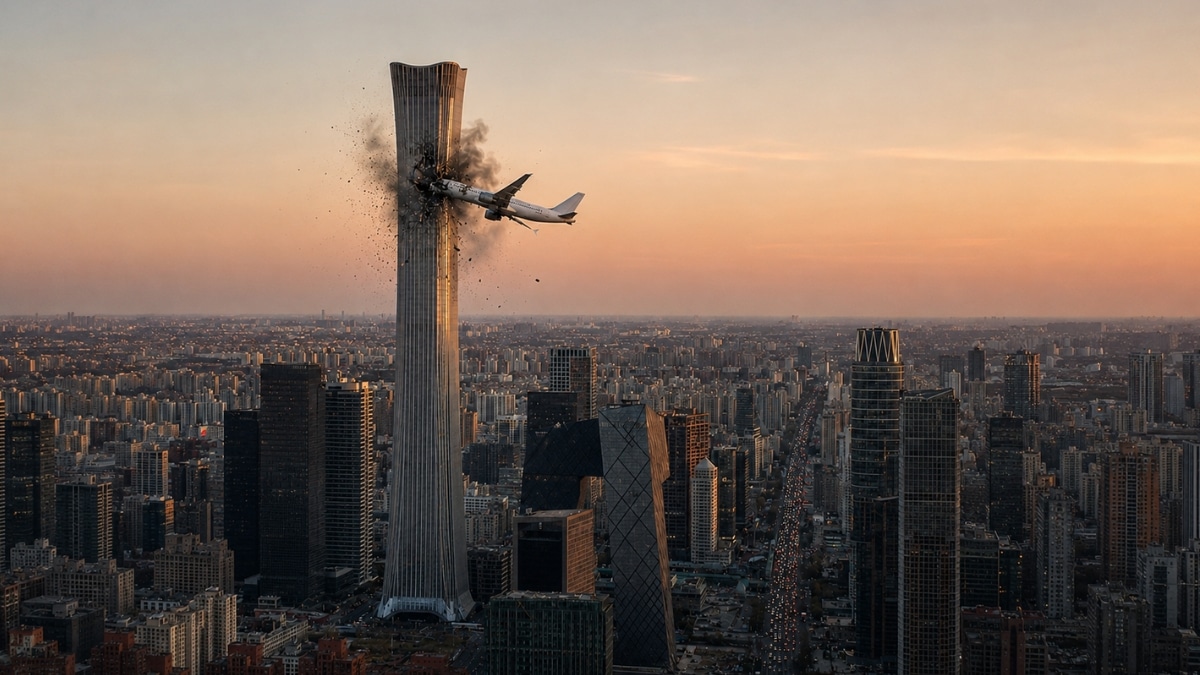
The incident occurred on Friday, with witnesses reporting a loud explosion before seeing debris fall from the tower. The cause of the crash and any casualties have not been confirmed.
A small plane crashed into a very tall building in Beijing, causing damage and prompting a big emergency response. It's like a car crashing into a house, but much bigger and more serious.
Analysis
Introduction to the Incident
The crash of a small aircraft into Beijing's CITIC Tower, the world's 10th tallest building, has sent shockwaves through the global community. The incident, which occurred on Friday, has prompted a major emergency response, with authorities quickly evacuating the building and sealing off surrounding roads.
The details of the crash are still emerging, but witnesses reported hearing a loud explosion before seeing debris fall from the tower. The cause of the crash and any casualties have not been confirmed, with officials expected to provide further updates as more information becomes available.
Implications for Aviation Safety
The incident raises significant concerns about aviation safety, particularly in major cities where tall buildings and dense populations pose a significant risk in the event of an aircraft crash. The fact that a small aircraft was able to crash into a major skyscraper without being detected or intercepted by air traffic control or security systems is a worrying indication of the vulnerabilities in current safety protocols.
The investigation into the crash will likely focus on the circumstances leading up to the incident, including the type of aircraft involved, the pilot's experience and training, and any potential mechanical or technical issues with the plane. It will also examine the response of air traffic control and emergency services, including the speed and effectiveness of the evacuation and rescue efforts.
Global Response and Cooperation
The incident highlights the need for international cooperation and information sharing to prevent and respond to such incidents. The global community must work together to develop and implement more effective safety protocols, including enhanced air traffic control systems, improved surveillance and monitoring, and more robust emergency response plans.
The incident also underscores the importance of cooperation between governments, aviation authorities, and emergency services to share intelligence and best practices in preventing and responding to aircraft crashes. By working together, the global community can reduce the risk of such incidents and minimize the impact on people and property.
Future Directions and Recommendations
In the aftermath of the incident, it is essential to conduct a thorough and transparent investigation to determine the cause of the crash and identify areas for improvement. The findings of the investigation should be used to inform the development of new safety protocols and procedures, including enhanced training for pilots and air traffic controllers, improved surveillance and monitoring systems, and more effective emergency response plans.
The incident should also serve as a catalyst for renewed international cooperation and information sharing on aviation safety. By working together and sharing best practices, the global community can reduce the risk of aircraft crashes and minimize the impact on people and property.
Key points
- A small aircraft crashed into Beijing's CITIC Tower
- The incident prompted a major emergency response
- The cause of the crash and any casualties have not been confirmed
The incident may lead to significant improvements in aviation safety protocols and emergency response procedures, reducing the risk of similar incidents in the future. It may also prompt increased international cooperation and information sharing on aviation safety, leading to a safer and more secure global aviation system.
The incident may have significant consequences for the people and businesses affected, including injuries, fatalities, and damage to property. It may also lead to increased security measures and restrictions on air travel, potentially disrupting global trade and commerce.