Akbar Abdi, Prominent Iranian Actor, Dies at 66
Akbar Abdi, one of Iran's most celebrated film and television actors, has died at 66 after a prolonged illness, prompting tributes from President Pezeshkian and Foreign Minister Araghchi.
Intelligence analysis by Llama
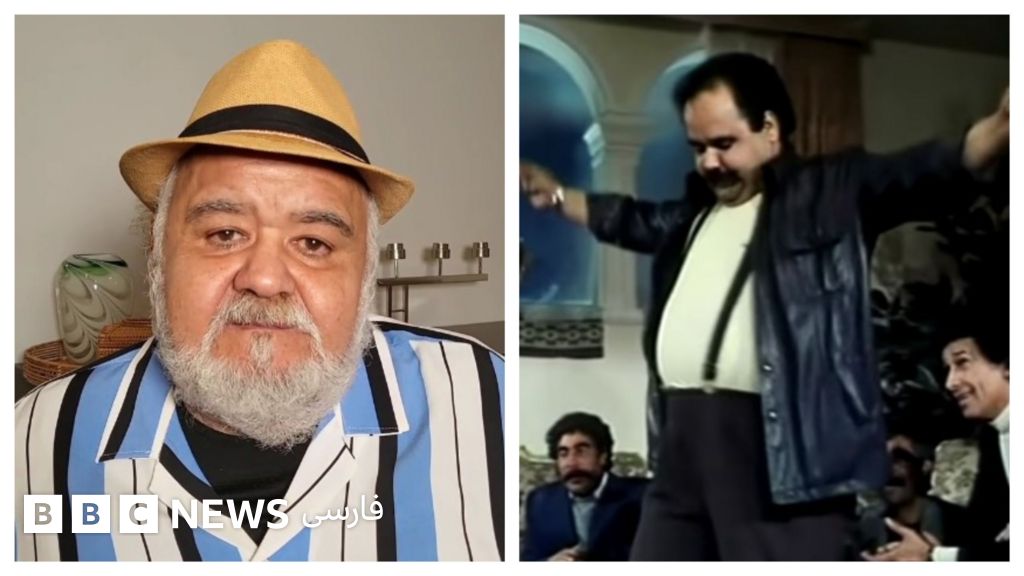
Iranian cinema and television lost one of its most beloved figures as Akbar Abdi died at 66. The two-time Crystal Simorgh winner was known for comedies and drama across four decades, with officials and peers mourning his passing.
A very famous actor in Iran named Akbar Abdi, who made people laugh and cry in movies and TV shows for more than 40 years, has passed away at age 66. The country's president and other leaders sent kind messages about him, and many fans are sad because he was like a familiar face in their living rooms.
Analysis
A Career Spanning Four Decades of Iranian Screens
Akbar Abdi's career began in 1980 with the tele-theater "Squirrels" and the television series "Mesle-Abad," according to the BBC Persian account. His breakthrough came with the children's series "I'm Late for School," directed by Hossein Afshari, followed by programs like "Mahale Boro va Bia" that made him a household name throughout the 1980s. He went on to appear in landmark productions including Dariush Mehrjui's "The Tenants" (Ejareh-Neshinha), Ali Hatami's "Mother," and Mohsen Makhmalbaf's "Nasser-ed-Din Shah, Actor of Cinema." These works placed him at the heart of both the art-house and popular traditions of post-revolutionary Iranian cinema.
Awards, Bans, and a Rare Public Stance
Abdi won the Crystal Simorgh at the Fajr Film Festival twice: first in 1989 for his role as Gholamreza in Hatami's "Mother," and again in 2011 for Reza Attaran's "Khabam Miyaad," the article reports. He also starred in Davood Mir-Baqeri's "The Snowman," filmed in Turkey and later banned in Iran for years. In 2022, during the nationwide protests following the death of Mahsa Amini in morality-police custody, Abdi released a video message expressing solidarity with the Iranian people, asking God to "pay attention to the people of Iran" and asking how long they would have to sit in mourning. The public remarks were a notable departure from the usual silence of senior cultural figures during such crackdowns.
State Tributes and Funeral Arrangements
Reactions to Abdi's death poured in from the highest levels of the Iranian government. President Masoud Pezeshkian wrote that "the annals of this land's art history will register the name and memory of Master Akbar Abdi among the unforgettable assets and enduring pillars of Iranian culture." Foreign Minister Abbas Araghchi wrote that Abdi had earned "a lofty and eternal place in the history of Iranian cinema and the collective memory of Iranians." The Cinema Museum of Iran announced his passing via Telegram on Saturday evening, citing a long illness. According to the public relations office of the Cinema Organization, his funeral procession will be held Sunday at 9:30 a.m. from Vahdat Hall, and he will be buried in the Artists' Section of a Tehran cemetery.
Key points
- Akbar Abdi, a two-time Crystal Simorgh winner, died at 66 after a long illness, the Cinema Museum of Iran announced.
- He began acting in 1980 and rose to fame with the children's series 'I'm Late for School' in the 1980s.
- President Pezeshkian and Foreign Minister Araghchi issued formal tributes calling him an enduring pillar of Iranian culture.
- In 2022, Abdi publicly expressed solidarity with protesters following Mahsa Amini's death, a rare stance for a senior cultural figure.
- His funeral is scheduled for Sunday morning from Vahdat Hall, with burial in Tehran's Artists' Section.
Abdi's legacy is likely to be formally honored by Iranian cultural institutions, and his filmography offers younger Iranian filmmakers a bridge to the rich tradition of post-revolutionary cinema. Public mourning may also offer a rare moment of national unity around shared cultural memory.
Tributes from senior officials sit awkwardly alongside Abdi's 2022 video message of solidarity with protesters, raising the question of whether state commemoration will gloss over the more politically inconvenient parts of his public life. His passing also leaves a gap in Iranian popular cinema that may not easily be filled.