Alibaba and WuXi AppTec decline in Hong Kong after addition to US blacklist
Alibaba and WuXi AppTec fell in Hong Kong after the US added them to a blacklist over alleged military links.
Intelligence analysis by GPT-5.4 Mini
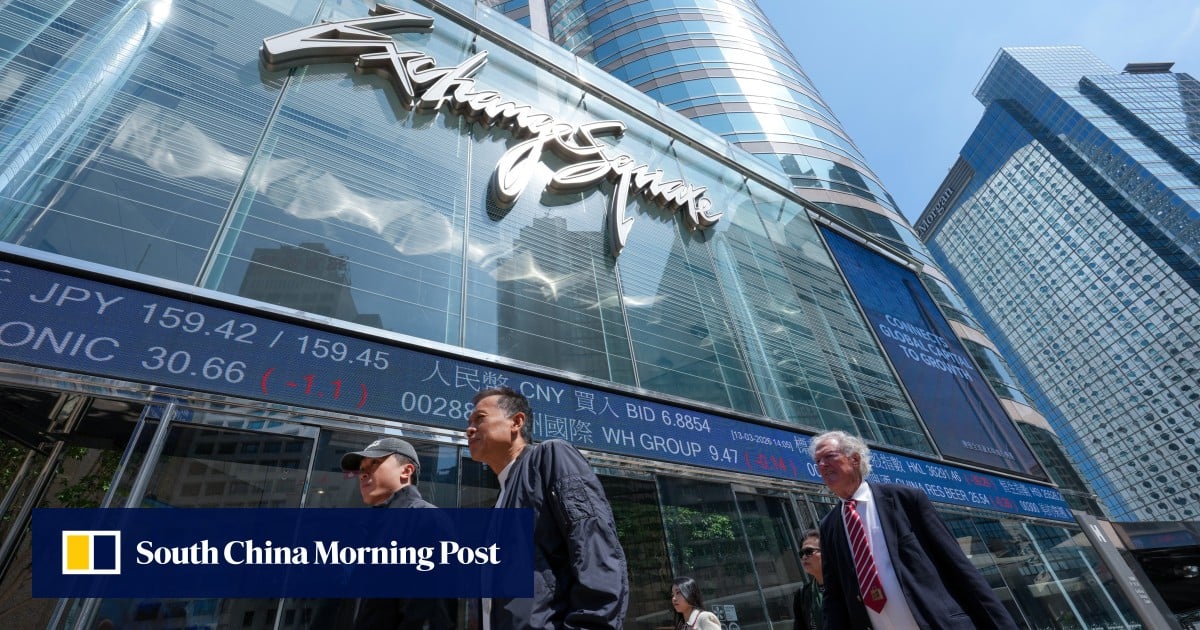
The US designation rattled Chinese stocks already facing nerves over Federal Reserve policy, geopolitics and a fading AI trade. Alibaba and WuXi AppTec fell, while some other blacklisted names rose.
The US put some big Chinese companies on a warning list, and their share prices dropped. It is like a school putting names on a hall monitor list: it does not punish them right away, but it can still make life harder and scare others nearby.
Analysis
What happened
Alibaba Group Holding and WuXi AppTec fell in Hong Kong on Tuesday after the US placed them and several other Chinese companies on a blacklist over alleged military links. Alibaba slipped 0.3 per cent to HK$118.50, while WuXi AppTec fell 5.5 per cent to HK$114.60. Shanghai-listed WuXi shares also dropped 7.1 per cent.
Market reaction
The move did not hit every company on the list in the same way. Nio and Baidu, which were also named, rose after trading began. Even so, the Hang Seng Index slipped 0.2 per cent, showing the broader mood was cautious.
Why investors care
The article says the surprise designation added to investor unease at a time when markets were already worried about a possible US Federal Reserve rate increase and an unwinding of the AI trade. It also came against a tense geopolitical backdrop, including the US-Israel war with Iran.
The Pentagon said the companies met the criteria for designation based on alleged ties to Chinese state entities, military-civil fusion programmes, the People’s Liberation Army or government industrial initiatives. The article notes that this list reaches deep into China’s strategic sectors, from EVs and AI to batteries, biotech and solar.
Practical effect
The designation does not automatically impose sanctions, but it can still matter. According to the article, it may make it harder for the companies to raise money in public markets or win US government contracts. That makes the blacklist more than a symbolic signal: it can affect financing, expansion plans and investor confidence across related Chinese tech and industrial names.
Key points
- Alibaba and WuXi AppTec fell in Hong Kong after the US added them to a blacklist over alleged military links.
- WuXi AppTec fell more sharply than Alibaba, and its Shanghai-listed shares also dropped.
- The article links the selloff to wider investor nerves about Fed tightening, geopolitics and an AI trade unwind.
- The Pentagon said the designation covered alleged ties to state entities, military-civil fusion programmes and the PLA.
- The blacklist does not automatically impose sanctions, but it can make fundraising and US contracting harder.
If the designation remains limited to investor sentiment rather than wider sanctions, the companies may avoid the most severe operational damage. Some names on the list, as the article notes, even rose after trading began, suggesting the market impact may stay uneven.
If investors treat the blacklist as a sign of deeper US-China conflict, funding conditions could tighten further for the affected companies and their peers. The article also suggests the move could complicate access to stock-market financing and US government contracts, which would be a real drag on growth.