Alibaba expects second-generation T-Head chip to tape out and enter production this year
Alibaba's CEO Eddie Wu announced that the company's second-generation T-Head chip is slated for tape-out and production in the latter half of this year, promising enhanced computing performance and interconnect bandwidth.
Intelligence analysis by Gemini 2.5 Flash
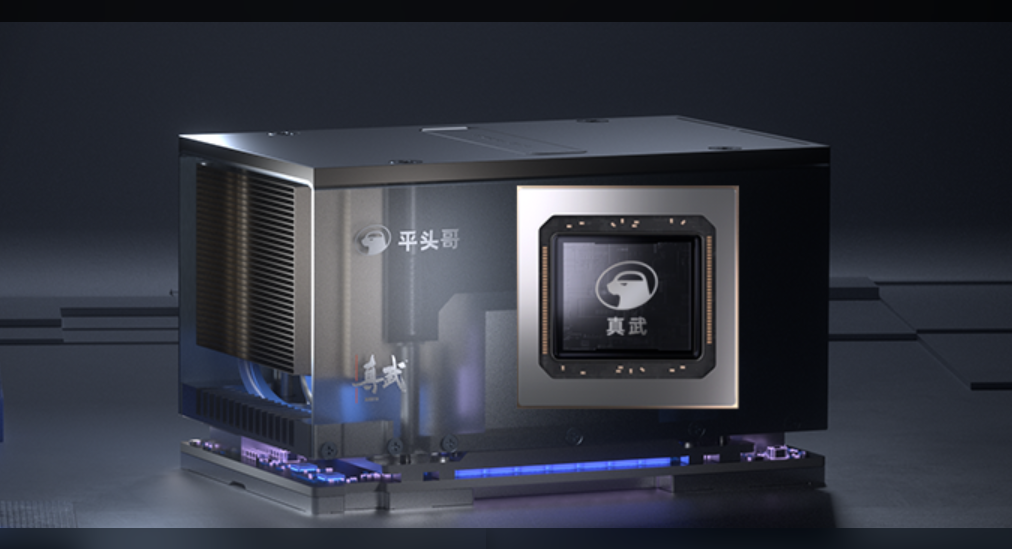
Alibaba is advancing its custom chip development with a new T-Head chip designed to significantly boost AI capabilities, particularly for large-model training workloads. This strategic move underscores the company's commitment to strengthening its cloud infrastructure and expanding its hardware portfolio, building upon the established success of its Zhenwu M890 chip line.
Imagine a super-smart brain for computers, like the one in a robot that learns new things. Alibaba is building an even faster, more powerful version of this brain, called a T-Head chip. It's like upgrading from a regular bike to a super-fast electric one, so it can learn really big, complicated lessons much quicker. They expect to start making these new brains this year, which will help their cloud computers become even smarter for everyone who uses them.
Analysis
Alibaba is making significant strides in its semiconductor development, with its second-generation T-Head chip poised to enter production. This initiative highlights the company's strategic focus on enhancing its core technological capabilities, particularly in the burgeoning field of artificial intelligence. The new chip is designed to offer substantial improvements in computing performance and interconnect bandwidth, critical factors for handling the intensive demands of modern AI workloads.
Second-Generation T-Head
Alibaba CEO Eddie Wu confirmed on August 20 that the company's second-generation T-Head chip is expected to begin its tape-out and production phase in the second half of the current year. This timeline suggests a rapid progression from design to manufacturing, indicating Alibaba's agility in hardware development. The company explicitly stated that this new chip is engineered to support large-model training workloads, a key area for advancements in AI, including large language models and complex neural networks.
This focus on large-model training underscores Alibaba's ambition to provide cutting-edge infrastructure for its cloud services. By developing specialized hardware, Alibaba aims to optimize the performance and cost-efficiency of its AI offerings, potentially giving it a competitive edge in the global cloud computing market. The successful deployment of such a chip could significantly reduce the computational bottlenecks often associated with training massive AI models.
Zhenwu M890
The announcement also referenced the existing success of Alibaba's T-Head unit, particularly with its Zhenwu M890 chip. A supernode built around the Zhenwu M890 chip has already entered scaled sales, demonstrating the commercial viability and market acceptance of Alibaba's proprietary hardware. This prior success provides a strong foundation and validates the company's approach to in-house chip development.
The Zhenwu product line has garnered considerable traction, serving more than 650 customers by early August. This broad customer base indicates a robust demand for Alibaba's specialized chips, suggesting that the company's hardware solutions are meeting critical industry needs. The experience gained from the Zhenwu M890's deployment will likely inform and benefit the development and rollout of the second-generation T-Head chip.
Full-Stack Portfolio
Alibaba's T-Head unit is not merely focused on a single chip but has developed a comprehensive, full-stack chip portfolio. This portfolio encompasses a range of essential components, including GPUs (Graphics Processing Units), CPUs (Central Processing Units), and networking chips. This holistic approach allows Alibaba to design integrated solutions that are optimized for its specific cloud and AI ecosystems.
By controlling the design and production of these diverse chip types, Alibaba can ensure seamless integration and superior performance across its hardware and software stack. This vertical integration strategy is common among leading tech giants seeking to maximize efficiency and innovation. The development of a full-stack chip portfolio positions Alibaba as a formidable player in the semiconductor industry, capable of delivering end-to-end solutions for advanced computing needs.
Key points
- Alibaba's second-generation T-Head chip is expected to begin tape-out and production in the second half of this year.
- The new chip is designed to offer stronger computing performance and interconnect bandwidth.
- It is specifically intended to support large-model training workloads for AI applications.
- Alibaba Cloud's supernode, built around the existing Zhenwu M890 chip, has already entered scaled sales.
- The T-Head unit has developed a full-stack chip portfolio including GPUs, CPUs, and networking chips, serving over 650 customers.
The successful production and deployment of Alibaba's second-generation T-Head chip could significantly enhance the efficiency and performance of large-model AI training, bolstering Alibaba Cloud's competitiveness. This could lead to more advanced AI services and solutions being available to a wider customer base, driving innovation across various industries.
Potential challenges include production delays or unexpected technical hurdles in the tape-out process, which could push back the chip's availability. Intense competition in the AI chip market from established players and other tech giants might also limit the market penetration or unique advantages of Alibaba's new offering.
Market signals
- BABA Alibaba's investment in advanced AI chips is expected to enhance its cloud computing offerings and competitiveness in large-model training.
AI-generated analysis of potential market relevance. Not financial advice.