Almost 140 arrested at protest against Palestine Action ban outside US embassy in London
Nearly 140 people were arrested at a protest outside the US embassy in London against the ban on Palestine Action. Demonstrators gathered to oppose the proscription, which makes supporting the group a criminal offense.
Intelligence analysis by Gemini 2.5 Flash Lite
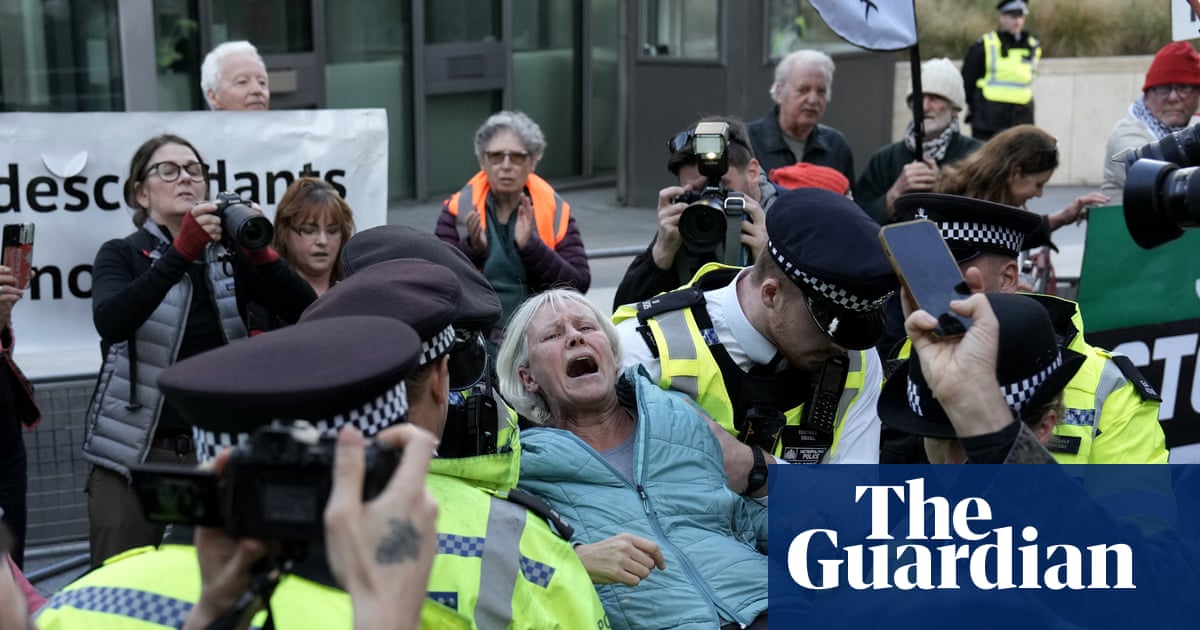
Hundreds gathered in London to protest the proscription of Palestine Action, leading to 139 arrests. Organizers argue the ban is an overreach to appease US interests, while police state participants were "meeting to purposefully commit a crime."
Imagine a group called Palestine Action is now considered a "bad group" by the government. People who support this "bad group" are being arrested, even if they are just protesting peacefully. This happened outside the US embassy, and many people were taken by the police because the government says supporting the group is against the law.
Analysis
Palestine Action Ban
The recent proscription of Palestine Action as a terrorist group in the UK has ignited significant public dissent, culminating in the largest demonstration under Andy Burnham's premiership. The Metropolitan police's robust operation outside the US embassy in London resulted in 139 arrests, with Commander Adam Slonecki stating that participants were "meeting to purposefully commit a crime" by supporting a banned organization. This action underscores the government's commitment to enforcing the ban, which has led to over 4,000 arrests since its inception, representing a substantial portion of terror-related arrests since July.
Defend Our Juries
The group "Defend Our Juries," which organized the protest, vehemently criticized the police response, labeling it an "overzealous" attempt to "appease American interests" and protect Israel from "war crimes." They estimate around 400 people participated in the demonstration, asserting that the authorities are criminalizing individuals who are attempting to prevent what they perceive as genocide. The group's spokesperson highlighted the perceived complicity of the US in the ongoing conflict, suggesting that Israel's actions would not be possible without American approval.
Legal and Political Challenges
The protest and arrests occur in the lead-up to a crucial appeal at the UK supreme court on November 4th, challenging Palestine Action's designation as a terror group. This legal battle is paralleled by political pressure on the government to rescind the ban, though Home Secretary Shabana Mahmood has maintained her stance in favor of the proscription. The controversy has also drawn in public figures, including the wife of the prime minister's national security adviser, who faced accusations of supporting the group, and highlighted instances where activists have confronted politicians over the issue.
Key points
- Nearly 140 people were arrested at a protest outside the US embassy in London against the proscription of Palestine Action.
- Police stated that participants were "meeting to purposefully commit a crime" by supporting a banned organization.
- The group "Defend Our Juries" organized the protest, criticizing the police response as an attempt to appease US interests.
- An appeal against Palestine Action's designation as a terror group is scheduled for the UK supreme court on November 4th.
- Over 4,000 arrests have been made for supporting Palestine Action since the ban took effect.
The ongoing legal challenges and public demonstrations could lead to a re-evaluation of the proscription, potentially restoring the right to support Palestine Action. A favorable supreme court ruling or a shift in government policy might de-escalate tensions and allow for open discourse on the group's activities and the broader geopolitical issues.
Continued arrests and the government's firm stance could further suppress dissent and criminalize activism related to the Israeli-Palestinian conflict. The ongoing legal battles may prove costly and unsuccessful, solidifying the ban and potentially leading to broader restrictions on freedom of association and speech.