Analysis-Turkey targets more defence sales as West rearms, alliances shift
Turkey is pushing to expand defence exports as Europe rearms and NATO alliances shift, while political barriers still limit access to some Western markets.
Intelligence analysis by GPT-5.4 Mini
Two decades of state-backed investment have made Turkey a major drone and weapons exporter. Reuters says Ankara now wants deeper sales and co-production with Europe and the U.S. as NATO rethinks security, but EU resistance and politics still constrain it.
Turkey has become good at making weapons and drones, like a shop that used to borrow tools but now sells its own. As Europe wants to protect itself faster, Turkey hopes more countries will buy from it or build things with it.
Analysis
Export push
Reuters says Turkey has turned from a country that once depended heavily on foreign arms suppliers into a major exporter of drones and other military equipment. Its defence exports have more than tripled since 2021 to $10 billion last year, and sales to Europe and the U.S. rose sharply over the same period. The article says Turkey now sells military gear to nearly 40 countries, with buyers drawn to lower costs, faster delivery, and systems that can be adapted more easily than some Western alternatives.
Why the timing matters
The article links Turkey’s ambitions to a broader shift in Western security thinking after Russia’s invasion of Ukraine. European governments are rethinking their dependence on the U.S. and looking for more industrial capacity of their own, which creates an opening for Turkish companies. Ankara hopes the NATO summit it will host in July will help it expand sales and joint production, especially in Europe, where Turkish firms still face barriers tied to EU-only initiatives and political disputes.
What Turkey wants next
Turkey’s defence agency wants exports to double in two years. The country also sees strategic value in deals that could help close its own gaps, including air defences and engine technology. The article says Turkish firms have already won supply deals in countries such as Poland, Spain, Portugal and Romania, and Baykar has moved further into Europe through its purchase of Italy’s Piaggio Aerospace and a partnership with Leonardo.
Risks
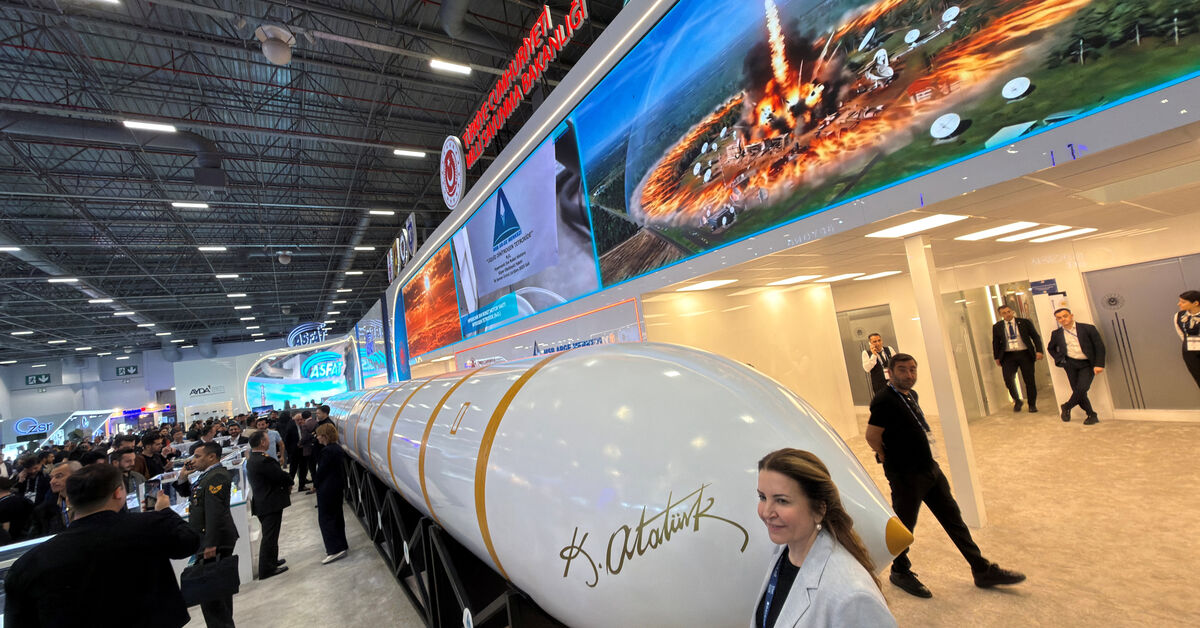
The expansion is not without risk. Turkey’s recent unveiling of a prototype intercontinental ballistic missile drew criticism from experts over both feasibility and messaging. More broadly, the article suggests the country’s growth will depend not just on stronger demand, but on whether political resistance in Europe softens enough for deeper industrial cooperation to take hold.
Key points
- Turkey’s defence exports have more than tripled since 2021, reaching $10 billion last year.
- Europe and the U.S. bought more Turkish defence goods as Western countries reassess security and rearm.
- Ankara wants to double defence exports in two years and use them to support revenue and technology gains.
- Turkish firms still face EU barriers and political resistance, despite some deals in Poland, Spain, Portugal and Romania.
- The article says Turkey’s defence growth now depends as much on diplomacy as on industrial capacity.
If political barriers ease, Turkish defence firms could win more European deals and joint production contracts. That would bring in more money, strengthen the domestic industry, and give NATO partners another supplier when fast delivery matters.
The biggest risk is that politics keeps limiting access to key Western markets, even as demand grows. The article also shows reputational risk: flashy missile messaging and regional disputes could make some governments more cautious about working with Turkey.