Anthony Fauci refuses to answer questions during US Senate hearing about Covid origins
Former top US health official Anthony Fauci refused to answer questions at a US Senate hearing about the origins of the Covid-19 pandemic, saying he feared Republican lawmakers would try to use his testimony to prosecute him for perjury.
Intelligence analysis by Llama
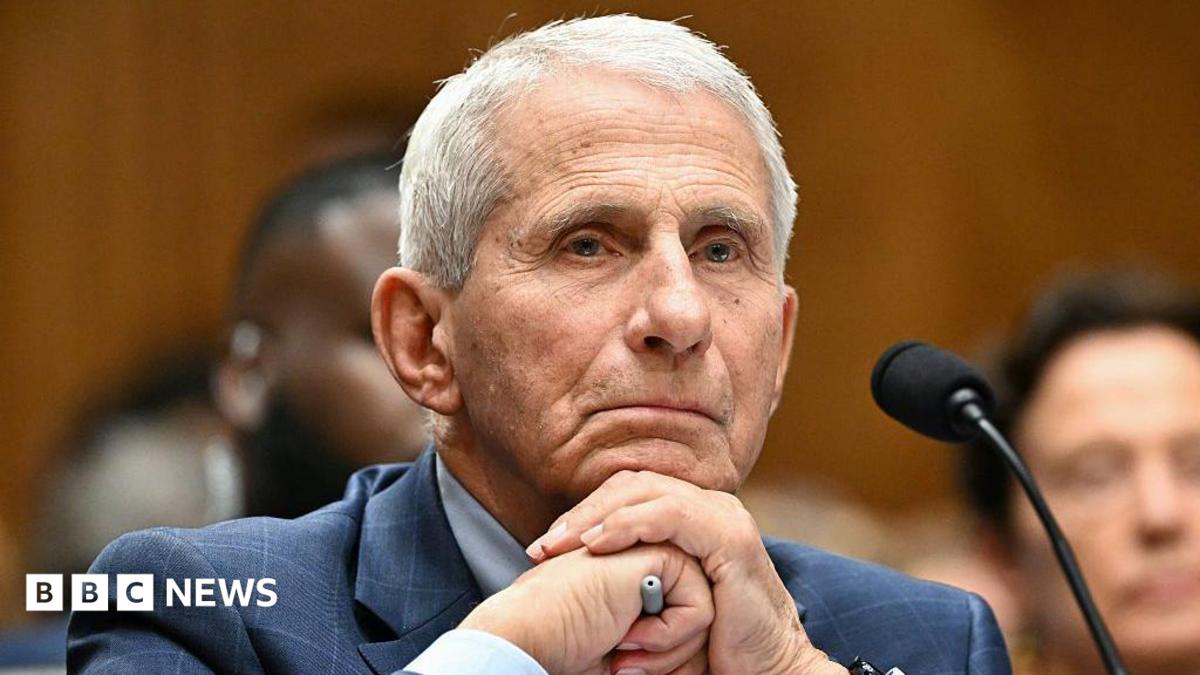
Anthony Fauci invoked the Fifth Amendment to avoid answering questions about the origins of Covid-19 at a US Senate hearing, citing fear of prosecution by Republican lawmakers.
Anthony Fauci, a former top US health official, refused to answer questions at a Senate hearing about the origins of Covid-19. He said he was afraid of being prosecuted by Republican lawmakers. This is a big deal because it's a fight about who is right about where Covid-19 came from.
Analysis
A Showdown in the Senate
The US Senate hearing on the origins of Covid-19 has taken a dramatic turn, with former top health official Anthony Fauci refusing to answer questions. Fauci, 85, invoked the Fifth Amendment, citing fear of prosecution by Republican lawmakers. This move has sparked a heated debate, with some accusing Fauci of having 'contempt for this body' of Congress.
The hearing was called by Senator Rand Paul, who has been a vocal critic of Fauci's handling of the pandemic. Paul released over 1,000 pages of Fauci's pandemic-era diary, which he claims shows Fauci's private views on the origins of Covid-19 contradict his public statements. Fauci has denied this, saying he has always been open about the possibility of a lab leak.
The controversy surrounding Fauci's testimony is not new. He has faced death threats and vociferous criticism from Republicans over mask mandates and other Covid restrictions. Fauci became the face of the US response to the pandemic, frequently briefing the public on the latest developments. However, his relationship with former President Donald Trump was strained, with Trump suggesting unproven treatments for the virus.
The hearing has also raised questions about the role of the US Health Secretary, Robert F Kennedy Jr, in the current administration. Kennedy has been a critic of Fauci and has called for his prosecution. The hearing is set to continue next week, with Senator Ron Johnson planning to push for a subpoena to require Fauci to answer lawmakers' questions.
The implications of this hearing are far-reaching, with some seeing it as a attempt to discredit Fauci and undermine the US response to the pandemic. Others see it as a necessary step to uncover the truth about the origins of Covid-19. Whatever the outcome, one thing is clear: the controversy surrounding Fauci's testimony will continue to dominate the headlines in the coming days.
Key points
- Anthony Fauci refused to answer questions at a US Senate hearing about the origins of Covid-19.
- Fauci invoked the Fifth Amendment, citing fear of prosecution by Republican lawmakers.
- The hearing was called by Senator Rand Paul, who has been a vocal critic of Fauci's handling of the pandemic.
- Fauci has faced death threats and vociferous criticism from Republicans over mask mandates and other Covid restrictions.
- The hearing has raised questions about the role of the US Health Secretary, Robert F Kennedy Jr, in the current administration.
The hearing may lead to a more transparent and open discussion about the origins of Covid-19, potentially shedding light on the truth and helping to move forward the US response to the pandemic.
The controversy surrounding Fauci's testimony could lead to further polarization and division, potentially undermining the US response to the pandemic and creating more challenges for public health officials.