Anwar says Taiwan part of China & he would also use force to protect M'sia's unity
Malaysian Prime Minister Anwar Ibrahim sparked controversy when he said he believes Taiwan is part of China, and that he would use force to protect territorial unity. His remarks have drawn praise from the Chinese government, and rebuke from Taiwan's.
Intelligence analysis by Llama
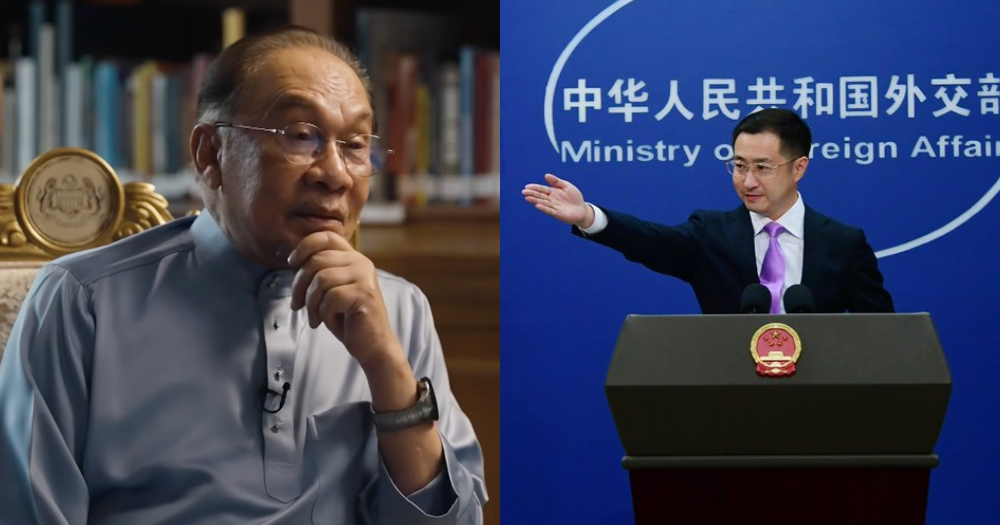
Anwar's comments on Taiwan's status have drawn praise from China and rebuke from Taiwan, highlighting the complexities of the region's politics and the implications for regional peace and stability.
Imagine you're playing a game with your friends, and one of your friends says that another friend is part of their team, even if the other friend doesn't want to be. This is kind of like what happened with Anwar, the Malaysian Prime Minister, and Taiwan. Anwar said that Taiwan is part of China, but Taiwan doesn't agree. This makes things complicated and could affect the relationships between countries in the region.
Analysis
Anwar's One-China Principle Stance
Malaysian Prime Minister Anwar Ibrahim's recent comments on Taiwan's status have sparked controversy and debate. In an interview with Al Jazeera, Anwar stated that he believes Taiwan is part of China, and that he would use force to protect territorial unity. This stance has drawn praise from the Chinese government, with a spokesperson from China's Ministry of Foreign Affairs commending Anwar's remarks on the one-China principle.
However, Taiwan has refuted Anwar's comments, interpreting them as implying that Taiwan is a province seeking to separate from China. Taiwan's Ministry of Foreign Affairs issued a statement to 'strongly condemn and refute' Anwar's remarks, arguing that they threaten regional peace and stability. The ministry also emphasized that Taiwan is a sovereign, independent country that is not subordinate to China, and that Anwar's one-sided support for China could undermine Taiwanese businesses' confidence in investing in Malaysia.
Use of Force and Regional Stability
Anwar's comments on the use of force to protect territorial unity have also raised concerns about regional stability. In the interview, Anwar stated that he would use force to protect the sanctity and unity of the nation, and that he would not condone colonialism. However, Taiwan has interpreted these comments as a threat to regional peace and stability, and has argued that Anwar's stance could lead to a breakdown in relations between Malaysia and Taiwan.
Implications for Regional Politics
Anwar's comments on Taiwan's status have significant implications for regional politics and stability. The one-China principle is a cornerstone of China's foreign policy, and Anwar's endorsement of this principle has been seen as a significant development in the region. However, Taiwan's response to Anwar's comments has highlighted the complexities of the region's relationships and the need for careful diplomacy to maintain regional stability.
Key points
- Anwar said that Taiwan is part of China and that he would use force to protect territorial unity.
- Taiwan has refuted Anwar's comments, interpreting them as a threat to regional peace and stability.
- Anwar's comments have drawn praise from the Chinese government, but have been criticized by Taiwan's Ministry of Foreign Affairs.
If Anwar's comments lead to a more stable relationship between Malaysia and China, it could have positive implications for regional trade and economic cooperation. However, this is uncertain and depends on how the situation develops.
If Anwar's comments lead to a breakdown in relations between Malaysia and Taiwan, it could have negative implications for regional stability and trade. This could also lead to a loss of confidence in Taiwanese businesses investing in Malaysia.