Apple becomes second ever $5tn company as investors flee AI stocks
Apple's market capitalisation briefly touched $5.04tn on Tuesday, making it only the second company ever to breach the $5tn threshold, as investors rotated out of AI and chip stocks.
Intelligence analysis by Llama
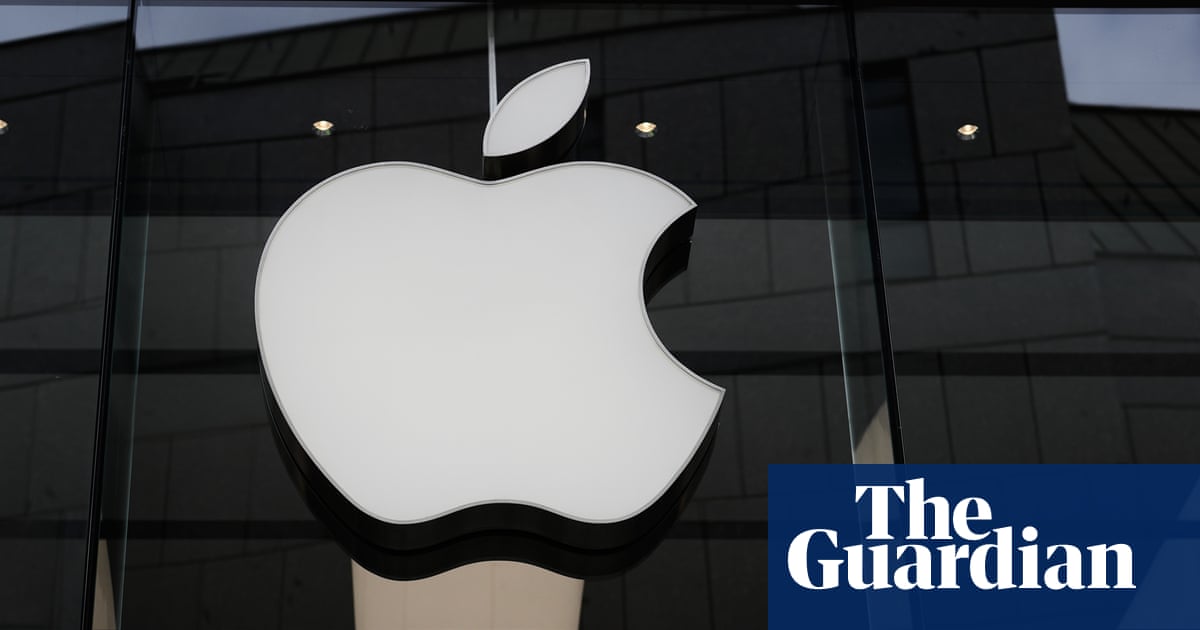
Apple's valuation crossed $5tn for the first time, overtaking Nvidia as the world's most valuable company, while a broader sell-off hit AI and semiconductor stocks amid concerns over datacentre spending and circular funding.
Apple is now worth more than five trillion dollars, only the second company ever to reach that size. While other tech giants spend huge amounts building AI computers, Apple is selling lots of iPhones and letting others handle the AI. So investors moved their money to Apple and away from the AI companies, helping Apple's value climb.
Analysis
Apple's Counter-Cyclical Bet Pays Off
Apple's ascent past the $5tn mark is as much a story about what it has not done as what it has. While peers such as Google have pushed capital expenditure toward $205bn this year and recorded negative free cashflow for the first time in history, Apple has largely sat out the AI infrastructure arms race. Its inability to develop competitive in-house models has forced it to lean on Google's technology for services such as a revamped Siri, and that dependency has inadvertently shielded its margins from the datacentre spending that has spooked investors elsewhere in Big Tech. Strong iPhone demand, reinforced by holding prices steady when MacBooks and iPads were marked up, has further bolstered the rally. According to Forrester's Dipanjan Chatterjee, Apple has "resisted the AI spending race, betting that customer experience – not infrastructure investment – will ultimately determine the winners."
The AI Trade Unwinds
The flip side of Apple's milestone is a bruising session for AI-linked equities. US chipmakers including Intel, AMD, Sandisk, Western Digital and Seagate all shed more than 4%, while the Nasdaq 100 fell as much as 1.8% intraday, putting it more than 10% below its early-June peak — the technical definition of a correction. South Korea's market slid to its lowest level since mid-April, with SK Hynix and Samsung Electronics both down more than 10%. Two worries are driving the rotation: the "circular funding" arrangements through which AI companies finance one another, and a fresh Information report that China has begun mass production of homegrown DUV chip-making tools, raising fears of cheaper Chinese competition.
Reading the Rotation
The pattern is consistent with a late-cycle rotation within the Magnificent Seven: Apple shares have jumped roughly 24% year-to-date, widely outperforming the other six, while the names most exposed to AI capex have lagged or reversed. The Klarna-powered iPhone leasing programme launched on Tuesday — monthly payments starting at $17.99 — extends the strategy of reframing rather than reducing consumer cost, a move Chatterjee called a "clever response" to sticker shock ahead of expected price hikes later this year. With third-quarter earnings due after Thursday's close and analysts forecasting more than 15% revenue growth, the $5tn print looks less like an endpoint than a marker of how dramatically the AI trade has repositioned across a single quarter.
Key points
- Apple briefly touched a $5.04tn market cap on Tuesday, the second company ever to cross $5tn after Nvidia
- Apple overtook Nvidia as the world's most valuable company earlier this month
- Apple's stock is up roughly 24% year-to-date, outperforming the rest of the Magnificent Seven
- US chip stocks fell more than 4% and the Nasdaq 100 entered correction territory, down 10%+ from its early-June high
- Apple's decision to sit out the AI datacentre spending race, held iPhone prices steady, and avoid negative free cashflow has set it apart from peers such as Google
If Apple delivers the more than 15% revenue growth analysts expect in Thursday's report and the AI infrastructure spend by rivals continues to weigh on free cashflow, the valuation gap between Apple and the rest of Big Tech could widen further. The Klarna leasing programme may also lock in a multi-year upgrade cycle by lowering the perceived monthly cost of premium hardware.
The valuation depends on Apple remaining a relative AI outsider; if it eventually has to match hyperscaler capex to keep Siri competitive, the cashflow advantage that justified the premium would erode. The broader tech correction could also drag Apple's multiple lower if Nasdaq sentiment deteriorates further, even if its earnings stay strong.