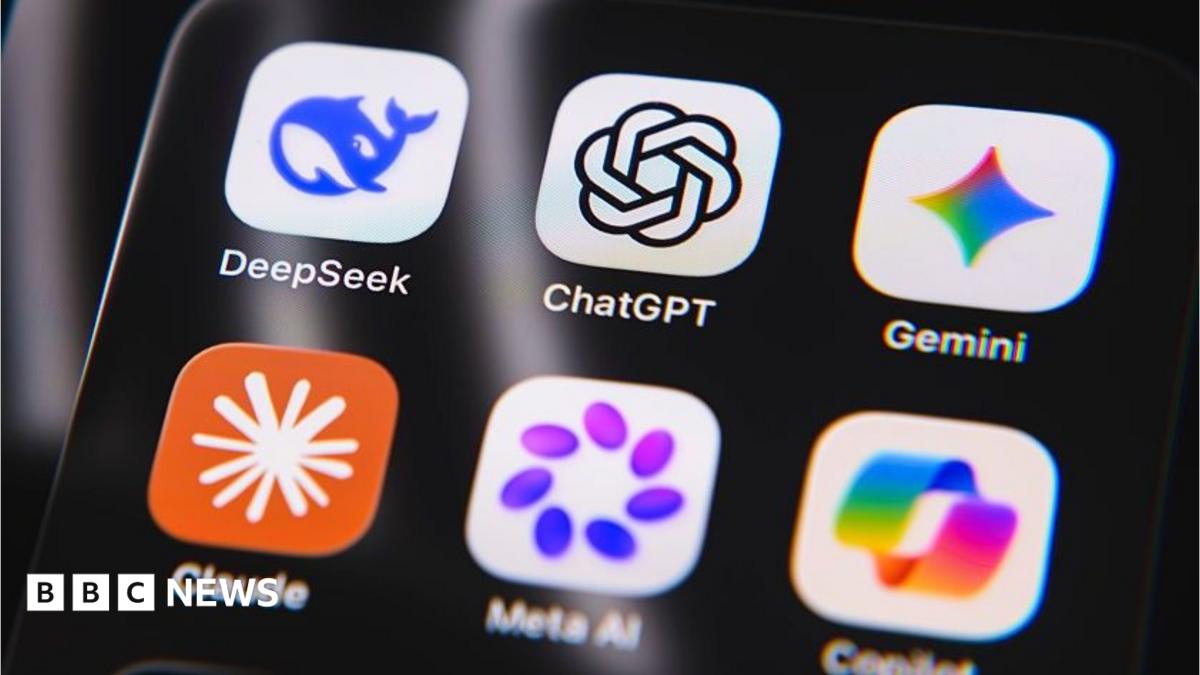
Apple finally fixed Siri. So why does it feel anticlimactic?
Apple has finally delivered a functional AI assistant in Siri, but its arrival feels anticlimactic due to the rapid progress in AI technology. Siri can now understand personal context, tap into broad world knowledge, and surface relevant information.
Intelligence analysis by Llama

Apple's Siri AI has finally arrived, but its launch feels anticlimactic due to the rapid progress in AI technology. The AI assistant can now understand personal context, tap into broad world knowledge, and surface relevant information.
Imagine you have a personal assistant that can understand you and help you with things like finding photos, emails, contacts, texts, or calendar appointments. That's basically what Siri AI is, but it's not as exciting as it used to be because AI technology has advanced so much.
Analysis
A Functional AI Assistant, But Not a Breakthrough
Apple's Siri AI has finally arrived, and it's a functional AI assistant. It can understand personal context, tap into broad world knowledge, and surface relevant information. However, the arrival of Siri AI feels anticlimactic due to the rapid progress in AI technology. AI tools are now coding and building software, AI agents are completing multi-step tasks, and AI is working alongside humans, using computers, reasoning, thinking, remembering, creating media, and more.
The Partnership with Google
Apple's partnership with Google for the use of its Gemini AI models has made it possible to deliver a functional AI assistant. Apple didn't just slap its name on Gemini AI; it used Google's technology to train and refine its own proprietary Apple Foundation Models. The result is AI models designed to run on Apple's own Silicon and on its Private Cloud Compute infrastructure and actually work.
A Bug Fixed Rather Than a Revolution
Despite finally delivering a functional AI assistant, it feels almost like Apple fixed a longstanding bug - a forever-broken Siri - rather than doing something revolutionary. This is how Siri was meant to work all along. The only marvel is that, after so many years of failing to perform tasks correctly, it actually works. The general public who don't run beta builds on their devices will gain access to the new Siri when Apple officially releases iOS 27, expected in September.
Key points
- Apple's Siri AI has finally arrived, but its launch feels anticlimactic due to the rapid progress in AI technology.
- Siri AI can now understand personal context, tap into broad world knowledge, and surface relevant information.
- Apple's partnership with Google for the use of its Gemini AI models has made it possible to deliver a functional AI assistant.
- The general public who don't run beta builds on their devices will gain access to the new Siri when Apple officially releases iOS 27, expected in September.
If Apple continues to innovate and improve Siri AI, it could become a game-changer in the AI industry. With its partnership with Google, Apple has a strong foundation to build upon, and the possibilities are endless.
However, if Apple fails to innovate and improve Siri AI, it could become a relic of the past. The rapid progress in AI technology could make Siri AI seem outdated and obsolete.