Are global stock markets heading for a crash?
Global financial markets are in turmoil due to escalating Middle East conflict, soaring government bond yields, and fears of an AI-fueled stock market bubble.
Intelligence analysis by Gemini 2.5 Flash
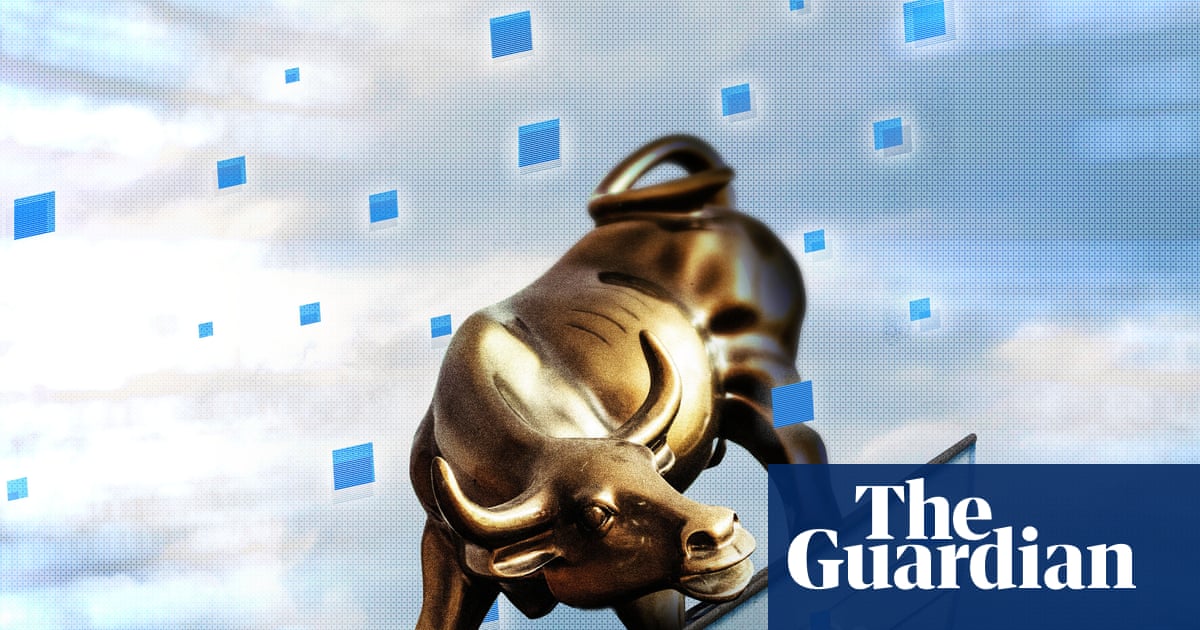
Optimism in financial markets has given way to alarm as the Iran war intensifies, driving oil prices up and government borrowing costs to multi-year highs. Concerns are mounting over an overextended US stock market, particularly in AI-related tech, with historical valuation metrics signaling a potential crash similar to the dotcom bust.
Imagine the world's piggy banks (stock markets) were feeling super happy because of a new toy called AI, making some companies' values shoot up like a rocket. But now, there's a big fight in a faraway land (Iran war) making gas and oil super expensive. This makes everything else cost more, so grown-ups in charge (central banks) have to make it more expensive to borrow money, like raising the price of a loan. This makes people worry that the piggy banks are too full and might burst, especially the ones holding the AI toy companies, just like a balloon that's been blown up too much.
Analysis
The current global economic landscape is characterized by a confluence of destabilizing factors, leading many analysts to warn of an impending financial crisis. Initially buoyed by the promise of the AI revolution, markets are now grappling with the harsh realities of geopolitical instability and unsustainable debt levels. The escalating conflict in the Middle East, specifically the Iran war, has emerged as a primary catalyst, driving up global oil prices significantly and stoking fears of entrenched inflation.
Iran War
The intensification of the Iran war has had immediate and profound effects on global financial markets. The soaring price of Brent crude above $100 a barrel directly contributes to inflationary pressures, impacting energy bills and fuel costs for households and businesses globally. This oil price shock has forced central banks, including the US Federal Reserve, the European Central Bank, and the Bank of Japan, to raise interest rates, defying political pressure in some cases, to curb inflation.
These rate hikes, while intended to cool inflation, simultaneously increase borrowing costs, putting further strain on economies already struggling with a cost of living crisis. The article highlights that such actions could lead to a slowdown in economic activity, potentially increasing job losses and exacerbating the challenges faced by governments burdened with high debt. The ripple effect of this conflict extends beyond energy markets, creating a febrile backdrop for investor sentiment and policy decisions.
AI Revolution
Despite the initial optimism surrounding the AI revolution, concerns are growing that it may have fueled an unsustainable bubble in the US stock market. The article points to the 'magnificent seven' tech stocks, with a combined value exceeding $20tn, as potentially overextended. Analysts like Albert Edwards of Société Générale suggest that the ingredients for a financial crisis are coalescing, partly due to the tinderbox conditions in the US government debt market and the perceived overvaluation of AI-related assets.
Research by Fathom Consulting indicates that for the multitrillion-dollar AI boom to justify current spending, AI-related sales would need to rise by $600-$800bn within two years, a growth rate deemed unlikely. This skepticism, coupled with warnings from tech bosses about 'reckless' AI development, draws parallels to the dotcom crash of 2000, where revolutionary technology still led to significant investor losses due to over-financing infrastructure too early. The consultancy assigns a 30% chance of the AI bubble popping next year, underscoring the fragility of current market valuations.
CAPE Ratio
One critical indicator signaling market overvaluation is the cyclically adjusted price-to-earnings (CAPE) ratio. For the S&P 500 index, this measure has surged to nearly 41 points, more than double its long-term average of about 17 points. This level is approaching the record high of 44.19 points observed in December 1999, just before the dotcom crash, suggesting that the US stock market is unusually highly valued compared to its profits.
This elevated CAPE ratio, combined with rising government bond yields—the US government's borrowing costs are at their highest since 2007—creates a precarious environment. Higher bond yields make equities less attractive by offering a safer alternative for returns, potentially diverting capital away from stocks. The historical correlation between interest rate hikes and subsequent recessions, as calculated by Deutsche Bank's Jim Reid, further amplifies these concerns, with markets often falling before an economic downturn officially begins.
Key points
- Global financial markets are experiencing renewed turmoil due to the Iran war, rising government bond yields, and fears of an AI stock market bubble.
- The US government's borrowing costs have climbed to their highest level since 2007, impacting households, businesses, and other governments.
- Soaring global oil prices above $100 a barrel are stoking inflation and prompting central banks worldwide to raise interest rates.
- The S&P 500's CAPE ratio is at its highest since 2000, signaling potential overvaluation and drawing parallels to the dotcom crash.
- Fathom Consulting estimates a 30% chance of the AI bubble popping next year, as required sales growth for AI technologies appears unlikely.
Despite current market anxieties, the underlying potential for AI to unlock significant productivity gains remains a long-term positive. If AI technologies mature and generate the substantial sales growth required, it could eventually justify current investments and drive future economic expansion.
The confluence of escalating geopolitical conflict, persistent inflation, and aggressive interest rate hikes poses a severe risk of a global recession. Furthermore, the potential bursting of an AI-fueled stock market bubble, reminiscent of the dotcom crash, could lead to widespread investor losses and further destabilize the financial system.