Are interest rates on their way up again?
Central banks in the US and UK are poised to make interest rate decisions next week amid surging energy prices and persistent inflation concerns, driven partly by the Middle East conflict. While a US rate hike is widely anticipated, the Bank of England is expected to hold…
Intelligence analysis by Gemini 2.5 Flash

Global economic anxieties are heightened as central banks grapple with inflation fueled by rising oil and gas prices, particularly from the Middle East conflict. The US Federal Reserve is under pressure to raise rates due to a strong jobs market, while the Bank of England is expected to maintain its current rates, balancing price pressures against a weaker economic environment.
Imagine your parents have a special piggy bank called the "economy." When prices for things like petrol and food go up too fast, it's like the piggy bank is getting too hot. So, the grown-ups in charge, called central banks, try to cool it down by making it a bit more expensive to borrow money, like charging a small fee to take coins from the piggy bank. This makes people spend a little less, hoping prices will stop rising so quickly.
Analysis
The global economic landscape is currently dominated by the intricate dance between persistent inflationary pressures and the monetary policy responses of major central banks. A key driver of this inflation is the volatile energy market, significantly impacted by geopolitical tensions. The article highlights the upcoming interest rate decisions by the US Federal Reserve and the Bank of England, which are poised to set the tone for borrowing costs and economic stability in the coming months. These decisions are not made in a vacuum but are heavily influenced by factors ranging from robust labor markets to international conflicts and their ripple effects on commodity prices.
US Federal Reserve
The US Federal Reserve is scheduled to announce its interest rate decision next week, following five consecutive meetings where rates have been held steady between 3.5% and 3.75%. This period of stability is now under scrutiny, with many on Wall Street anticipating a rate hike. The market's expectation is largely fueled by a strong domestic jobs market, which suggests underlying economic resilience, and comments from President Donald Trump linking oil prices to the ongoing US-Iran conflict, which he expects to persist until after the November elections.
Newly-appointed Fed Chair Kevin Warsh has consistently emphasized the central bank's commitment to slowing price rises, further reinforcing the belief among economists that an increase is imminent. Deutsche Bank economists, for instance, have labeled a rate hike as "the most likely policy outcome," citing Warsh's remarks and those of other Fed members. While some, like Grace Zwemmer of Oxford Economics, foresee rates remaining unchanged, there is a near-universal consensus that a rate cut is currently off the table, despite Trump's public calls for lower rates.
Strait of Hormuz
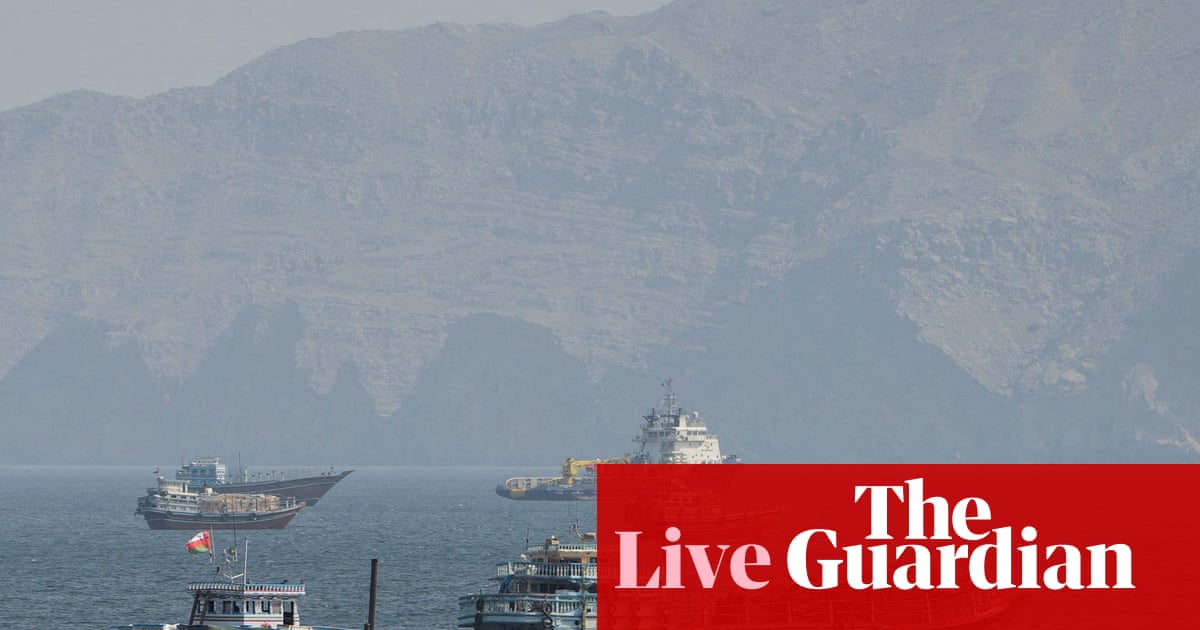
The Middle East conflict, specifically the US-Iran war, has emerged as a critical factor exacerbating global inflation fears, primarily through its impact on energy markets. Shipments through the Strait of Hormuz, a vital waterway for global oil and gas transport, have faced restrictions due to the conflict. This disruption has pushed the price of Brent crude oil to approximately $105 a barrel, nearing levels last observed at the conflict's outset.
The surge in energy prices has a multifaceted effect on the cost of living. Beyond directly increasing expenses for households and businesses through higher fuel and utility bills, elevated oil and gas prices also inflate transportation costs for goods. These additional expenses are frequently passed on to consumers, leading to steeper prices for essential items such as food and other staples, thereby contributing to broader inflationary pressures across the economy. Central banks typically respond to such widespread price rises by increasing interest rates, aiming to cool consumer spending and investment by making borrowing more expensive, and encouraging saving over spending.
UK
In the United Kingdom, the Bank of England is also set to convene next week, facing its own set of inflationary challenges. UK inflation currently stands at 2.9% and is projected to rise further in the coming months, compounded by forecasts of household energy bills reaching a three-year high this winter and gas prices surpassing 200p per therm for the first time since late 2022. Despite these pressures, there is a broad expectation that the Bank of England will maintain its current interest rate of 3.75%.
This anticipated hold is largely attributed to the absence of "second-round effects" of the price shock, such as widespread demands for wage increases or businesses broadly hiking prices, according to Oxford Economics. This situation provides the Bank of England with "some breathing space," as noted by economist Alexander Harvey. Yael Selfin, chief economist at KPMG, further explains that the UK's economic environment is "much weaker" than it was in 2022 when the last significant inflation shock occurred, with consumers already adjusting spending habits due to previous price hikes.
The current labor market in the UK also presents a stark contrast to four years ago, when businesses were aggressively hiring, and vacancies were at record highs, empowering employees to push for significant pay rises in response to inflation. Today, hiring is considerably weaker, reducing the leverage employees have to demand higher wages. This subdued labor market pressure is a key reason why the Bank of England is expected to prioritize the wider economic picture and hold rates steady, rather than tightening monetary policy further.
Key points
- Central banks in the US and UK are preparing for key interest rate decisions next week.
- Surging oil and gas prices, partly due to the Middle East conflict and Strait of Hormuz restrictions, are fueling global inflation fears.
- The US Federal Reserve is widely expected to raise rates, driven by a strong jobs market and comments from Fed Chair Kevin Warsh.
- The Bank of England is anticipated to hold rates steady at 3.75%, as there are no signs of 'second-round effects' like widespread wage rises.
- The UK's current economic and labor market conditions are weaker than in 2022, providing less pressure for aggressive rate hikes.
The Bank of England's expected decision to hold rates, despite inflation, suggests a belief that current price shocks are not leading to broader wage-price spirals, potentially allowing the economy to stabilize without further tightening. If the US Federal Reserve's potential hike effectively tames inflation without significantly harming the strong jobs market, it could lead to a more stable economic environment.
Continued escalation of the Middle East conflict could further restrict oil and gas supplies, driving energy prices and inflation even higher globally. This might force central banks to implement more aggressive rate hikes, risking a significant slowdown in economic growth or even a recession, as businesses and consumers face increased borrowing costs and reduced spending power.