As AI upends humanity, we must focus on what makes us human
The essay argues that AI-driven job anxiety makes the humanities more important, not less, because human distinctiveness matters more as machines take on tasks.
Intelligence analysis by GPT-5.4 Mini
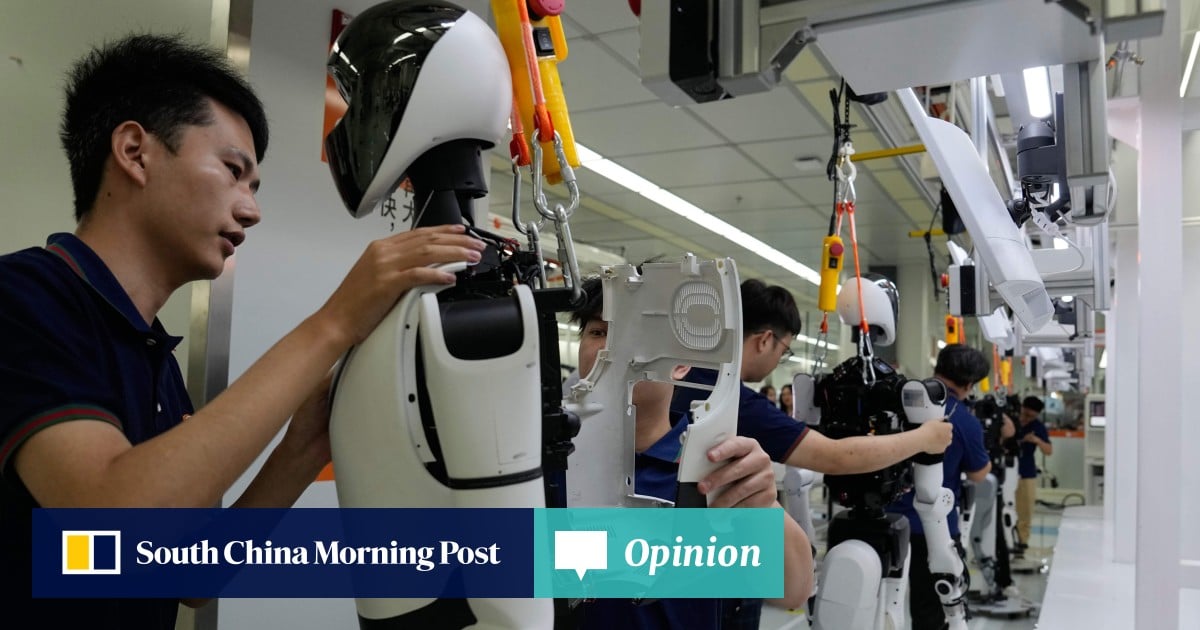
Brian Y. S. Wong says AI is blurring the line between human and machine work, intensifying job anxiety and pushing schools toward STEM. He argues the right response is not narrower technical training, but deeper study of the humanities to understand what remains uniquely human.
AI is starting to do more jobs, so many students worry about finding work. The author says schools should not only teach computer skills, but also books, history, and ideas, because those help people understand what makes humans special, like a compass helps find direction.
Analysis
The core argument
Wong opens with a practical question students increasingly ask: what can they do after graduation? He ties that worry to weak job prospects, citing high youth unemployment on the Chinese mainland and broader competition for jobs. In that setting, AI adds another layer of pressure because it appears to threaten entry-level roles while leaving experienced work more stable.
He points to examples that reinforce public unease: a Stanford paper he says found a relative decline in entry-level employment among AI-exposed occupations in the United States since 2022, boos directed at Eric Schmidt after a commencement speech praising AI, and a Chinese court ruling that firms cannot justify layoffs solely by citing a cheaper AI replacement.
Why he rejects a STEM-only answer
The temptation, he argues, is to respond by narrowing education toward STEM, machine learning, and technical literacy. Wong says that would be a mistake. As AI becomes embedded in areas ranging from military decisions to financial analysis, the boundary between what humans do and what machines do is harder to see. That makes it more important to ask what human beings are for, rather than only how to compete with machines.
The humanities as preparation
His answer is the humanities: classics, history, languages, literature, sociology, anthropology, and philosophy. The article does not claim these subjects teach direct AI replacement skills. Instead, it argues they help people understand human judgment, identity, meaning, and social life, which become more important when machines can imitate many tasks.
The article is a broad opinion piece rather than a policy blueprint. Its central claim is simple: in an AI-saturated world, education should not just train students to operate machines; it should also help them understand what makes people different from machines.
Key points
- The author says AI is worsening anxiety about jobs, especially for new graduates.
- He cites signs of pressure on entry-level employment and public backlash to pro-AI messaging.
- He argues that a STEM-only education response is too narrow.
- The humanities are presented as essential for understanding what remains uniquely human.
- The piece frames AI as both a labor issue and a cultural one.
If this view gains traction, schools may produce graduates who are both technically capable and better at judgment, communication, and ethical reasoning. That could help people adapt as AI spreads into more kinds of work and decision-making.
If institutions overcorrect toward technical training alone, students may be left with narrower skills and less preparation for questions AI cannot answer well. The article also suggests that anxiety over replacement could keep growing if employers continue to treat AI as a substitute for entry-level workers.