As US and China compete over AI, middle powers can craft a third path
The global AI race is splitting into three tracks: US-led Pax Silica controlling frontier tech exports, China-led WAICO institutionalizing affordable open-weight models, and a still-fragmented middle-power route.
Intelligence analysis by Llama
An opinion piece argues the AI contest now has three structural tracks rather than two. The US organizes frontier technology via Pax Silica export packages and trusted-partner cloud networks. China institutionalizes its strategy through the newly established WAICO in Shanghai. Middle powers can shape norms between these poles but face lock-in risks from either bloc.
Two big countries, the US and China, are racing to build AI and trying to get other countries to use theirs. Countries that aren't super big have a choice and don't have to just pick one side. They can team up to make their own AI rules so they don't get stuck depending on either giant.
Analysis
Three Tracks, Not Two
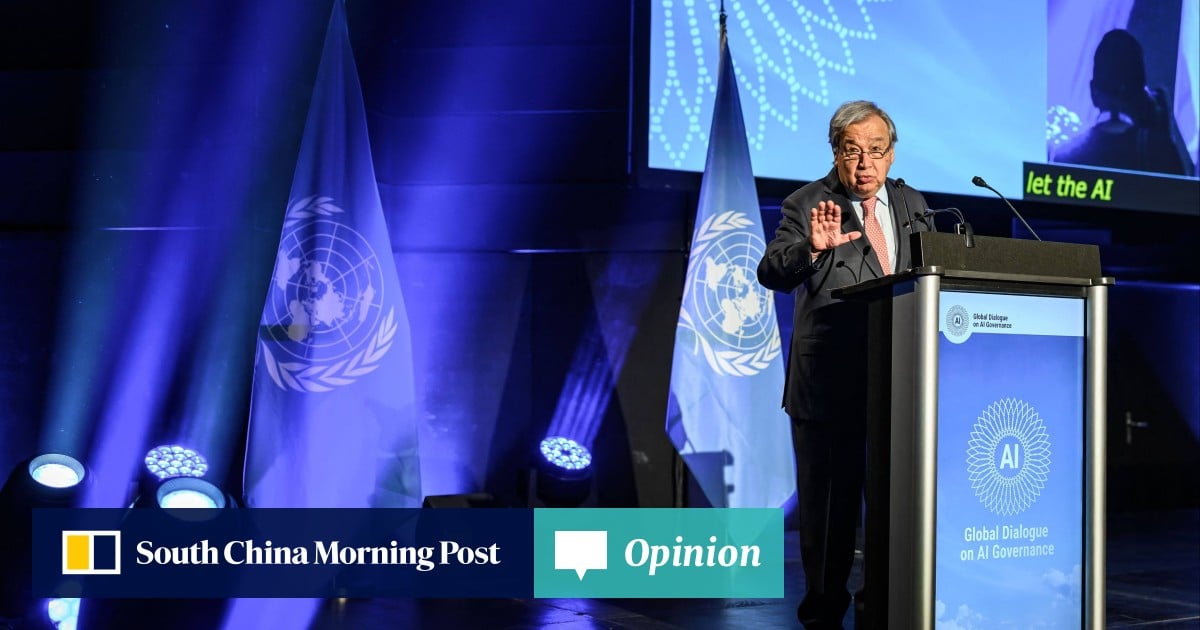
The conventional framing of a two-sided US-China AI contest misses what is actually emerging, according to the article: a three-layered structure with a third, still-fragmented tier led by middle powers and multilateral institutions. The argument hinges on three discrete events in mid-2026. In June, the US convened the second summit under Pax Silica, a 24-economy grouping focused on secure supply chains, AI infrastructure, and trusted technology partnerships. In July, all 193 UN member states gathered in Geneva for the inaugural Global Dialogue on AI Governance, and days later 29 countries signed the agreement establishing the World Artificial Intelligence Cooperation Organization (WAICO) in Shanghai. Read together, these moments suggest the AI order is being negotiated across three registers simultaneously rather than collapsed into a single bipolar contest.
The Pax Silica Doctrine
The American pathway is built around control of the technological frontier. US firms dominate advanced chip design, cloud platforms, proprietary models, and much of the software used to train and deploy AI, the article notes. Pax Silica turns those assets into a full-stack export regime: semiconductor partnerships, public finance, cybersecurity networks, and licensing terms that widen access among trusted partners while keeping the most consequential capabilities restricted. The article is careful to point out the dependency created by this model. Partners receive high-performance technology and access to mature firms and deep capital markets, but they also become reliant on American licences, cloud services, model updates, and policy continuity. US influence therefore rests as much on the conditions of access as on the technologies themselves, a structural form of leverage that survives political turnover in Washington.
WAICO's Test in Shanghai
China is constructing a different architecture, the article argues, one that combines lower-cost and open-weight models, telecommunications and data-centre infrastructure, industrial deployment, and government-led cooperation. WAICO gives this strategy a permanent institutional platform distinct from the Geneva track. Its founding agreement casts it as a vehicle for international cooperation, global governance, and the safe, fair and inclusive development of AI, and Beijing has explicitly tied it to capacity-building and Global South concerns. The offer appeals to governments seeking affordable models, local deployment, and fewer alliance-based entry conditions. The article flags the same lock-in dynamic in reverse: maintenance, equipment compatibility, data practices, technical standards, and supplier relationships may leave partner states dependent on Chinese systems even when models are locally operated. WAICO's real influence will hinge on whether it develops a stable budget, a functioning secretariat, and credible projects beyond diplomatic declarations, a test that will define whether the Shanghai track can sustain weight.
Key points
- Pax Silica convening in June 2026 brought together 24 economies around secure supply chains, AI infrastructure, and trusted technology partnerships
- All 193 UN member states met in Geneva in July for the inaugural Global Dialogue on AI Governance
- 29 countries signed the agreement establishing the World Artificial Intelligence Cooperation Organization (WAICO) in Shanghai days later
- US dominance rests on chip design, cloud platforms, proprietary models, and on the licensing conditions attached to access
- China's offer combines open-weight models, data-centre and telecoms infrastructure, and government-led cooperation aimed at the Global South
- Both US and Chinese pathways create structural dependency for partner states, even when models are locally operated
- WAICO's influence will depend on whether it develops a stable budget, secretariat, and projects beyond diplomatic declarations
Middle powers could leverage competitive pressure between the two blocs to negotiate better terms, invest in independent technical capacity, and push for governance norms that reflect diverse interests rather than superpower priorities. The Geneva dialogue's universal membership provides one venue, and the article frames middle-power coordination as a viable counterweight to either form of dependency.
Fragmentation may not produce genuine autonomy. Both Pax Silica and WAICO embed dependency through different lock-in mechanisms: licence and cloud continuity on the American side, maintenance and standards alignment on the Chinese side. WAICO's credibility is untested beyond declarations, and the middle-power track lacks an institutional backbone comparable to either bloc, leaving smaller economies likely to gravitate toward whichever offers easier near-term access.