Asian stocks fall as US and Iran exchange fire – business live
Asian stocks slid after US-Iran strikes escalated, while oil stayed near $91 and China’s factory-gate prices rose on higher energy costs.
Intelligence analysis by GPT-5.4 Mini
Markets are reacting to a sharper US-Iran exchange of fire, with Asian shares under pressure and traders watching whether conflict risk feeds through to oil, inflation, and central-bank policy. The live blog also tracks China’s rising producer prices and a key US inflation release due later in the day.
It’s like a faraway fight near an important fuel road made investors nervous. When oil and prices can jump, stock markets wobble too, like a seesaw that suddenly gets shaken.
Analysis
Market reaction
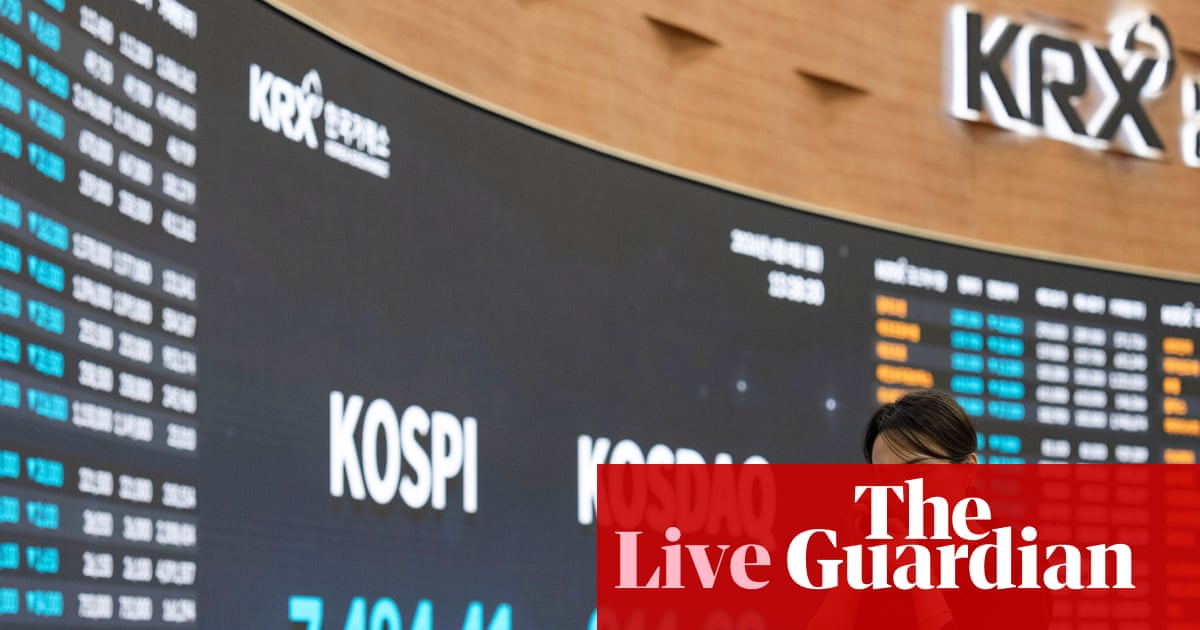
Asian stocks fell sharply after the US and Iran exchanged their biggest round of fire since a ceasefire in April. Japan’s Nikkei slipped about 2%, while South Korea’s Kospi dropped by roughly 6% before trimming losses. European futures pointed to a muted open, suggesting the caution was spreading beyond Asia.
Oil and inflation
The conflict has not yet driven a sustained jump in crude on this update: Brent was slightly lower at about $91.28 a barrel. Even so, the live blog says traders are still watching the Strait of Hormuz and the risk that energy prices could rise again if the fighting widens. That matters because higher oil costs can feed into inflation and complicate central banks’ decisions.
China and company impacts
New data from China showed producer prices rose 3.9% in May from a year earlier, the fastest pace in four years. Economists quoted in the piece said the rebound looks mainly like a cost story rather than evidence of stronger demand, with energy costs linked to the war in Iran playing a part. The coverage also notes that WH Smith is turning to investors for funds after the Middle East conflict hit profit expectations.
What investors are watching next
The article points to a US inflation reading later in the day, with economists expecting a higher print. That combination of war risk, energy prices, and inflation data leaves markets sensitive to any further escalation or signs that the conflict is easing.
Key points
- Asian shares fell after the US and Iran exchanged strikes, with Japan and South Korea among the biggest movers.
- Brent crude was only slightly lower on the morning of the update, but traders remained focused on the Strait of Hormuz.
- China’s producer price inflation rose 3.9% in May, with the piece linking some of the increase to higher energy costs.
- The blog says US inflation data later in the day could add pressure on the Federal Reserve if prices keep rising.
- WH Smith was cited as one company feeling the profit hit from the Middle East conflict.
If the fighting does not spread and the Strait of Hormuz stays effectively open, oil prices could remain contained. That would ease pressure on stocks, on producer prices in China, and on inflation worries in the US and Europe.
If the conflict escalates, traders may price in higher energy costs and more market turmoil. That could deepen stock losses, lift inflation pressures, and make central banks less comfortable about cutting rates.