Asian stocks tumble, bitcoin retreats as China enters bear market
Asian stocks, led by China's CSI 300 entering a bear market, tumbled across the region, while Bitcoin retreated towards $82,000 amidst rising oil prices and mixed U.S. earnings.
Intelligence analysis by Gemini 2.5 Flash
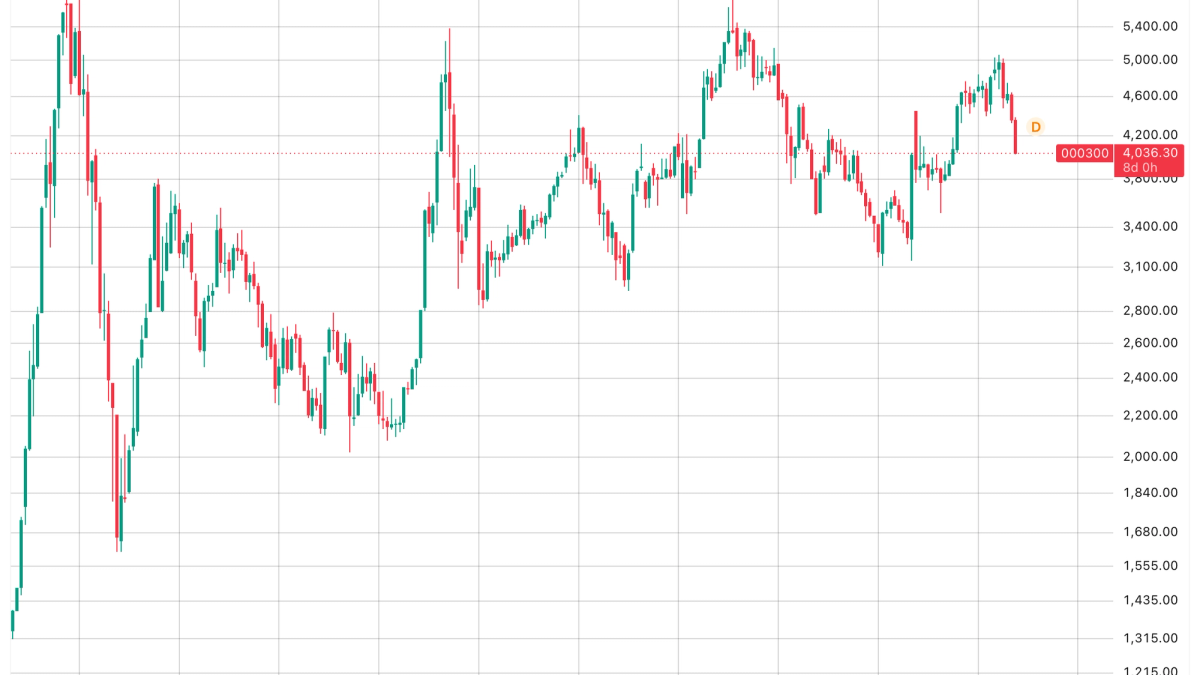
A broad market selloff swept across Asia, with Chinese equities officially entering bear market territory due to a 20% decline from recent peaks, exacerbated by a significant drop in technology shares. This regional downturn, coupled with rising oil prices and uncertainty from mixed U.S. corporate earnings, also saw Bitcoin give up its recent gains and other commodities like gold and …
Imagine a big playground where everyone is playing with their favorite toys, like stocks and digital coins. Suddenly, the biggest kid on the playground, China, starts having trouble, and its toys (stocks) lose a lot of value, like falling off a cliff. This makes other kids in Asia nervous, and their toys also start dropping. Even a special digital coin called Bitcoin, which usually does its own thing, gets a bit wobbly and loses some value because everyone is worried. But oddly, the price of oil, like the fuel for cars, goes up, making things a bit more expensive for everyone.
Analysis
CSI 300's Bear Market Entry
China's equity market experienced a significant downturn, with the CSI 300 index officially entering bear market territory. This benchmark, which tracks the 300 largest stocks traded in Shenzhen and Shanghai, slid 2% on Thursday, marking a cumulative decline of 20% from its peak in June. The substantial fall underscores growing investor apprehension regarding the Chinese economy and its corporate sector.
The impact was particularly severe on Chinese technology shares traded in Hong Kong, which recorded their worst session since President Donald Trump's April 2025 tariff announcement. According to Bloomberg's David Ingles, the technology benchmark has plummeted over 40% from its peak, nearly erasing gains that followed Beijing's September 24 stimulus package. This sharp correction has compressed forward valuations to approximately 13 times earnings, reflecting a significant repricing of risk in the sector.
Regional Market Contagion
The market weakness originating in China quickly spread across other major Asian economies, leading to widespread declines in regional benchmarks. Japan's Nikkei 225 index fell around 3%, while South Korea's Kospi dropped 3.5%, indicating a broad-based loss of investor confidence. Taiwan's benchmark also lost 2%, and Hong Kong's Hang Seng declined 3%, demonstrating a synchronized regional selloff.
These declines were not isolated incidents but rather a reflection of interconnected global market dynamics. Investor concerns were compounded by mixed third-quarter earnings reports from U.S. companies, which added to the uncertainty surrounding artificial intelligence investment. The broader market sentiment was clearly negative, with a flight from risk assets.
Bitcoin's Retreat and Commodity Reactions
Amidst the equity market turmoil, Bitcoin (BTC) also experienced a retreat, giving up its advance above $84,000 and slipping back towards $82,000. This movement highlights Bitcoin's continued correlation with broader financial markets, as investors de-risk across various asset classes during periods of heightened uncertainty. The cryptocurrency's performance mirrored the cautious sentiment prevalent in traditional markets.
Other commodities also reacted sharply to the evolving market conditions. Gold, traditionally a safe-haven asset, fell more than 1% to below $4,100 an ounce, while silver dropped over 3.5% to around $55. This suggests that the current market pressures might be leading to a broader liquidation across assets, rather than a clear flight to traditional safe havens. Conversely, oil prices surged, with WTI crude topping $100 a barrel and Brent crude climbing above $112, reaching its highest levels since May, adding another layer of inflationary pressure and market concern.
Key points
- China's CSI 300 index has officially entered a bear market, declining 20% from its June peak.
- Asian stock markets, including Japan's Nikkei 225, South Korea's Kospi, and Hong Kong's Hang Seng, experienced significant declines of 2-3.5%.
- Chinese technology shares in Hong Kong recorded their worst session since April 2025, with valuations compressed.
- Bitcoin retreated towards $82,000, giving up recent gains amidst the broader market downturn.
- Gold and silver prices fell, while Brent crude oil climbed above $112 a barrel, reaching its highest levels since May.
The widespread market selloff, particularly China's entry into a bear market and the retreat of Bitcoin, signals a potential period of sustained investor caution and de-risking. Continued rising oil prices could exacerbate inflationary pressures, further dampening economic growth prospects and leading to deeper market corrections across both traditional and crypto assets.