Assam Needs a Climate Mobility Plan, Not Just Flood Relief
Assam is experiencing severe recurring floods and riverbank erosion, displacing thousands annually. The article argues for a proactive 'climate mobility' policy framework instead of just reactive emergency relief, highlighting the need to address long-term displacement an…
Intelligence analysis by Gemini 2.5 Flash
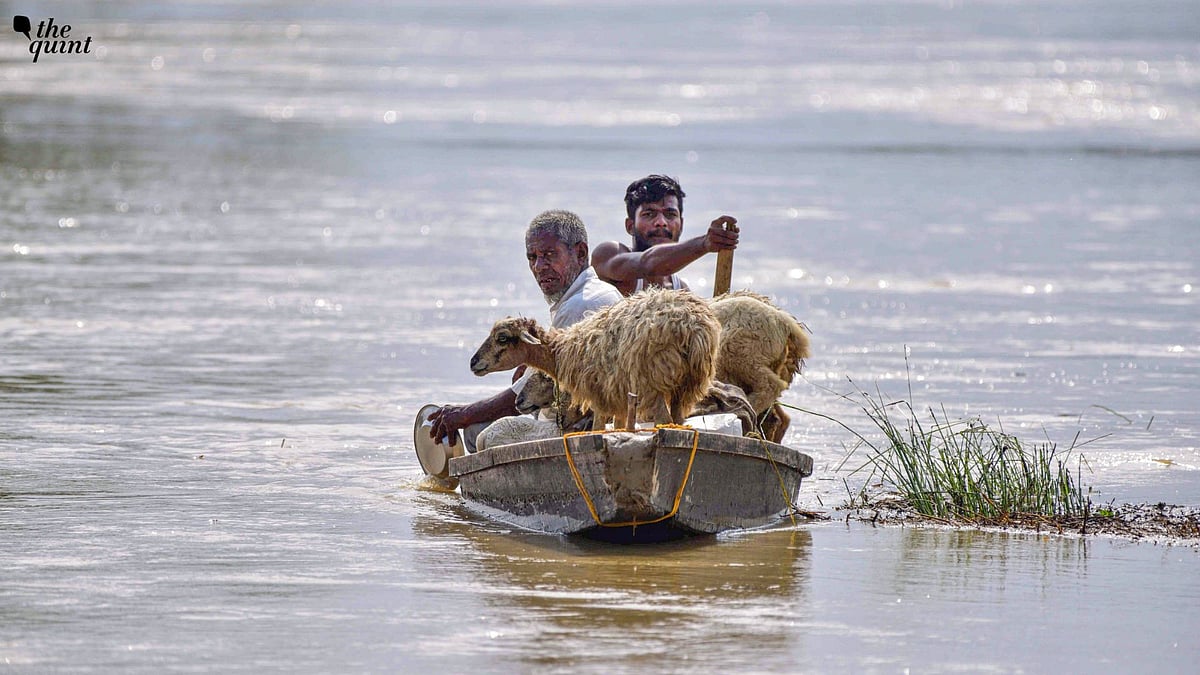
Assam faces chronic flooding and significant land loss due to riverbank erosion, displacing thousands and creating internal migrants. The current disaster response, focused on immediate relief and hard engineering, is insufficient. The article advocates for a comprehensive 'climate mobility' plan that integrates long-term strategies for displacement, migration, and planned relocation,…
Imagine a big river in Assam that keeps eating away the land where people live and farm, like a hungry monster. Every year, floods come, and then the land disappears, forcing families to move. Instead of just giving them food and temporary shelter each time, grown-ups need a plan to help them move safely and find new homes and jobs when the river changes its path for good.
Analysis
The Relentless Cycle of Erosion and Displacement
Assam, particularly the Brahmaputra basin, is one of the world's most flood-prone regions, experiencing severe monsoon floods annually. Beyond the immediate devastation of submerged agricultural land and disrupted services, a more insidious threat looms: riverbank erosion. Data from Assam's Water Resources department reveals a staggering loss of over 4.27 lakh hectares of land since 1950, accounting for 7.4 percent of the state's total area. This translates to approximately 8,000 hectares of land vanishing each year, rendering countless farmers landless and forcing them into internal migration.
The human cost of this continuous land loss is immense, fracturing community ties, compromising access to basic services, and disproportionately affecting vulnerable groups like women and children. Displaced populations, especially from the shifting riverine islands known as 'chars', face legal and spatial marginalization. The current reactive approach, characterized by emergency relief camps, ration distribution, and minimal financial ex-gratia, provides only temporary respite and fails to address the permanent loss of land and livelihoods.
Limitations of Current Mitigation Strategies
The standard mitigation plan for the Brahmaputra's changing morphology has historically relied on the construction and repair of embankments. However, this overreliance on hard engineering structures often disrupts the river's natural course and can inadvertently reduce the long-term adaptive capacity of local communities. When these embankments breach unexpectedly, the resulting damage is frequently more severe than that from gradual inundation, highlighting the limitations of a purely structural approach.
Furthermore, these top-down engineering interventions often overlook traditional ecological knowledge. Indigenous communities, such as the Mishing tribe of Majuli Island, have developed sophisticated adaptive living strategies over centuries, including stilt housing (chang ghar) and flexible agricultural calendars, to coexist harmoniously with the river's dynamic nature. A critical policy gap also exists: riverbank erosion is currently excluded from the list of natural calamities covered under the National Disaster Response Fund (NDRF) and State Disaster Relief Fund (SDRF) guidelines. This exclusion stems from viewing erosion as a predictable geomorphological evolution rather than a sudden disaster, leaving Assam to rely on limited state resources and external funding for compensation and resettlement, leading to significant delays and inadequate support.
Embracing a Climate Mobility Framework
To break this destructive cycle, policymakers must adopt the concept of Climate Mobility, a principle first recognized in the UN's Cancún Adaptation Framework of 2010. This framework categorizes climate-induced human movement into displacement, migration, and planned relocation, offering a comprehensive lens through which to view the challenges in Assam. Subsequent global frameworks, including the Paris Agreement, Sendai Framework, and the Nansen Initiative, have further advocated for embedding climate mobility within national and state-level climate and disaster-management plans. The Global Compact for Migration also acknowledges climate change as a driver of migration and outlines strategies for preparedness and resilience building.
India has integrated many of these global frameworks into its national and state policies, linking climate adaptation, disaster management, resilient infrastructure, and rural development. However, significant implementation gaps remain, particularly in effectively addressing climate mobility and fostering community resilience. States like Odisha and Telangana offer valuable examples of proactive responses, supporting adaptive agriculture, skills training, and safe migration initiatives through programs like the UN Joint Programme on Climate Change and Migration. By integrating these lessons and formally recognizing riverbank erosion as a disaster requiring long-term planning and legal compensation, Assam can move towards a more sustainable and humane approach to its climate challenges.
Key points
- Assam experiences severe annual floods and significant riverbank erosion, displacing thousands.
- Over 4.27 lakh hectares of land have been eroded since 1950, with 8,000 hectares lost annually.
- Current responses focus on emergency relief and hard engineering structures like embankments, which are often insufficient.
- Riverbank erosion is not recognized as a natural calamity under NDRF/SDRF, limiting compensation and resettlement efforts.
- The article advocates for a 'climate mobility' framework, including planned relocation, migration, and displacement strategies, drawing from global frameworks and other Indian states.
If Assam adopts a comprehensive climate mobility plan, it could lead to more resilient communities better prepared for climate-induced displacement. Learning from states like Odisha and Telangana, proactive policies could provide legal compensation, skills training, and planned relocation, reducing the long-term suffering and economic burden on affected populations.
Without a shift from reactive relief to proactive climate mobility, Assam will continue to face a vicious cycle of displacement, land loss, and economic hardship. The exclusion of riverbank erosion from national disaster funds means communities will remain vulnerable, leading to increased marginalization, fractured social ties, and inadequate support for those forced to migrate.