Astronomers measure the mass of a dormant black hole, our solar system's lost protoplanet, and more science stories
JWST helped astronomers weigh a dormant black hole 10 billion light-years away. A meteorite also hinted at a large protoplanet that may have once formed in our solar system.
Intelligence analysis by GPT-5.4 Mini
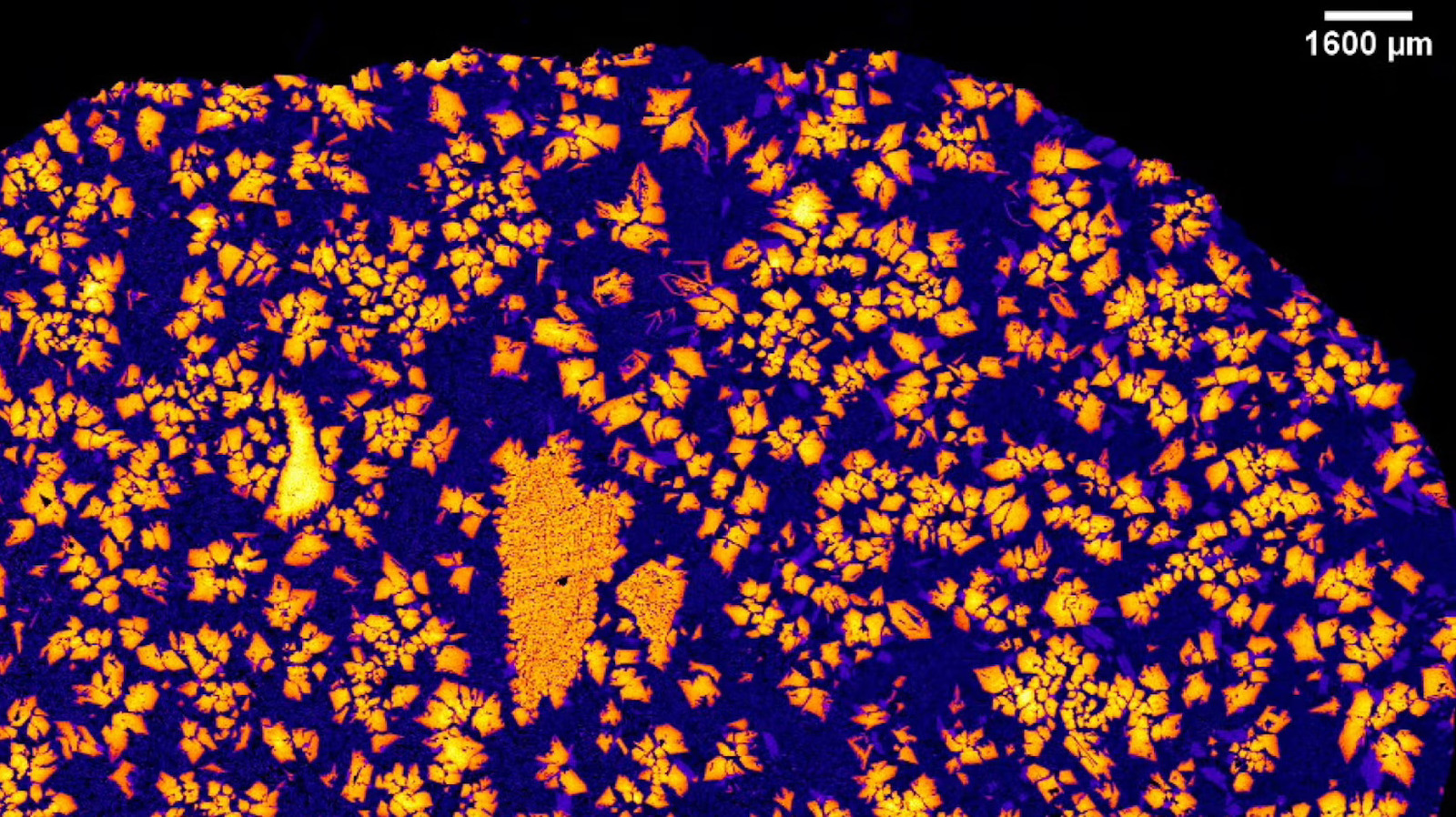
This week's science roundup highlights two distant-origin stories: a black hole measured with JWST and gravitational lensing, and a rare meteorite that may preserve evidence of a long-lost protoplanet from the early solar system.
Scientists used a giant space telescope like a super-powered magnifying glass to weigh a black hole that is very far away and very hard to see. They also studied a space rock that may be a tiny leftover piece of a lost, planet-sized world from the solar system's baby days.
Analysis
Black hole measurement
Researchers used the James Webb Space Telescope together with gravitational lensing to estimate the mass of a dormant black hole about 10 billion light-years away, in the galaxy MRG-M0138. Dormant black holes are harder to study than actively feeding ones because they do not glow from surrounding hot gas and dust.
The team relied on lensing as a kind of natural magnifier, then looked at how the black hole's gravity affects nearby stars. According to the article, the result is the farthest dormant black hole directly measured so far. The authors say the method can help explain how huge black holes and galaxies were assembling in the early universe.
A possible lost world
The piece also covers a meteorite found in the Sahara, NWA 12774, which researchers say contains clues about a protoplanet that existed about 4.5 billion years ago. The rock is an angrite meteorite, meaning it comes from ancient volcanic material tied to the solar system's first few million years.
The key clue is an aluminum-rich crystal, clinopyroxene, that the team says points to much higher pressure than an asteroid-sized body would provide. From that, they infer a parent body large enough to be roughly moon-sized or even Mars-sized. The article frames this as evidence that early planetary building blocks were more varied than the familiar path that led to Earth and Mars.
Key points
- JWST and gravitational lensing were used to measure a dormant black hole 10 billion light-years away.
- The black hole sits in the galaxy MRG-M0138 and is described as the farthest dormant black hole directly measured so far.
- A Sahara Desert meteorite, NWA 12774, may preserve evidence of a large protoplanet from the solar system's earliest era.
- Researchers say the meteorite's minerals point to pressures too high for a simple asteroid origin.
- The roundup also notes other science stories from the week, including the ISS air leak, MAVEN's end, and an AI-designed vaccine effort.
If the JWST method holds up, astronomers could measure more hidden black holes from the early universe and learn how they and their galaxies grew together. The meteorite result could also give scientists a better map of the different kinds of worlds that formed before the modern solar system took shape.
The black-hole result still depends on a specialized combination of JWST data and gravitational lensing, so it may not be easy to repeat on other targets. The protoplanet claim also rests on a rare meteorite and pressure-based inference, so later studies could sharpen or revise the origin story.