Asymmetric Deterrence in Practice
Iran's strategic victory against Trump's blockade showcases asymmetric deterrence in action, raising the cost of war for adversaries and pushing oil prices to $100.
Intelligence analysis by Llama
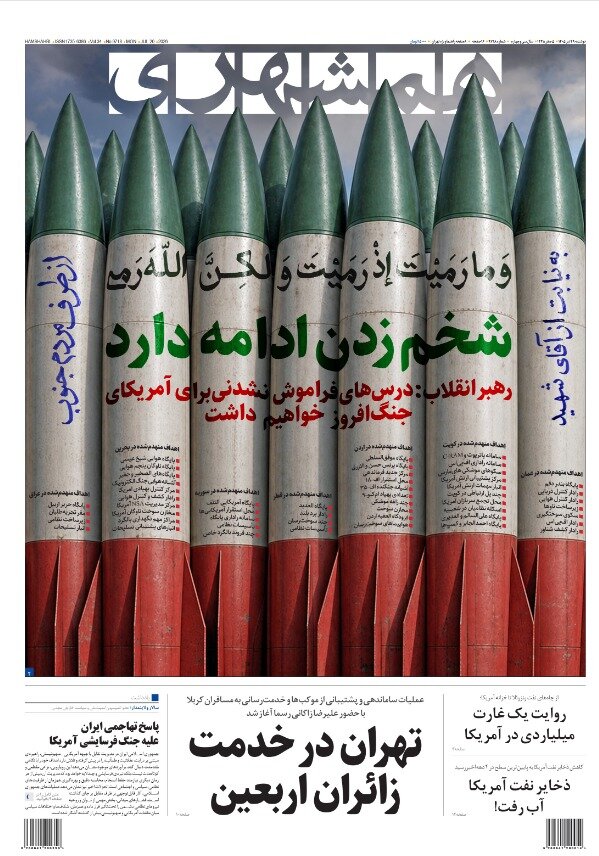
Iran's strategic victory against Trump's blockade demonstrates the power of asymmetric deterrence, where Iran threatens to close the Strait of Hormuz, increasing the cost of war for its adversaries.
Imagine a game of chess where Iran has a powerful piece that can checkmate the opponent's king without even moving. That's what Iran's asymmetric deterrence is like. It's a way of making the other side think twice before attacking, by threatening to do something that would hurt them a lot.
Analysis
A $60B Vote of Confidence
Iran's strategic victory against Trump's blockade is a manifestation of asymmetric deterrence in action—a strategy in which Iran, by threatening to close the Strait of Hormuz, raised the cost of war for its adversaries to such an extent that even Israeli security analysts openly admitted: 'The damage to the United States and the international economy would be greater than to Iran.' The surge in oil prices and the global economy's vulnerability demonstrate Tehran's success in implementing asymmetric deterrence. Any calculation that ignores Iran's capabilities and resolve is doomed to fail.
Why Cursor?
The US fears a major operation, and this fear leads to miscalculation. The US forced ships to pass through the lower part of the Strait of Hormuz, hoping to test Iran's fear of renewed conflict and use that fear-induced miscalculation to permanently remove the strait from Iran's control. However, this move was meant to test Iran's resolve, not its fear.
The Road Ahead
The Middle East is experiencing one of the most volatile periods in its modern history. The attacks have entered a new, complex, and highly unpredictable phase. Field dynamics signal tougher days ahead. Military experts believe these conditions may indicate the imminent entry of the confrontation into a far more costly phase.
Key points
- Iran's strategic victory against Trump's blockade showcases asymmetric deterrence in action.
- The surge in oil prices and the global economy's vulnerability demonstrate Tehran's success in implementing asymmetric deterrence.
- The US fears a major operation, and this fear leads to miscalculation.
- The Middle East is experiencing one of the most volatile periods in its modern history.
- The attacks have entered a new, complex, and highly unpredictable phase.
If this development plays out positively, it could lead to a reduction in tensions between Iran and the US, and potentially even direct or indirect talks between the two sides. This could help to prevent further escalation and promote regional stability.
However, if this development fails to achieve its intended goals, it could lead to a prolonged war of attrition, where geography and geopolitical leverage play decisive roles. This could have devastating consequences for the region and the world.