At least 12 people killed in Russian overnight attacks on Ukraine – Europe live
Overnight Russian attacks killed at least 12 people in Ukraine, injuring dozens and leaving thousands without power in Odesa. A border crossing with Romania was also damaged.
Intelligence analysis by Gemini 2.5 Flash Lite
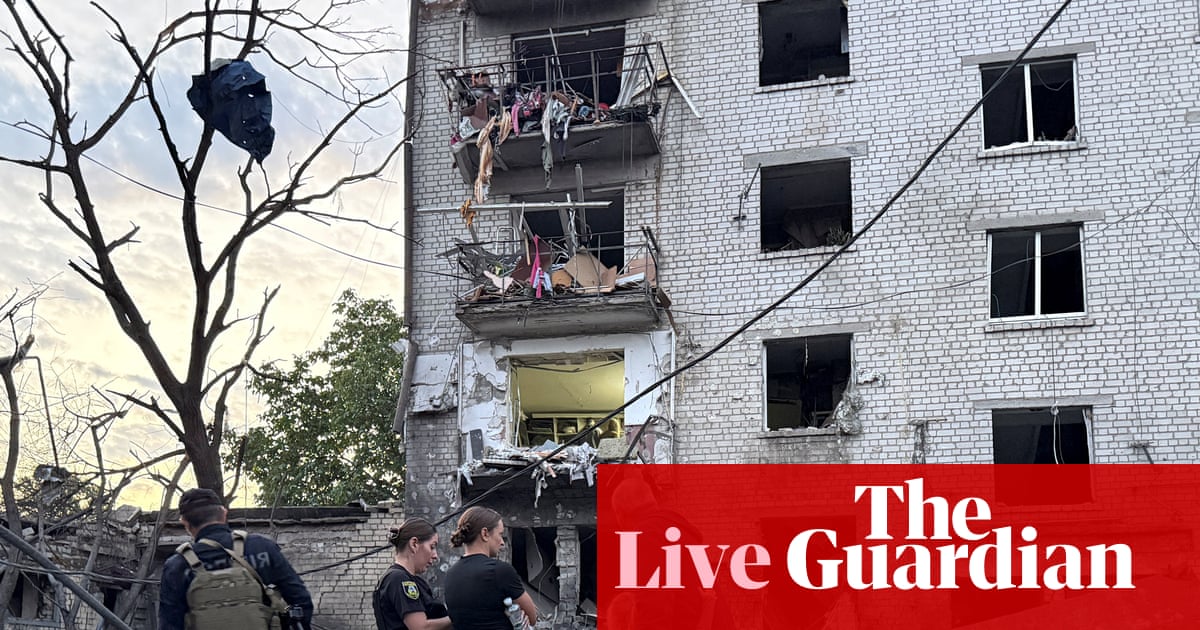
Russia's overnight attacks on Ukraine resulted in at least 12 fatalities and numerous injuries, with significant power outages in the Odesa region and damage to a Romanian border crossing. The strikes are part of a broader pattern of Russian aggression, including a high volume of drone attacks in August, and are being discussed by EU defense ministers.
Imagine Russia is throwing lots of special buzzing toys (drones) at Ukraine, and Ukraine is trying to catch them. In August, Russia threw over 2,800 of these toys, and Ukraine caught about 60%. Some of these attacks are so bad they knock out electricity and even damage roads, making life difficult for people.
Analysis
Russian Drone Offensive
Ukraine's air force spokesperson, Yuriy Ihnat, reported that Russia launched over 2,800 jet-powered drones at Ukraine in August. These drones, described as harder to intercept, had an interception rate of approximately 60%, a figure lower than other drone types. This sustained aerial assault underscores Russia's evolving tactics in its efforts to wear down Ukraine's defenses and infrastructure. The sheer volume of these attacks suggests a significant investment in and deployment of this specific military capability, posing a continuous challenge for Ukrainian air defenses.
German Attribution Efforts
Reports indicate that Germany is nearing a formal attribution of last month's attempted drone attack on a Ukrainian cargo plane in Leipzig to Russia. The German interior and foreign ministers are expected to announce the findings of their investigation. This potential move by Germany signifies a significant step in holding Russia accountable for specific acts of aggression on European soil. Chancellor Friedrich Merz had previously hinted at a forthcoming government response, suggesting a coordinated and deliberate approach to addressing such incidents.
EU Defence Ministers' Discussions
An informal meeting of EU defence ministers in Wicklow, Ireland, is addressing the escalating security challenges, with a particular focus on Ukraine's defense and maritime security. Ireland's defence minister, Helen McEntee, emphasized the need for closer cooperation amidst "profound challenge." EU's foreign policy chief Kaja Kallas highlighted the importance of NATO but also the growing need for European self-reliance, urging ministers to "challenge the conventional thinking" and explore innovative defense capabilities. Kallas also announced the formation of a high-level group comprising former political and military leaders from EU countries, the UK, and Ukraine to reassess responses to military threats.
Key points
- At least 12 people were killed and dozens injured in overnight Russian attacks on Ukraine.
- Thousands were left without electricity in the Odesa region, and a border crossing with Romania was damaged.
- Russia launched over 2,800 jet-powered drones at Ukraine in August, with a 60% interception rate.
- Germany is reportedly set to formally blame Russia for a drone attack on a Ukrainian cargo plane in Leipzig.
- EU defense ministers are meeting to discuss enhanced cooperation and European defense capabilities.
The increased focus on European defense cooperation and the potential for Germany to formally attribute attacks to Russia could lead to a more unified and robust response to Russian aggression. This could bolster Ukraine's resilience and deter future attacks.
The high number of successful drone interceptions and the deliberate damage to infrastructure, including a border crossing, indicate a persistent and evolving threat that continues to inflict casualties and disrupt essential services in Ukraine.