At least 13 killed in Kyiv as Ukraine grapples with air defence shortages
At least 13 people were killed and 40 injured in recent Russian strikes on Kyiv, as Ukraine faces a critical shortage of air defence missiles, according to Ukrainian officials.
Intelligence analysis by Gemini 2.5 Flash
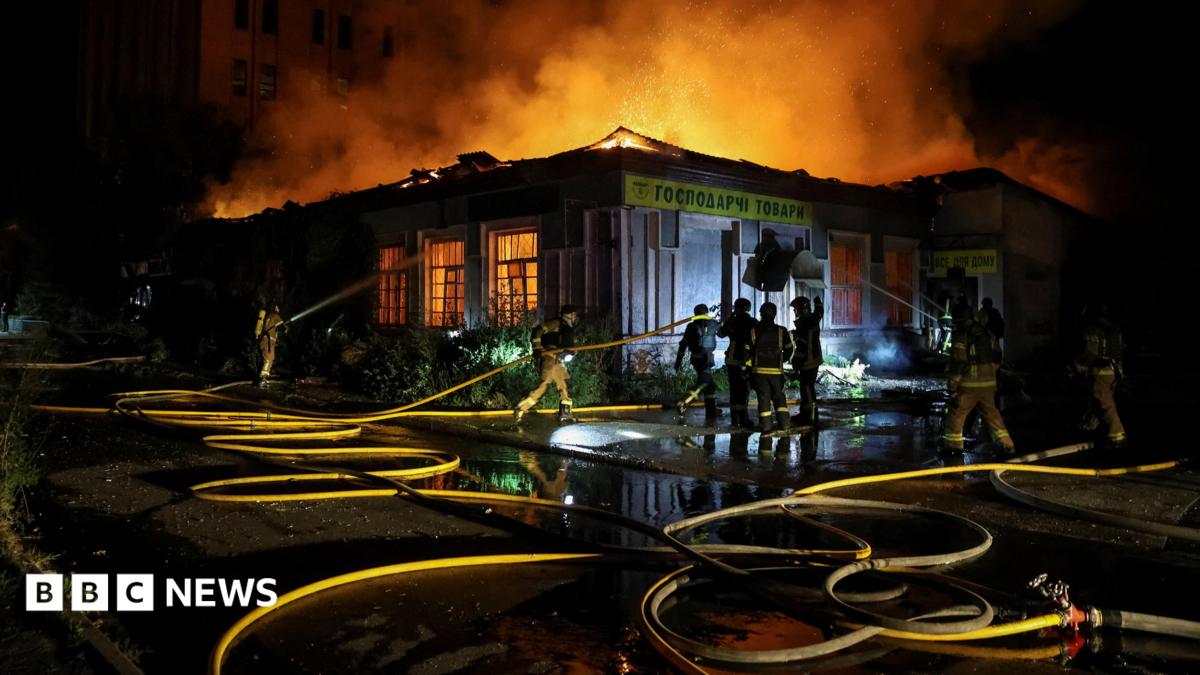
Russian forces launched a barrage of missiles and drones targeting Kyiv, hitting apartment blocks, warehouses, a children's hospital, and a school. President Zelensky attributed the high casualties to insufficient Western-supplied Patriot interceptor missiles, while also facing internal political challenges regarding military corruption.
Imagine Ukraine is playing a very serious game of dodgeball, but the other team has super-fast balls that are hard to catch. Ukraine has some special gloves called 'Patriot interceptors' to catch these fast balls, but they don't have enough of them because their friends who usually give them gloves are using them for another game. So, when the other team throws lots of fast balls, many get through, causing damage and hurting people. Ukraine's leader is asking for more gloves so they can protect their players better.
Analysis
The recent Russian strikes on Kyiv, which resulted in at least 13 deaths and 40 injuries, underscore the escalating human toll of the ongoing conflict. Apartment blocks, warehouses, a children's hospital, and a school were among the targets, illustrating the widespread impact on civilian infrastructure. The State Emergency Service of Ukraine (DSNS) confirmed the damage, while the Russian defence ministry claimed its targets were military facilities and warehouses, a common point of contention in the information war.
Kyiv Casualties
The overnight attacks on Kyiv, which began around midnight local time, saw approximately 20 Russian missiles strike the capital, cutting power to thousands of properties. This barrage led to a day of mourning being declared on Friday, reflecting the profound grief and disruption caused by the sustained assaults. The Ukrainian Air Force reported that 168 drones and 44 missiles were used in the broader attack, primarily targeting Kyiv, with air defences managing to intercept 146 drones and 39 cruise missiles. However, the critical detail emerged that none of the ballistic missiles used overnight were intercepted, highlighting a severe vulnerability.
These attacks extend beyond Kyiv, with one man killed and seven wounded in the Brovary and Boryspil districts of the broader Kyiv region, and further casualties reported in Donetsk Oblast. The scale of destruction and loss of life emphasizes the urgent need for more robust defensive capabilities, as Ukrainian cities remain exposed to sophisticated Russian weaponry. The repeated targeting of civilian areas, whether intentional or collateral, continues to inflict immense suffering and destabilize daily life across the country.
Patriot Interceptors
Ukrainian President Volodymyr Zelensky directly linked the high death toll to a shortage of air defence missiles, specifically American-supplied Patriot interceptors. He stated that "as long as Ukraine does not have enough anti-ballistics, Russia will not seriously think about peace," emphasizing the daily need for these interceptors to save lives. The reliance on Western allies for these crucial supplies has become a significant point of vulnerability, especially as the US has reportedly diverted much of its stockpile to the war in the Middle East, reducing its capacity to supply Ukraine.
Ukrainian MP Oleksiy Goncharenko further articulated the dire situation, telling BBC Radio 4 that Ukraine's cities are "absolutely unprotected" from ballistic missile attacks without these interceptors. This dependency on external aid for fundamental defence capabilities places Ukraine in a precarious position, where the ebb and flow of international support directly correlates with its ability to protect its population and infrastructure. The plea for more military aid is a constant refrain, reflecting the strategic importance of these systems in countering Russia's aerial superiority.
Mykhailo Fedorov
Zelensky's renewed appeal for military assistance comes amidst a challenging internal political landscape. He is facing a direct political challenge from Mykhailo Fedorov, a popular ex-defence minister, who has called for an election and launched a scathing critique of the government. Fedorov's claims that corruption has deprived the military of essential weapons add another layer of complexity to Ukraine's wartime governance. Such accusations, whether substantiated or not, can undermine public trust and potentially impact the efficiency of military procurement and distribution, further exacerbating the challenges posed by external aggression.
This internal political pressure could divert attention and resources from the immediate war effort, potentially complicating Ukraine's ability to effectively lobby for and utilize international aid. The interplay between external military threats and internal political stability is critical, as any perceived weakness or division could be exploited by adversaries. The government's ability to address these corruption claims and maintain national unity will be crucial in sustaining both domestic support and international confidence in its fight against Russia.
Key points
- At least 13 people were killed and 40 injured in recent Russian strikes on Kyiv.
- Ukrainian President Zelensky attributed the casualties to a critical shortage of Western-supplied air defence missiles, particularly Patriot interceptors.
- The US has reportedly used much of its Patriot stockpile in the Middle East, reducing supplies to Ukraine.
- Ukrainian MP Oleksiy Goncharenko stated that cities are "absolutely unprotected" from ballistic missile attacks without interceptors.
- Zelensky faces a political challenge from ex-defence minister Mykhailo Fedorov, who claims corruption has deprived the military of weapons.
Increased international pressure and a renewed commitment from Western allies could lead to an accelerated supply of critical air defence missiles, bolstering Ukraine's ability to protect its cities and civilians. This enhanced defence might deter further large-scale Russian attacks and create a more stable environment for diplomatic efforts to progress.
The continued shortage of air defence missiles could leave Ukrainian cities highly vulnerable to devastating Russian strikes, leading to more casualties and widespread destruction. Internal political challenges, such as corruption allegations and calls for elections, could further destabilize Ukraine's government and hinder its war efforts, prolonging the conflict and its human cost.