At least 14 dead in suicide bomb attack at anti-militant rally in Pakistan
A suicide bomber targeted protesters at an anti-militant rally in northwestern Pakistan, killing at least 14 people, including police officers, and wounding more than two dozen others.
Intelligence analysis by Llama
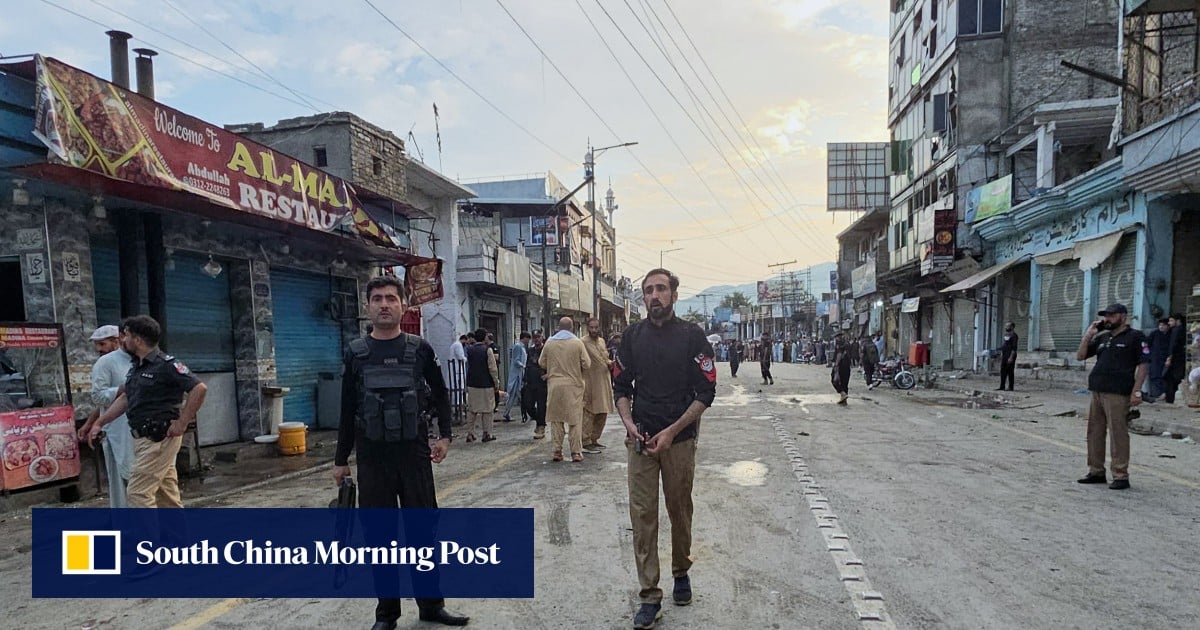
A suicide bomber attacked an anti-militant rally in Pakistan, killing at least 14 people, including police officers, and wounding over 20 others. The attack happened in Kabal, a town in Swat Valley, where demonstrators had gathered near a police station, chanting anti-militant slogans and demanding peace.
A suicide bomber attacked a group of people in Pakistan who were protesting against militant groups. The attack killed at least 14 people and wounded over 20 others. The bomber was likely a member of the Pakistani Taliban, a group that wants to impose strict Islamic law in Pakistan.
Analysis
A Deadly Attack in Pakistan's North-Western Region
The recent suicide bombing at an anti-militant rally in Kabal, a town in Swat Valley, has left at least 14 people dead, including police officers, and over 20 others wounded. This attack serves as a grim reminder of the ongoing threat posed by militant groups in Pakistan's north-western region.
The Swat Valley was once a stronghold of Islamic militants who imposed a strict interpretation of sharia, or Islamic law, before the Pakistani military launched a major operation in 2007 that drove them out and restored government control. However, the region remains vulnerable to militant attacks, and the recent incident is a testament to this.
No group has immediately claimed responsibility for the bombing, but suspicion is likely to fall on the Pakistani Taliban, known as Tehrik-e-Taliban Pakistan, or TTP. The TTP is separate from, but allied with, Afghanistan's Taliban rulers. Many of its leaders and fighters have found sanctuary in Afghanistan since the Taliban returned to power there in 2021.
The attack has been widely condemned by Pakistani authorities, with Interior Minister Mohsin Naqvi extending condolences to the families of those killed and prayers for the speedy recovery of the wounded. The incident highlights the need for continued security efforts to protect civilians and prevent such attacks from occurring in the future.
The Pakistani Taliban's Continued Threat
The Pakistani Taliban, or TTP, has been responsible for numerous attacks in Pakistan over the years. The group's ideology is rooted in a strict interpretation of Islam, and it has been involved in various terrorist activities, including bombings, kidnappings, and assassinations. The TTP's alliance with Afghanistan's Taliban rulers has further emboldened the group, allowing it to operate with relative impunity in Pakistan's north-western region.
The recent attack in Kabal is a stark reminder of the TTP's continued threat to Pakistan's security and stability. The group's ability to carry out such attacks with relative ease highlights the need for a more effective security strategy to counter its activities.
The Road Ahead for Pakistan's Security
In the wake of the recent attack, Pakistan's authorities must take a more proactive approach to addressing the security concerns in the north-western region. This includes strengthening security measures, improving intelligence gathering, and enhancing coordination between security agencies to prevent such attacks from occurring in the future.
Furthermore, the Pakistani government must also address the root causes of militancy in the region, including poverty, unemployment, and lack of education. By addressing these issues, the government can reduce the appeal of extremist ideologies and prevent the spread of militancy in the region.
Key points
- At least 14 people killed and over 20 wounded in a suicide bombing at an anti-militant rally in Pakistan's north-western region.
- No group has claimed responsibility for the attack, but suspicion is likely to fall on the Pakistani Taliban.
- The attack highlights the ongoing threat posed by militant groups in Pakistan's north-western region.
- The Pakistani government must take a more proactive approach to addressing security concerns in the region.
- Addressing the root causes of militancy, such as poverty and unemployment, is crucial to reducing the appeal of extremist ideologies.
The Pakistani government's efforts to strengthen security measures and improve intelligence gathering may help to prevent future attacks. Additionally, the government's plans to address the root causes of militancy, such as poverty and unemployment, could reduce the appeal of extremist ideologies and prevent the spread of militancy in the region.
The Pakistani Taliban's continued threat to the country's security and stability may lead to further attacks and instability in the region. The group's ability to operate with relative impunity in Pakistan's north-western region highlights the need for a more effective security strategy to counter its activities.