At World Robot Conference 2026, robots face the test of real work
The World Robot Conference 2026 in Beijing showcased China's robotics sector entering a more demanding phase, with companies focusing on closing the loop between robot training models, physical movement, and commercial applications.
Intelligence analysis by Llama
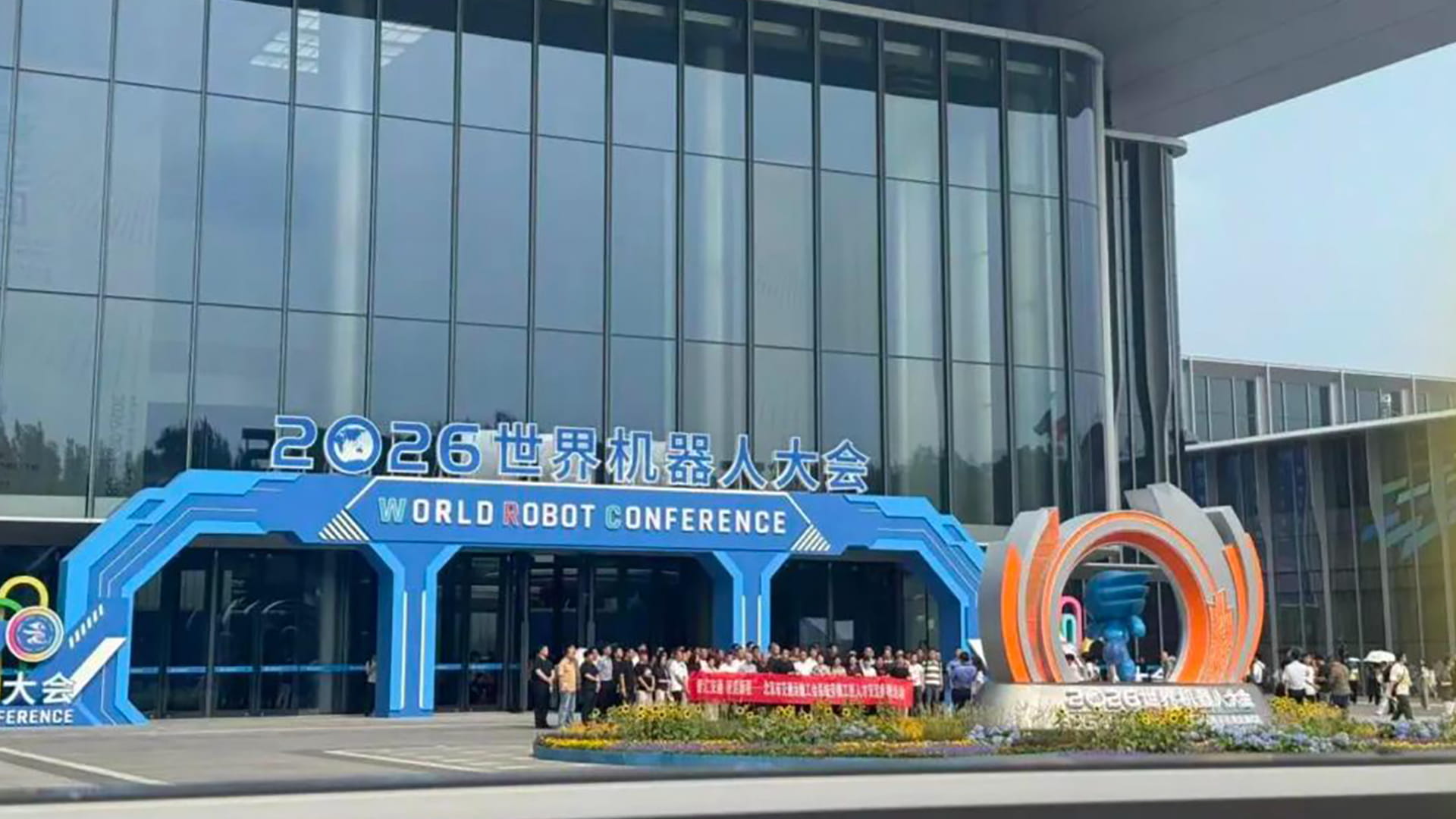
The conference highlighted the industry's shift towards commercial fundamentals, with companies under pressure to generate revenue in the present. Exhibitors focused on connecting models, data, and physical tasks in a closed loop to improve performance during real-world deployment.
Imagine you have a robot that can do tasks for you. But instead of just doing the task, the robot also needs to think about how the world will change after it does the task. This is like a robot that can predict the future and act accordingly. The World Robot Conference 2026 showed that companies are now focusing on making robots that can do real work and create value in the present, rather than just developing advanced models.
Analysis
Embodied Intelligence Enters a More Exacting Phase
The World Robot Conference 2026 in Beijing marked a significant milestone in China's robotics sector, with companies shifting their focus from developing advanced models to commercial applications and real-world deployment. The event drew over 300 exhibitors, including 49 centrally administered state-owned enterprises, and featured over 3,000 robots on display. The conference offered a glimpse into the industry's future, with companies under pressure to generate revenue in the present.
One of the key takeaways from the conference was the importance of closing the loop between robot training models, physical movement, and commercial applications. Exhibitors were under less pressure to sell a distant vision and more pressure to answer immediate questions: Does the model form a usable closed loop between data, decision-making, and execution? Can the robot perform real work?
The conference also highlighted the industry's shift towards commercial fundamentals. With Unitree listed and several companies now valued above RMB 10 billion (USD 1.5 billion), embodied intelligence is entering a more exacting phase. WRC 2026 pointed to a renewed focus on commercial fundamentals, with companies competing over how to connect models, data, and physical tasks in a closed loop that improves performance during real-world deployment.
World Models and VLA Architectures
One technical shift was particularly visible at the conference. Last year, vision-language-action (VLA) models were the dominant theme. This year, exhibitors talked less about VLA itself and more about adding world models, systems designed to represent and predict how an environment may change, to VLA architectures. A standalone VLA model can perceive a scene, interpret instructions, and generate actions, which can be sufficient for short tasks in controlled environments. But it does not necessarily model how its surroundings will change or how causal relationships unfold over time.
World models are intended to address that weakness by helping a robot predict possible outcomes before acting. Companies differ, however, on how VLA and world model capabilities should be combined. One approach is to integrate predictive world modeling directly into the robot's policy, or decision-making system. Under this architecture, action generation is informed by predictions about how the environment will change rather than functioning as a simple end-to-end mapping from input to action.
Commercial Applications and Real-World Deployment
The conference offered a useful view of where the industry is heading. After walking the 52,000-square-meter venue, 36Kr found that exhibitors appeared to be under less pressure to sell a distant vision and more pressure to answer immediate questions: Does the model form a usable closed loop between data, decision-making, and execution? Can the robot perform real work?
The commercial question is the same: how does a model create value in a real operating environment? One of the clearest changes at this year's WRC was speed. Robots were visibly moving faster than in previous years, and several exhibitors attributed the improvement to extensive engineering optimization rather than any single breakthrough model.
Key points
- The World Robot Conference 2026 marked a significant milestone in China's robotics sector, with companies shifting their focus from developing advanced models to commercial applications and real-world deployment.
- Exhibitors at the conference focused on closing the loop between robot training models, physical movement, and commercial applications.
- The conference highlighted the industry's shift towards commercial fundamentals, with companies competing over how to connect models, data, and physical tasks in a closed loop that improves performance during real-world deployment.
- World models and VLA architectures were a key focus of the conference, with companies differing on how to combine these capabilities.
- The commercial question is the same: how does a model create value in a real operating environment?
The World Robot Conference 2026 marked a significant milestone in China's robotics sector, with companies shifting their focus from developing advanced models to commercial applications and real-world deployment. This shift towards commercial fundamentals is likely to drive innovation and growth in the industry, leading to the development of more practical and effective robots.
The industry's shift towards commercial fundamentals may also lead to increased competition and pressure on companies to generate revenue in the present. This could result in a focus on short-term gains over long-term innovation, potentially stifling the development of more advanced and effective robots.