AusAlert test will blast emergency warning siren over most phones in Australia on Monday. Here's what to know
Australia will conduct its first nationwide test of a new emergency warning system, AusAlert, on 27 July 2026 at 2pm AEST, sending a 10-second siren and pop-up to most mobile devices.
Intelligence analysis by Llama
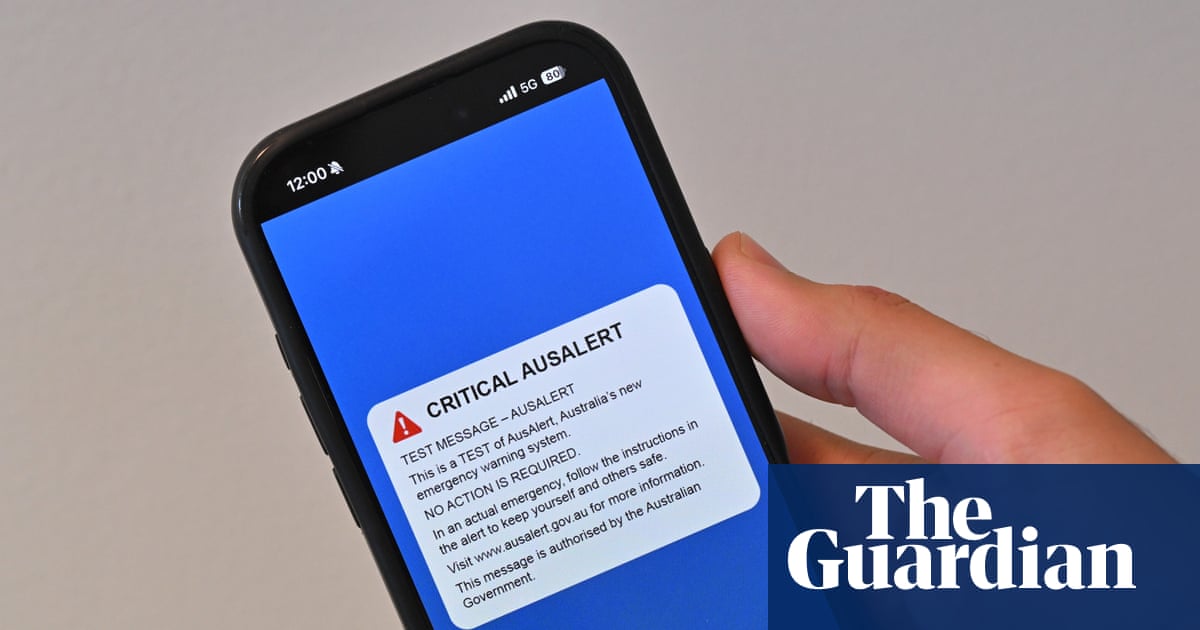
Australia's National Emergency Management Agency will test AusAlert on 27 July, pushing a non-silenceable alert to most phones nationwide. The system stems from the black summer bushfires royal commission and aims to replace lag-prone SMS warnings, while advocates warn about risks for domestic violence victims.
Australia is going to make nearly every phone in the country ring like a fire alarm for 10 seconds on Monday afternoon, just to make sure a new emergency alert system works. It's like a fire drill, but for the whole country, so that if a real bushfire or flood ever happens, the government can warn everyone at once, even people whose phones are on silent.
Analysis
From Royal Commission to Real-World Test
AusAlert is the operational answer to one of the most painful findings of the 2019-20 black summer bushfires royal commission: that Australia lacked a single, consistent way to push emergency messages to every phone in the country. Pat Hetherington, the interim coordinator general at the National Emergency Management Agency (Nema), told The Guardian the existing SMS-based approach had suffered from "real latency," with messages either delayed by network congestion or blocked entirely depending on the carrier. Federal emergency management minister Kristy McBain, whose Eden-Monaro electorate was burned in that disaster, said some residents never received emergency texts at all because their provider went down. The 27 July test, three months ahead of a planned October national launch, is meant to validate the new cell-broadcast technology on a population-scale before real emergencies trigger it.
A Network-Level Override
Unlike an SMS, which is routed through carrier messaging infrastructure and can queue or fail, AusAlert messages are broadcast by mobile phone towers to every compatible handset in range. That is why the alert pierces silent and "do not disturb" modes: the phone treats it as a critical notification, not a user message. Hetherington said the siren will last about 10 seconds and sit between a fire alarm and a notification chime in volume. Nema estimates roughly 80% of Apple iPhones (iPhone 11 and later on iOS 26.4 or newer) and some 16 million Android devices (Android 12 and later) will receive the test. The only opt-outs, per the agency, are to power the device off or switch to airplane mode. The architecture also allows geofenced alerts for local incidents such as flash floods or boil-water notices, layering a national broadcast capability on top of existing state-level systems rather than replacing them.
The Domestic Violence Dilemma
The same property that makes AusAlert effective, a non-silenceable siren on every phone nearby, is the property that makes it dangerous for some of Australia's most vulnerable residents. The Guardian reports the test has "raised questions about the risk it poses to women and children experiencing domestic and family violence," particularly those carrying covert "safe phones" that abusers must not see or hear. McBain has described AusAlert as "another tool in the toolkit" and "far superior" to current systems, and Hetherington has pointed to engagement with "thousands" of stakeholder groups to soften the rollout. Whether Nema's guidance for at-risk users, and the small affordances like the single one-hour silencing window Hetherington alluded to, will be enough to protect survivors will be one of the quieter but more important tests of the rollout.
Key points
- Australia will test its new AusAlert system nationwide at 2pm AEST on Monday 27 July 2026, the first country-wide drill of its kind.
- The non-silenceable siren will reach about 80% of iPhones (iPhone 11 and up on iOS 26.4+) and roughly 16 million Android devices on Android 12+, plus select Apple Watches.
- AusAlert originates from a recommendation of the royal commission into the 2019-20 black summer bushfires, which found SMS-based warnings were too slow and unreliable.
- The system uses cell-broadcast technology that can also send geofenced alerts for local incidents such as floods or boil-water notices.
- Domestic violence advocates have flagged risks for women and children carrying covert 'safe phones' that the alert could expose to abusers.
- Nema's interim coordinator general Pat Hetherington and emergency management minister Kristy McBain are leading the rollout ahead of a planned October national launch.
If the test succeeds and the public grows accustomed to the alert format, future emergencies could see near-universal awareness within seconds of a broadcast, potentially saving lives in fast-moving disasters like bushfires or flash floods. A clean rollout would also validate cell-broadcast technology as a faster, more reliable alternative to carrier-dependent SMS for other countries watching the experiment.
A poorly handled rollout could expose survivors of domestic violence whose covert phones are suddenly forced to make noise, with limited practical guidance on mitigation. There is also a risk of alert fatigue or public alarm if the 10-second siren is perceived as more disruptive than advertised, and the system remains untested against a genuine high-stakes emergency.