Automaker: VW Unveils Electric Mini-SUV for 28,000 Euros
Volkswagen is launching the ID.Cross, an electric mini-SUV, with sales starting in autumn. Priced from 28,000 euros, it offers a range of over 400 kilometers in its top variant.
Intelligence analysis by Gemini 2.5 Flash
VW is expanding its electric vehicle lineup with the ID.Cross, a compact SUV designed to complement the ID.Polo. Positioned as a versatile option, it aims to cater to both city driving and longer trips, despite entering a competitive segment with a slightly higher price point than some rivals.
Imagine a cool new electric car from VW, like a smaller SUV, that runs on batteries instead of gas. It's called the ID.Cross and it's like a taller, tougher version of a small car, perfect for families or people who need a bit more space. It can go pretty far on one charge, over 400 kilometers for the best version, and it has fancy features inside like massage seats. It costs about as much as a new family car, starting around 28,000 euros.
Analysis
VW's Entry into the Compact EV SUV Segment
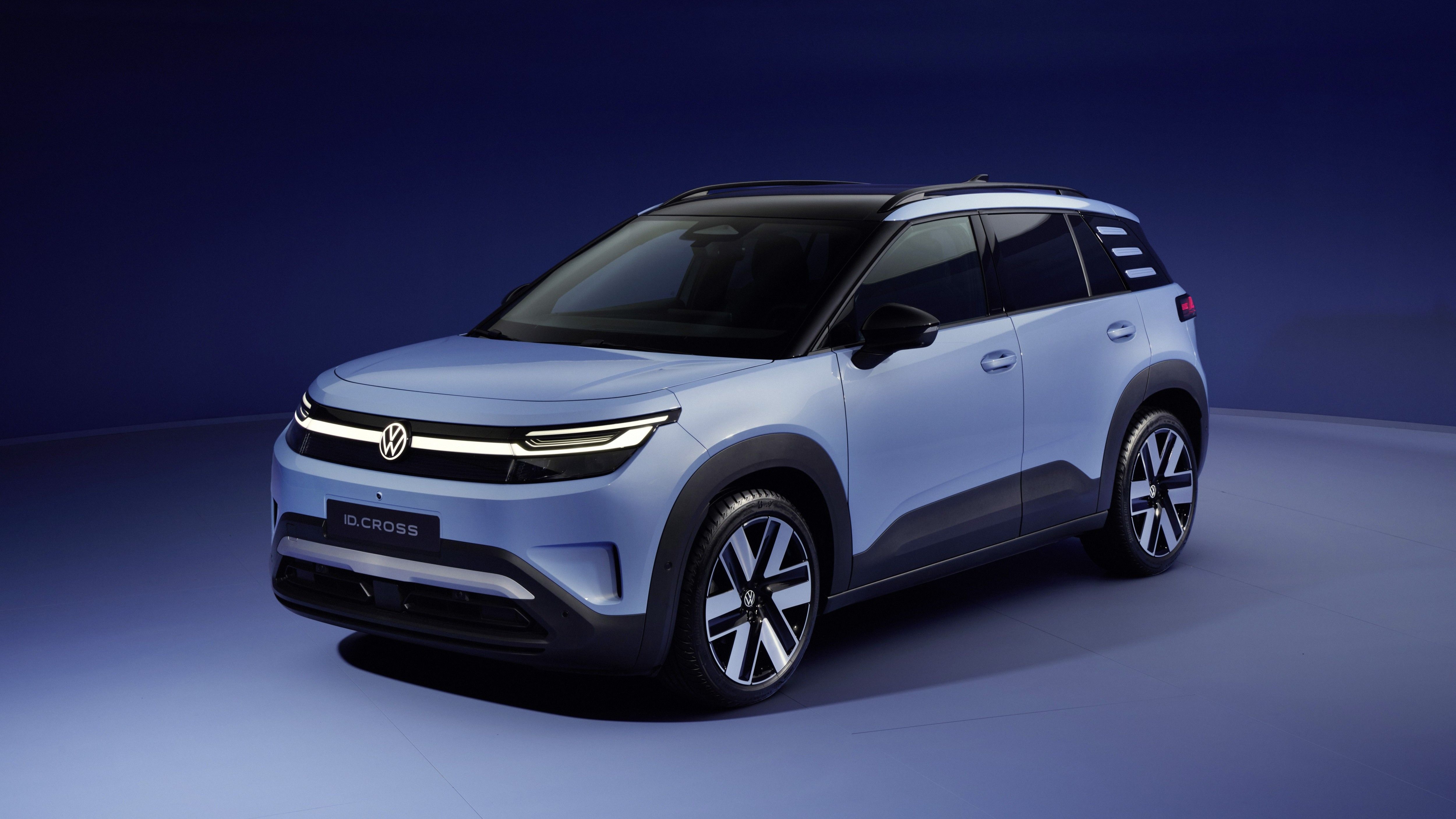
Volkswagen is making a strategic move into the burgeoning compact electric SUV market with the introduction of the ID.Cross. This new model is designed to sit alongside the ID.Polo electric small car, sharing a common technical foundation based on the advanced MEB+ electric platform. The ID.Cross's design, while modern, leans more towards the brand's conventional combustion engine models than the initial ID series, featuring narrow headlights with a continuous light strip at the front and three horizontal decorative strips on the C-pillar, distinguishing it from its conventionally powered sibling, the T-Cross.
At 4.15 meters, the ID.Cross is slightly longer than the T-Cross, offering a comparable 475-liter trunk space, augmented by a small storage compartment under the front hood. This design choice suggests VW is aiming for a familiar aesthetic while integrating electric vehicle advantages. The vehicle's visual presentation, first seen as a concept at IAA 2025, indicates a focus on practicality and broad appeal rather than radical design.
Performance and Features for the Modern Driver
The ID.Cross will be offered with two battery sizes and multiple motor options, catering to different range and performance needs. Entry-level variants will feature a 37 kWh LFP battery, providing a range of 312 kilometers, while higher-priced models will come with a 52 kWh NMC battery, extending the range to 436 kilometers. These batteries utilize the group's new 'unified cells,' which are slated for production in locations like Salzgitter for various brands.
Motor options include 85 kW/116 PS, 99 kW/135 PS, and 155 kW/211 PS, all driving the front axle. A more powerful 166 kW/226 PS variant is also hinted at, potentially indicating a future GTI version, mirroring plans for the ID.Polo. Interior features are also notable, with a new infotainment system, physical controls for key functions, and premium extras like massage seats and a Harman Kardon sound system. An advanced driving assistant capable of reacting to red lights further enhances the vehicle's appeal, positioning it as more than just a short-distance city car.
Navigating a Crowded Market
Volkswagen is entering the compact electric SUV segment as a relatively late contender, facing established and upcoming models such as the Kia EV2, Opel Frontera, Leapmotor B03X, Jeep Avenger, Renault 4, and Mini Aceman. Despite this, VW is positioning the ID.Cross in the higher end of the segment, with a starting price of 28,000 euros for the base model, which is 2,000 euros more than its technically similar ID.Polo sedan counterpart. The maximum DC charging power, at 90 or 105 kW depending on battery size, is noted as somewhat disappointing compared to some competitors.
This pricing strategy and charging performance could present challenges in a highly competitive market where affordability and rapid charging are increasingly important factors for consumers. However, VW's brand recognition, combined with a comprehensive feature set and the promise of longer-range variants, could help it carve out a significant niche. The success of the ID.Cross will depend on its ability to balance these factors and appeal to a broad customer base looking for a practical, well-equipped electric SUV.
Key points
- Volkswagen is launching the ID.Cross, an electric mini-SUV, with sales beginning in autumn.
- The base model will start at 28,000 euros, making it 2,000 euros more expensive than the ID.Polo.
- It offers two battery options: a 37 kWh LFP battery for 312 km range and a 52 kWh NMC battery for 436 km range.
- The ID.Cross features a new infotainment system, physical controls, massage seats, and an advanced driving assistant.
- VW is a late entrant to the compact electric SUV market, facing competition from models like the Kia EV2 and Jeep Avenger.
The ID.Cross could significantly boost VW's electric vehicle sales by offering a popular SUV body style at a relatively accessible price point. Its advanced features and longer-range option could attract a wide customer base, solidifying VW's position in the competitive EV market.
VW's late entry into the compact electric SUV segment, coupled with a higher price point than some rivals and somewhat disappointing charging speeds, could hinder its market penetration. Intense competition from established and new players might make it challenging to capture significant market share.