B-52: Why America Still Relies on a 70-Year-Old Bomber?
A recent B-52 bomber crash in California highlighted the enduring relevance of this 70-year-old strategic aircraft, which remains a key part of the US Air Force due to continuous modernization and versatile capabilities.
Intelligence analysis by Gemini 2.5 Flash
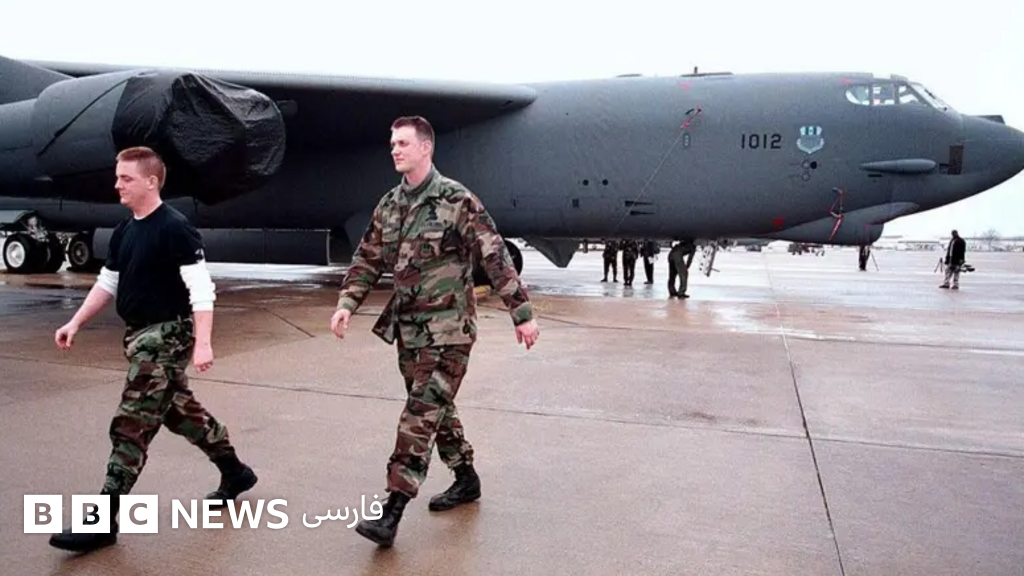
The article explores the historical significance and ongoing operational role of the B-52 Stratofortress, a bomber designed in the 1950s that continues to be a cornerstone of US air power. It delves into the reasons for its longevity, including its adaptability through upgrades and its capacity to carry diverse payloads for both nuclear deterrence and conventional warfare.
Imagine a really old, strong truck that's been around for 70 years. Instead of buying a new truck every time, the US keeps upgrading its engine, adding new tools, and making it smarter. So, even though it's old, it can still carry lots of important stuff, fly far, and help protect the country, like a trusty old workhorse that learns new tricks.
Analysis
A Legacy of Strategic Deterrence
The B-52 Stratofortress, designed in the 1950s amidst the Cold War arms race, was conceived as a long-range bomber capable of delivering massive payloads, including nuclear weapons, deep into enemy territory. Its entry into service in 1955 solidified its role as a primary symbol of American air power and a critical component of the US nuclear deterrence strategy against the Soviet Union. The aircraft's imposing presence, characterized by its large fuselage, swept wings, and eight engines, quickly made it one of the most recognizable military planes in the sky.
Beyond its nuclear role, the B-52 transitioned effectively into conventional warfare, becoming a staple in major US conflicts. It saw extensive use in the Vietnam War from the 1960s, demonstrating its capacity for sustained bombing campaigns. Its operational history further expanded to include the Persian Gulf War in 1991, the war in Afghanistan after 2001, the invasion of Iraq in 2003, and more recently, operations against the Islamic State group in Syria and Iraq since 2014. This adaptability underscores its foundational importance across various geopolitical landscapes and conflict types.
The Enduring Adaptability of the Stratofortress
The primary reason for the B-52's remarkable longevity in the US Air Force fleet is its inherent design as a robust, adaptable platform. Rather than requiring fundamental structural changes, the aircraft has undergone continuous internal system upgrades over several decades. These modernizations encompass critical areas such as navigation, communication, radar systems, electronic warfare capabilities, and the integration of advanced weaponry.
Crucially, the B-52 is no longer limited to direct overhead bombing runs. Its updated systems enable it to launch precision-guided missiles and smart bombs from significant distances, allowing it to engage targets without entering the dangerous range of modern air defense systems. Furthermore, its large physical size, which might seem a disadvantage in an era of stealth technology, actually provides a significant operational benefit: the capacity to carry a diverse and substantial array of weapons on a single mission. This versatility allows it to fulfill multiple roles, from strategic bombing to close air support, making it a cost-effective and flexible asset.
Capabilities and Future Relevance
The B-52's military capabilities are impressive, particularly when viewed through the lens of its age. It boasts intercontinental range, capable of traveling thousands of kilometers without aerial refueling, a capacity that can be further extended with in-flight refueling. Powered by eight engines, it can carry an enormous payload exceeding 31 tons of bombs and missiles, including both conventional guided munitions and nuclear weapons, integral to America's deterrence posture.
Typically operated by a five-person crew, including pilots and officers managing navigation, weapon systems, and electronic warfare, the B-52 is designed for high-altitude, long-endurance missions. While it is not a stealth aircraft and cannot evade radar detection, its strength lies in its immense range, heavy payload capacity, ability to deploy precision weapons from standoff distances, and its integration within a broader air network. These attributes ensure its continued relevance, even as newer, more advanced bombers like the B-1 and B-2, and future platforms, are introduced into the US fleet.
Key points
- The B-52 bomber, designed in the 1950s, remains a key strategic asset for the US Air Force.
- Its longevity is attributed to continuous upgrades in navigation, radar, electronic warfare, and weapon systems.
- It can carry over 31 tons of diverse munitions, including nuclear and precision-guided conventional weapons.
- The aircraft has served in major conflicts from the Cold War to Vietnam, Iraq, Afghanistan, and against ISIS.
- Despite its age and lack of stealth, its long range and payload capacity make it highly adaptable.
The continued reliance on the B-52 demonstrates the US's ability to cost-effectively maintain strategic air power through modernization, ensuring a robust and adaptable deterrent force without constant, expensive fleet overhauls.
The recent crash, though not detailed as a systemic failure, highlights the inherent risks of operating aging aircraft, potentially raising concerns about maintenance, safety, and the long-term viability of relying on such vintage platforms.