Bangladesh Test cricket reboot delivers in style with historic win
Bangladesh achieved a historic first-ever Test win on Australian soil, a victory attributed to strategic reforms implemented by the Bangladesh Cricket Board (BCB) since 2019.
Intelligence analysis by Gemini 2.5 Flash
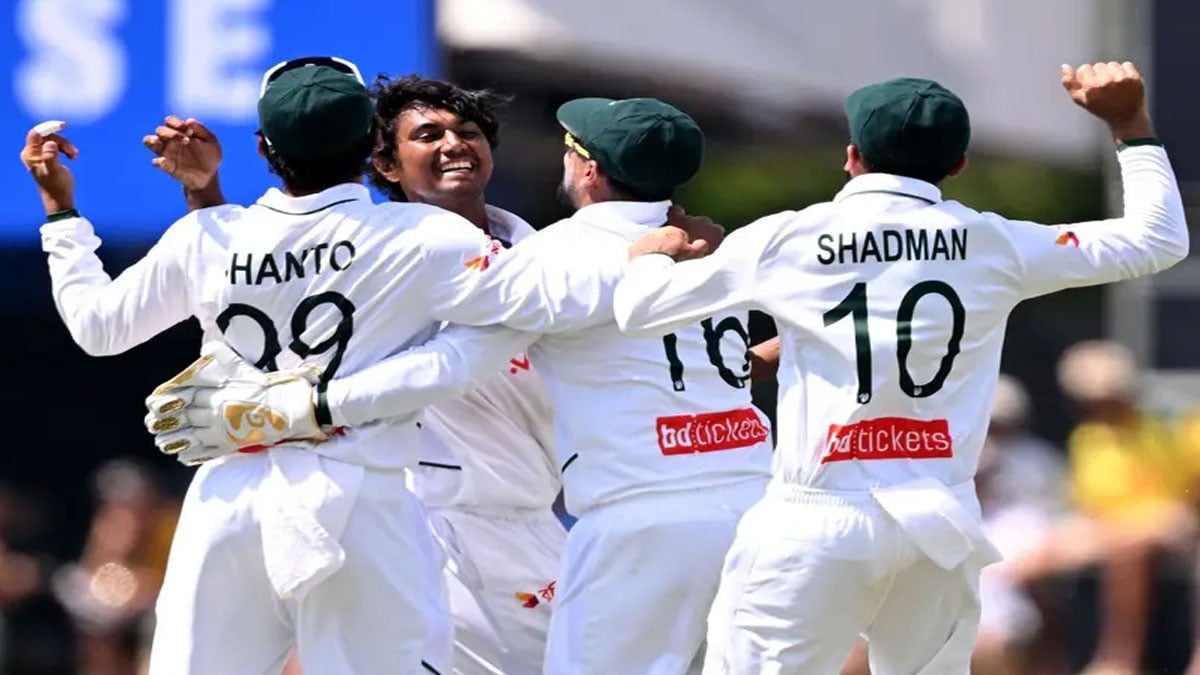
Following a crisis period in 2019, Bangladesh's cricket board overhauled player contracts and domestic pitch conditions, prioritizing Test cricket and fast-bowling development. These reforms culminated in a landmark nine-wicket victory against top-ranked Australia in Darwin, ending a 23-year wait for a Test match in the country and signaling a new era for Bangladeshi cricket.
Imagine a cricket team that wasn't winning many of their longest games. They decided to make some big changes, like paying players more money for those long games and practicing on special fields to help their fast bowlers get really good. It was like planting new seeds and watering them carefully. Now, those changes have finally paid off, and they just won a super important game against a really strong team in Australia, which makes them feel proud and hopeful for the future!
Analysis
Bangladesh's recent historic Test victory against Australia marks a significant turning point for the nation's cricket program, demonstrating the tangible results of a deliberate and comprehensive reform agenda. This success was not accidental but rather the culmination of strategic decisions made in the wake of a challenging period for Bangladeshi cricket.
2019 Crisis
The catalyst for change was a difficult period in 2019, characterized by a players' strike and the suspension of star all-rounder Shakib Al Hasan. This internal turmoil, coupled with a subsequent difficult tour of India, forced the Bangladesh Cricket Board (BCB) to undertake a critical self-assessment. The board recognized that fundamental changes were necessary to elevate the standard of Test cricket within the country and improve its competitiveness on the international stage. This introspection led to a complete overhaul of existing structures and incentives, laying the groundwork for future success.
800,000 Taka
One of the most impactful reforms was a significant increase in financial incentives for Test cricket. Former captain Akram Khan, then head of BCB's cricket operations, revealed that the BCB introduced separate contracts for Tests, ODIs, and Twenty20 internationals, moving away from a single central contract covering all formats. Crucially, the Test match fee was doubled to 800,000 taka ($6,500), a move explicitly designed to encourage players to prioritize the longest format of the game. This financial restructuring aimed to make Test cricket a more attractive and rewarding career path, fostering greater dedication and focus among players.
Nahid Rana
The reforms extended beyond financial incentives to include crucial structural changes aimed at developing specific skill sets. The BCB decided to prepare greener pitches for the domestic National Cricket League and introduced Dukes balls, a type of ball known for assisting fast bowlers. These measures were specifically designed to nurture fast bowlers capable of performing overseas, shifting away from the country's traditional reliance on spin bowling. The success of this strategy was evident in the Darwin Test, where Bangladesh pacemen accounted for all of Australia's first-innings wickets, with Hasan Mahmud achieving career-best figures of 6-55. The emergence of talents like pace bowler Nahid Rana underscores the effectiveness of these targeted development programs. BCB president Tamim Iqbal noted that this victory will significantly strengthen Bangladesh's position in upcoming International Cricket Council's Future Tours Programme (FTP) meetings, enabling them to negotiate for more competitive fixtures against top-ranked teams.
Key points
- Bangladesh secured their first-ever Test win on Australian soil after a 23-year wait.
- The victory is attributed to strategic reforms initiated by the Bangladesh Cricket Board (BCB) in 2019.
- Reforms included significantly increased financial incentives for Test players and developing greener domestic pitches with Dukes balls.
- The strategy successfully nurtured fast bowlers, with Hasan Mahmud taking career-best figures of 6-55 in the historic match.
- BCB president Tamim Iqbal believes this win will strengthen their position in future ICC Future Tours Programme negotiations.
Bangladesh's historic win could significantly boost their confidence and standing in international cricket, potentially leading to more competitive fixtures against top teams and further investment in their red-ball program. This success might inspire other developing cricket nations to implement similar strategic reforms, fostering broader growth in the sport.
While a significant achievement, maintaining this level of performance consistently, especially away from home, remains a challenge. Future scheduling negotiations might still favor traditional powerhouses, and the reforms' long-term impact depends on sustained commitment and a continuous pipeline of new talent.