Bank of England governor walks out of IMF summit in protest against Russia
Bank of England Governor Andrew Bailey joined finance leaders from several European nations in a walkout from an IMF meeting in Bangkok, protesting the presence and address of Russia's finance minister.
Intelligence analysis by Gemini 2.5 Flash
The coordinated departure occurred when Russian Finance Minister Anton Siluanov began speaking, with nearly half of all delegates participating. This act underscored deep divisions among international partners regarding Russia's role in global forums, despite the US expressing support for Russia's presence.
Imagine a big meeting where important grown-ups from different countries talk about money. When a grown-up from Russia started talking, the grown-up from the Bank of England and many others stood up and walked out. They did this to show they were unhappy about what Russia is doing in Ukraine, even though everyone still needs to talk about how the world's money works.
Analysis
The walkout by Bank of England Governor Andrew Bailey and other senior finance officials from an International Monetary Fund (IMF) meeting in Bangkok underscores the persistent geopolitical tensions impacting global economic forums. This coordinated protest, occurring when Russian Finance Minister Anton Siluanov addressed the group, highlights the deep divisions among international partners regarding Russia's role on the world stage following the Ukraine war. The symbolic gesture, involving nearly half of all delegates including representatives from France, Germany, and several Scandinavian and Baltic nations, signals a continued refusal by many European countries to normalize relations with Russia, despite some efforts to re-engage.
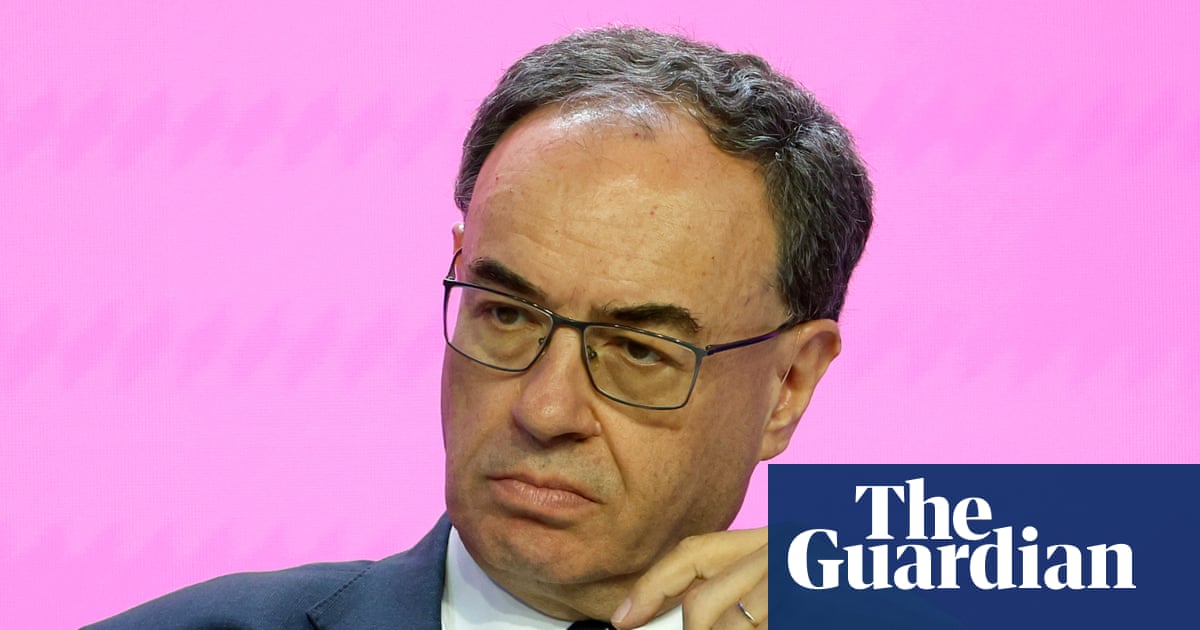
Andrew Bailey
Andrew Bailey's participation in the walkout at the IMF summit in Bangkok represents a significant diplomatic statement from the Bank of England. By joining counterparts from major European economies, Bailey reinforced a united front against Russia's continued presence and influence in high-level international financial discussions. This action reflects a broader policy stance among these nations, emphasizing that economic cooperation cannot proceed as usual while the conflict in Ukraine persists.
The coordinated departure was not merely a symbolic act but a clear message intended to isolate Russia within these critical global institutions. It demonstrates the ongoing commitment of key financial leaders to leverage their positions to exert pressure, even if it means disrupting the traditional decorum of such gatherings. The involvement of central bank governors and finance ministers from a diverse group of countries amplifies the weight of this protest, indicating a shared conviction that Russia's actions warrant continued international condemnation and exclusion from certain platforms.
Anton Siluanov
The presence of Russian Finance Minister Anton Siluanov at the IMF meeting, and the subsequent walkout during his address, illustrates the complex and often contradictory dynamics of international diplomacy. While many European nations, including Germany, have explicitly warned against efforts to reintegrate Russia into the international fold, the US has shown a more nuanced approach, with Treasury Undersecretary Erin Browne reportedly supporting Russia's presence despite European concerns. This divergence in strategy complicates a unified global response.
Siluanov's attendance at previous G20 finance minister meetings further highlights the ongoing debate about Russia's participation in multilateral forums. For some, his presence is a necessary evil for maintaining channels of communication, while for others, it represents an unacceptable normalization of aggression. The walkout during his speech was a direct challenge to any perception of business-as-usual, ensuring that Russia's involvement would not go unchallenged or unacknowledged by a significant portion of the international financial community.
Mohammed al-Jadaan
Mohammed al-Jadaan, the Saudi finance minister and chair of the IMF’s steering committee, played a crucial role in managing the immediate aftermath of the walkout. His acknowledgment of the protest, stating that "We came here for a reason, and we achieved it," suggests an understanding of the diplomatic intent behind the action, even if it disrupted the proceedings. His focus on the agreed-upon chair statement indicates an an effort to maintain the functional aspects of the summit despite the political tensions.
Al-Jadaan's subsequent remarks on the global economy provided a sobering assessment, noting its "remarkable resilience" despite the Ukraine war and issues in the Strait of Hormuz, but also warning against complacency. He highlighted persistent challenges such as high public debt levels and elevated bond market rates. Furthermore, his caution about "escalating conflicts and trade tensions" potentially disrupting critical trade routes and exacerbating commodity price pressures, including in refined energy products, directly links geopolitical instability to tangible economic risks, underscoring the broader implications of the very tensions that led to the walkout.
Key points
- Bank of England Governor Andrew Bailey led a walkout of finance leaders from an IMF meeting in Bangkok.
- The protest occurred when Russian Finance Minister Anton Siluanov addressed the group.
- Nearly half of all delegates, including those from France, Germany, and Scandinavian/Baltic countries, participated.
- The walkout signals continued European opposition to normalizing relations with Russia amid the Ukraine war.
- The IMF chair acknowledged the protest while noting the global economy's resilience but warned against complacency due to escalating conflicts and debt.
Despite the political tensions, the global economy is showing remarkable resilience, suggesting it can weather ongoing shocks. Continued dialogue, even amidst protests, might eventually lead to pathways for de-escalation and more stable international economic relations.
Escalating conflicts and trade tensions could further disrupt critical trade routes, exacerbating commodity price pressures, especially for energy products, and worsening global energy and food security. High public debt levels and bond market rates also pose significant risks, making the global economy vulnerable to further shocks.
Market signals
- OIL Escalating conflicts and trade tensions could disrupt critical trade routes and exacerbate commodity price pressures, including in refined energy products.
AI-generated analysis of potential market relevance. Not financial advice.