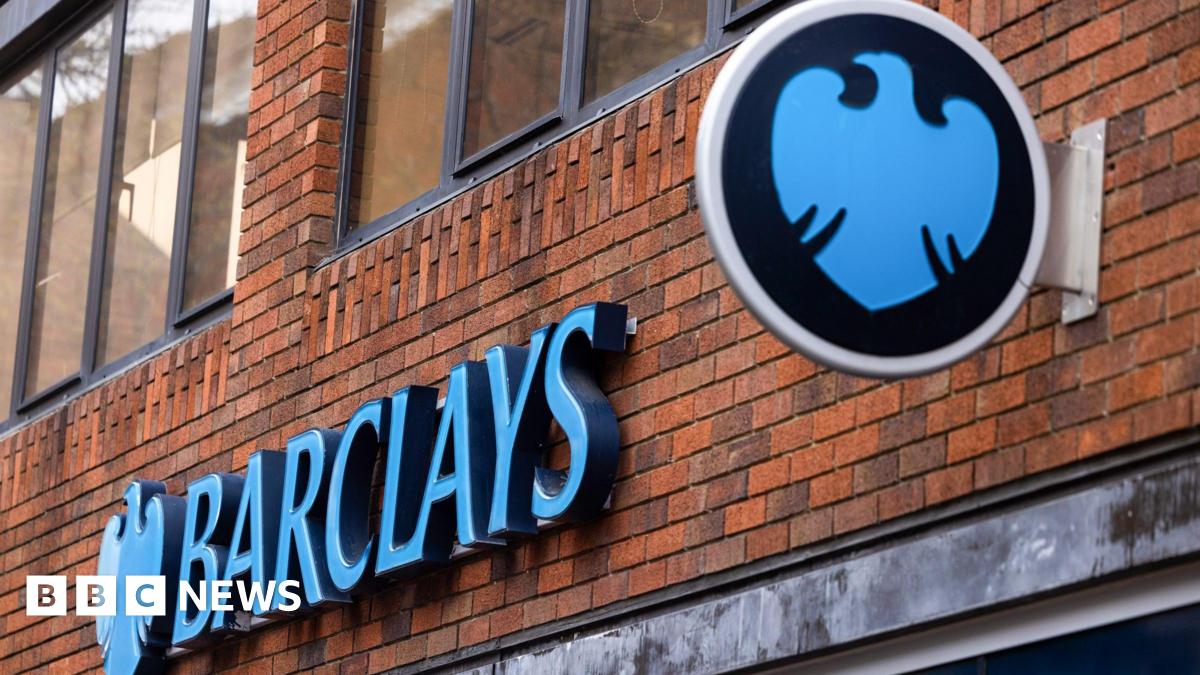
Barclays cuts 5,000 jobs as profits jump ahead of looming bank tax; French bond yields hit fresh 24-year high – business live
Barclays is cutting 5,000 jobs, primarily in support roles, driven by AI advancements and a cost-saving initiative, despite reporting bumper profits. Concurrently, French 10-year bond yields have reached a 24-year high, surpassing US Treasury yields, amid improving but fr…
Intelligence analysis by Gemini 2.5 Flash

The article highlights two significant economic developments: Barclays' strategic decision to reduce its global workforce by 5,000, attributing the move to efficiency gains from AI and a broader cost-cutting drive, while simultaneously reporting strong profits. In parallel, France faces economic headwinds as its 10-year bond yields surge to a 24-year peak, reflecting investor concerns…
Imagine a big bank like Barclays is doing really well and making lots of money, but they're also using smart computer programs, like super-smart robots, to do some of the work. Because these robots are so good, the bank doesn't need as many people for certain jobs, so they're letting about 5,000 people go to save money. At the same time, in France, the government is borrowing money, and it's getting more expensive for them, like when your parents have to pay more interest on a loan, because people are worried about their economy and some protests happening there.
Analysis
The recent announcement by Barclays to shed 5,000 jobs, representing approximately 5% of its global workforce, underscores a significant shift in the banking sector's operational strategy. This move, largely affecting support functions, is explicitly linked to advancements in artificial intelligence and a broader cost-cutting drive aimed at saving over £1.1bn by 2027. While the bank's CEO, CS Venkatakrishnan, described AI as the 'icing on the cake' for modernizing technology, the scale of job losses highlights the disruptive potential of automation on employment, even within profitable enterprises. This trend is not isolated, as Standard Chartered, another UK-headquartered bank, previously announced plans to cut over 7,000 jobs, further signaling a sector-wide embrace of AI-driven efficiency that could reshape the future of financial services employment.
5,000 job cuts
Barclays' decision to eliminate 5,000 positions, with 1,000 already completed and another 4,000 planned by year-end, is a direct consequence of its 'deep investments' in technology and process simplification. The bank's chief financial officer, Anna Cross, confirmed that roughly 60% of these reductions target support roles, including 'theory developers,' indicating a strategic pivot towards leaner, more automated back-office operations. This efficiency drive comes at a time when Barclays is reporting 'bumper profits,' a juxtaposition that has drawn criticism from organizations like the TUC, which argues for a bank windfall tax.
This development reflects a broader industry trend where financial institutions leverage AI not just for customer-facing services but also for internal processes, leading to significant productivity gains. While such measures can enhance profitability and competitiveness, they also raise questions about the social responsibility of corporations and the future of work in an increasingly automated economy. The long-term implications for the labor market, particularly for roles susceptible to automation, remain a critical area of concern for policymakers and economists.
French 10-year bond
Concurrently, the European economic landscape is grappling with significant challenges, notably the surge in French 10-year bond yields to a fresh 24-year high, surpassing US Treasury yields for the first time since 2013. This increase in borrowing costs reflects heightened investor apprehension regarding France's public finances and the potential economic fallout from recent social unrest. Despite an unexpected improvement in French business confidence in October, the outlook remains clouded by higher interest rates, a weak labor market, and worsening public finances.
Charlotte de Montpellier, a senior economist at ING, noted that while the rebound in manufacturing and services indicators is encouraging, it is fragile and potentially 'overtaken by events,' particularly the violence and social unrest observed recently. The economic cost of such unrest extends beyond immediate material damage, encompassing lost sales, reduced footfall, and a significant rise in perceived economic uncertainty. Prolonged instability could undermine confidence, deter investment, and exacerbate existing fiscal pressures, posing a substantial risk to France's economic recovery and broader Eurozone stability.
Anna Cross
Anna Cross, Barclays' chief financial officer, played a key role in articulating the rationale behind the bank's extensive job cuts. She informed reporters that the reduction of approximately 5,000 full-time employees is an integral part of a strategic plan to achieve over £1.1 billion in cost savings by 2027. Her statements clarified that a significant portion, around 60%, of these group actions are directed at support functions, including roles like 'theory developers,' highlighting the specific areas targeted for efficiency improvements through technological integration.
Cross's explanation underscores the financial imperative driving these decisions, emphasizing that the job reductions are not merely a reaction to market conditions but a proactive measure to enhance the bank's operational efficiency and long-term profitability. This strategic focus on cost optimization, even amidst strong profit reports, illustrates the competitive pressures within the global banking sector and the ongoing drive to leverage technology, such as AI, to streamline operations and reduce overheads.
Key points
- Barclays is cutting 5,000 jobs, approximately 5% of its global staff, primarily in support roles, as part of a cost-cutting drive.
- The job cuts are attributed to advancements in artificial intelligence and are expected to save over £1.1bn by 2027.
- French 10-year bond yields have hit a 24-year high, surpassing US Treasury yields, reflecting concerns over public finances and social unrest.
- French business confidence unexpectedly improved in October, particularly in manufacturing, but the outlook is clouded by higher interest rates and social instability.
- Another UK bank, Standard Chartered, previously announced plans to cut over 7,000 jobs, also citing increased use of AI.
Barclays' strategic investment in AI and subsequent cost-cutting measures could lead to enhanced operational efficiency and sustained profitability, benefiting shareholders and strengthening the bank's competitive position. For France, the unexpected improvement in manufacturing and services business confidence, despite current challenges, suggests underlying resilience that could support future economic recovery if social unrest is contained and public finances are managed effectively.
The 5,000 job cuts at Barclays, driven by AI, signal a worrying trend of automation-induced unemployment in the financial sector, potentially exacerbating labor market challenges. In France, the soaring 10-year bond yields, coupled with persistent social unrest and worsening public finances, could lead to increased borrowing costs, reduced investment, and a prolonged period of economic instability, undermining confidence across the Eurozone.