Battered by war, Iran’s rulers wary of more economic pain and unrest if US tightens pressure
Iran's leaders are worried that a threat of more economic punishment by Donald Trump could increase hardships, reignite unrest and further erode the Islamic Republic's legitimacy. The U.S. president vowed to hit Iran hard economically, a day after Treasury Secretary Scott…
Intelligence analysis by Llama
Iran's leaders are concerned that a threat of more economic punishment by Donald Trump could lead to increased hardships, unrest, and a further erosion of the Islamic Republic's legitimacy. The U.S. president has vowed to hit Iran hard economically, and Treasury Secretary Scott Bessent has hinted at measures that have 'never been seen' before.
Iran's leaders are worried that if the US tightens economic pressure, it could make life harder for ordinary people, lead to more unrest, and make the government look weaker. This is because Iran is already struggling with high inflation, a weak currency, and energy shortages, and the US has promised to impose new measures that could make things even worse.
Analysis
Economic Pressures Mounting Despite Resilience in War with US
Iran's leaders are projecting resilience in the war with the US, but they are worried that a threat of more economic punishment could increase hardships, reignite unrest, and further erode the Islamic Republic's legitimacy. The U.S. president has vowed to hit Iran hard economically, a day after Treasury Secretary Scott Bessent said Washington would impose measures on Tehran that have 'never been seen' as early as next week.
For all the bravado of Iran's leaders after holding out in nearly six months of conflict and effectively closing the Strait of Hormuz, a vital global oil supply route, they face mounting pressure at home that could result in nationwide unrest, according to three Iranian officials. The officials, two political insiders, a former Iranian official, and a dozen ordinary Iranians spoke to Reuters for this story on condition of anonymity, either for fear of retribution or because they are not authorised to speak to media.
Iran entered the war with high inflation, a weakening currency, energy shortages, sanctions, and deep structural weaknesses, and must now contend with damaged infrastructure, disrupted trade, lost production, and the cost of rebuilding. Arshia, a civil engineer, spent a decade working in Iran's construction industry before the war that began with U.S. and Israeli attacks on February 28 brought projects largely to a standstill. He is now struggling to find work as projects are delayed or cancelled and costs soar, with little prospect of a rapid recovery.
Nationwide Unrest Looms
The officials say that the greater threat may be not economic pain itself, but the risk that worsening hardship reignites mass unrest. The appointment of Hossein Taeb last week, a key architect of past crackdowns, to lead Iran's Basij militia is one of the clearest signs yet of growing concern over a resurgence of unrest, a former reformist official said. The Basij, a paramilitary volunteer militia, is affiliated with Iran's powerful Revolutionary Guards, which have both been used by the clerical rulers to quell protests.
Economic grievances have repeatedly spilled into nationwide protests in Iran in recent years. In January, nationwide protests over economic hardships were crushed by the IRGC and the Basij force, with thousands killed. In recent months, Iran's clerical rulers have responded to fears of renewed unrest with executions, arrests, summonses, and lengthy prison sentences targeting journalists, lawyers, activists, human rights advocates, and students, rights groups say.
Families Cutting Back on Essentials
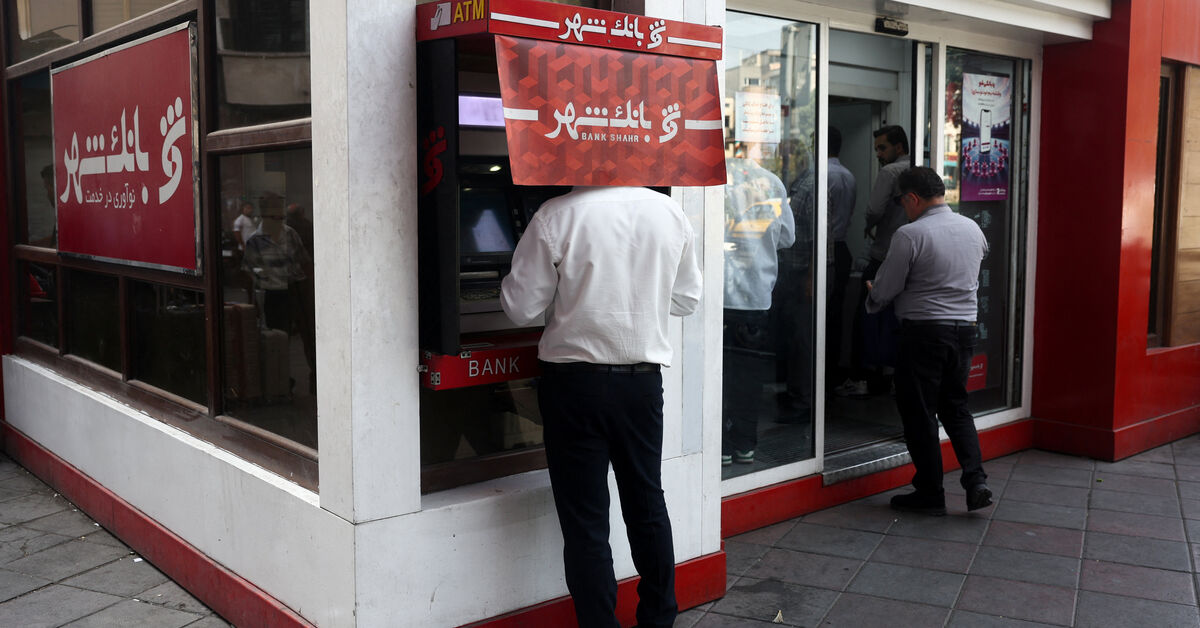
Families are cutting back on meat and other staples, opting for cheaper alternatives. 'I'm ashamed in front of my children. My salary is gone within days. Meat and chicken have disappeared from our table. I have no idea how we're going to get by,' said Hossein, a government employee in the central city of Yazd. Rents rose 31% year-on-year in March, according to the Statistical Centre, while state media reported Tehran housing prices at roughly 50% above last year.
Iran's minimum wage was raised by about 60% this year, but continued rial depreciation has eroded purchasing power, with the dollar value of the minimum wage falling from about $105 to $86 since late March. Bijan, 40, earned about $1,000 a month as an engineer when he entered the job market 15 years ago. He has since turned to online tutoring to make ends meet. Now, he and his wife struggle to make about $400 a month and have left Tehran for a cheaper province.
Key points
- Iran's leaders are worried about the potential consequences of increased economic pressure from the US.
- The US has promised to impose new measures on Iran that could make things even worse.
- Iran is already struggling with high inflation, a weak currency, and energy shortages.
- The government has responded to fears of renewed unrest with executions, arrests, and lengthy prison sentences.
- Families are cutting back on meat and other staples, opting for cheaper alternatives.
If the US and Iran can find a way to negotiate a peace deal, it could lead to a significant reduction in economic pressure on Iran, which could in turn lead to a decrease in inflation and an improvement in living standards for ordinary people.
If the US tightens economic pressure on Iran, it could lead to a significant increase in inflation, a further weakening of the currency, and a decrease in living standards for ordinary people, which could in turn lead to more unrest and a further erosion of the government's legitimacy.