Be on alert for iMessages from scammers posing as the police or Singapore courts
Scammers are sending iMessages pretending to be the Singapore police or courts, claiming unpaid fines and asking victims to click links or reply with codes. The police advise verifying notices on official websites, using iMessage spam filters, installing ScamShield, and e…
Intelligence analysis by Llama
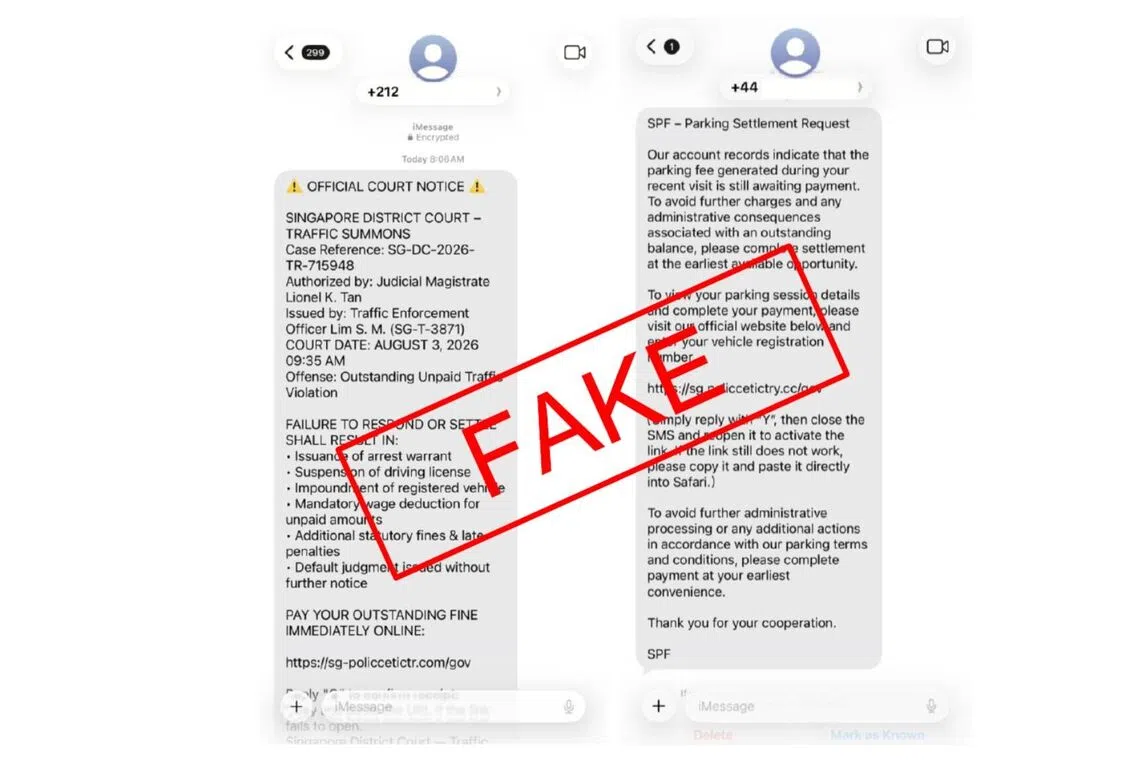
Scammers are sending iMessages to Singapore residents, claiming they have committed a traffic offence or failed to settle a court summons. The police advise verifying notices on official websites and using iMessage spam filters to avoid falling victim to these scams.
Imagine you receive a message on your phone saying you owe money to the police or courts. The message asks you to click a link or reply with a code to 'acknowledge' the notice. This is a scam. The police will never ask you to pay money via a link or text message. Always verify notices on official websites or contact the relevant authority directly to avoid falling victim to these scams.
Analysis
Scam Patterns and Targets
The police have observed a rise in phishing scams impersonating the country's police and courts, with most victims receiving unsolicited iMessages from foreign numbers or e-mail addresses. These messages claim that the recipient has committed a traffic offence, incurred an unpaid parking fee, or failed to settle a court summons. The scammers threaten consequences such as an arrest warrant or vehicle impoundment and direct the victims to click a link or reply with a code to 'acknowledge' the notice.
Consequences of Falling Victim
Upon clicking the link, victims are redirected to a spoofed government portal, where they are prompted to enter their card details, online banking credentials, or a one-time password to 'process' the 'outstanding payment'. The victims realize they have been scammed only when unauthorized transactions appear on their bank accounts. The police warn that the Singapore Police Force, Traffic Police, and the Singapore Courts will never request payment via unsolicited links or text message replies.
Prevention and Security Measures
To avoid falling victim to these scams, the police advise the public to verify notices on official websites, use iMessage spam filters, install ScamShield, and enable security features such as two-factor authentication for bank accounts and e-wallets. They also recommend setting transaction limits for internet banking and PayNow. For more information on scams, the public can visit www.scamshield.gov.sg or call the ScamShield Helpline on 1799.
Key points
- Scammers are sending iMessages pretending to be the Singapore police or courts, claiming unpaid fines and asking victims to click links or reply with codes.
- The police advise verifying notices on official websites, using iMessage spam filters, installing ScamShield, and enabling two-factor authentication for security.
- Victims of these scams are directed to click links or reply with codes to 'acknowledge' the notice, which leads to unauthorized transactions on their bank accounts.
- The police warn that the Singapore Police Force, Traffic Police, and the Singapore Courts will never request payment via unsolicited links or text message replies.
If the public remains vigilant and takes the necessary precautions, such as verifying notices on official websites and using iMessage spam filters, the number of victims of these scams can be reduced. Additionally, the installation of ScamShield and enabling of two-factor authentication for bank accounts and e-wallets can provide an added layer of security.
The scammers may adapt their tactics to evade detection, making it even more challenging for the public to identify and report these scams. Furthermore, the increasing use of iMessage and other messaging platforms may provide scammers with more opportunities to target victims.