Beauty Pie LED mask advert banned over misleading anti-wrinkle claim
The UK ad watchdog banned a Beauty Pie LED mask ad for claiming it was clinically proven to reduce wrinkles in four weeks without enough evidence.
Intelligence analysis by GPT-5.4 Mini
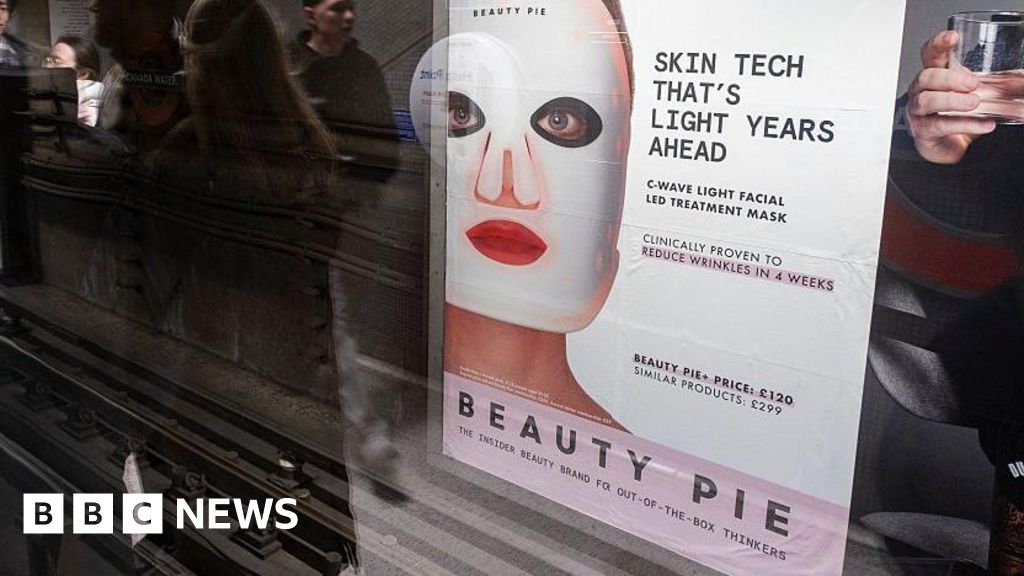
BBC reports that the Advertising Standards Authority ruled against Beauty Pie’s London Underground ad for its LED face mask. The watchdog said the company’s testing was too limited to support a strong anti-wrinkle claim.
A beauty company said its face mask could reduce wrinkles, but the rules people who check ads said the proof was too weak. It is like saying a homework app makes grades better after testing only a few kids and not comparing them fairly.
Analysis
What happened
The BBC says Beauty Pie’s LED face mask advert was banned after the UK advertising watchdog found that the claim it was "clinically proven to reduce wrinkles in four weeks" was not properly supported. The ad appeared on the London Underground in December and also described the product as "skin tech that's light years ahead."
Why the regulator objected
Beauty Pie said it had tested the mask on 28 people aged 30 to 65 for four weeks. The Advertising Standards Authority said that was a relatively small sample and highlighted the lack of a placebo group. It also said the testing was weakened because participants used an exfoliating product and a hydrogel during the trial, even though those items are not sold with the mask. The product page says the mask should be used on a clean, dry face, which made the reported improvements harder to attribute to the device alone.
The evidence standard
Beauty Pie argued that sample sizes of 20 to 25 are routinely accepted by other regulators. The ASA disagreed, saying the other studies the company cited were not enough to prove the mask was clinically proven to reduce wrinkles in four weeks. It concluded the advert was misleading and told Beauty Pie not to repeat the claim unless it can back it up with stronger evidence.
Wider context
The story lands in a fast-growing at-home LED device market. BBC notes that LED technology is already used in medical settings for conditions such as eczema, acne, psoriasis and sun damage, but that experts say larger and longer clinical trials are still needed to show the benefits of home-use masks. That makes evidence quality a central issue for brands selling these products at premium prices.
Key points
- The ASA banned a Beauty Pie LED mask advert for making an anti-wrinkle claim it said was not adequately proven.
- Beauty Pie pointed to a four-week trial of 28 people, but the watchdog called the sample relatively small.
- The regulator said the test lacked a placebo group and was weakened by extra products used during the trial.
- BBC says the at-home LED mask market is growing, but experts say large, long clinical trials are still lacking.
- The ASA told Beauty Pie not to repeat the claim unless it can support it with stronger evidence.
If Beauty Pie can produce stronger, product-specific evidence, it could make clearer claims and regain trust. The ruling may also push the wider beauty-tech market toward more careful testing and more honest ads.
If the company cannot back up its claims, similar ads may keep getting banned and the product may face skepticism from shoppers. The decision could also make it harder for other at-home LED brands to market wrinkle benefits without costly new trials.