Bengaluru demolition drive: 233 shops removed near KR Market after High Court order
Bengaluru authorities removed 233 unauthorized shops near KR Market and Victoria Hospital following a Karnataka High Court order to clear encroached footpaths.
Intelligence analysis by Gemini 2.5 Flash
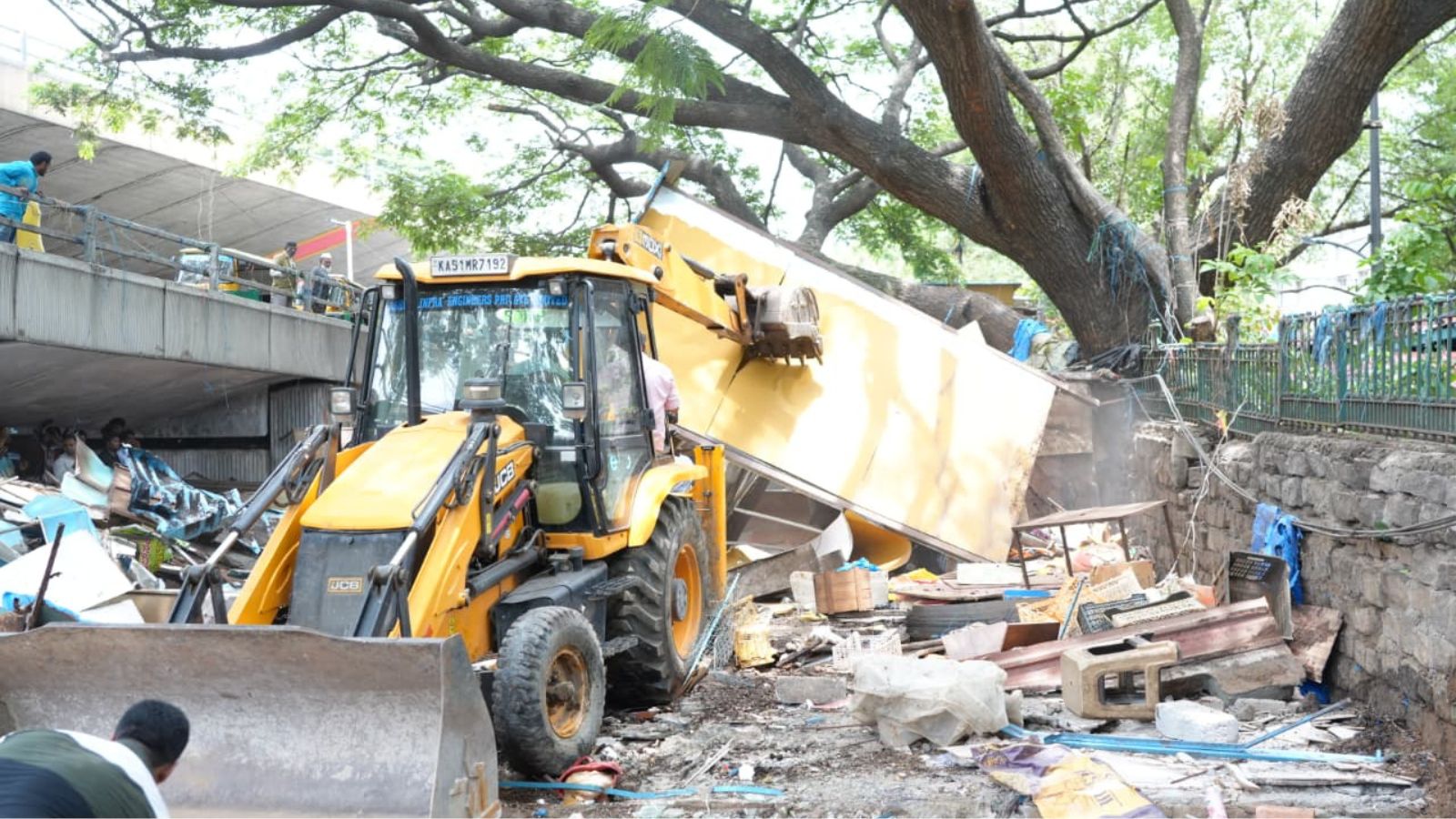
The large-scale demolition drive aimed to restore pedestrian pathways for public use, despite protests from displaced vendors who cited decades of presence and demanded rehabilitation under the Street Vendors Act. The High Court had previously directed the civic body to clear public pathways, declining a stay requested by some vendors.
Imagine a busy sidewalk where people walk, especially near a hospital where sick people need to get in quickly. If too many shops set up right on the path, it becomes hard for everyone to walk safely. So, the city, following a judge's order, cleared these shops so people can walk freely again, even though the shopkeepers were sad to lose their spots where they earned money.
Analysis
High Court's Mandate and Enforcement
The recent demolition drive in Bengaluru saw the removal of 233 unauthorized shops near the bustling KR Market and Victoria Hospital. This extensive operation was a direct consequence of directives issued by the Karnataka High Court, which had mandated the civic administration to clear public pathways, especially around major healthcare hubs and market corridors. The court's primary concern was to prioritize emergency hospital access and ensure pedestrian safety, which had been compromised by years of encroachment.
The Bruhat Bengaluru Mahanagara Palike (BBMP) executed the drive with a coordinated effort involving numerous departments, including engineering, solid waste management, health, revenue, police, and emergency services. The operation specifically targeted 200 shops along the Victoria Hospital compound wall and 33 shops beneath the Sri Balagangadharanatha Swamiji Flyover. This decisive action by the BBMP, under judicial pressure, signals a renewed focus on reclaiming public infrastructure for its intended purpose, aiming to provide citizens with safe and uninterrupted pedestrian movement across the city.
Vendors' Livelihoods and Legal Protections
The demolition, however, was met with significant distress and protests from the affected street vendors. Many expressed despair over the destruction of their livelihoods, with some claiming to have paid rent to the BBMP until 2002 and even possessing electricity connections for their footpath shops. Vendors' associations strongly criticized the drive, arguing that it violated the provisions of the Street Vendors (Protection of Livelihood and Regulation of Street Vending) Act, 2014.
Under this Act, civic bodies are legally obligated to conduct a comprehensive survey of street vendors and designate alternative vending zones before carrying out any evictions. The vendors' petitions to the High Court seeking a stay on the demolition were ultimately declined, though the court did grant a 15-day window for them to vacate. This situation highlights a critical gap between legal mandates for vendor protection and the practical enforcement of urban planning regulations, leaving many vulnerable to sudden displacement without adequate rehabilitation.
Reclaiming Public Spaces: A Broader Urban Challenge
The Bengaluru demolition drive is indicative of a larger urban challenge faced by many Indian cities: balancing the need for organized public spaces with the informal economy that often thrives on them. Encroachments on footpaths and public land are a common issue, leading to congestion, safety hazards, and reduced accessibility for pedestrians and emergency services. The High Court's intervention underscores the judiciary's role in upholding civic order and ensuring public welfare when administrative bodies fall short.
While the drive aims to improve urban infrastructure and public safety, the plight of the displaced vendors raises important questions about inclusive urban planning. Future special drives, as indicated by Bengaluru Central City Commissioner Jagadeesh G, will need to address not only the removal of encroachments but also the socio-economic impact on affected communities. A sustainable solution would involve a more proactive approach to vendor rehabilitation and the creation of designated vending zones, aligning with the spirit of the Street Vendors Act, to prevent recurring conflicts and ensure equitable urban development.
Key points
- Bengaluru authorities removed 233 unauthorized shops near KR Market and Victoria Hospital.
- The demolition drive was carried out following directions from the Karnataka High Court to clear encroached footpaths.
- The operation aimed to restore pedestrian pathways for public use and improve access, especially for emergency services.
- Displaced street vendors protested, citing decades of presence and demanding rehabilitation under the Street Vendors Act, 2014.
- The High Court declined to stay the drive but granted vendors a 15-day window to vacate.
The demolition drive ensures safer and more accessible footpaths, particularly around critical areas like hospitals and markets, improving public convenience and emergency access. It also signals the city's commitment to enforcing urban planning regulations and reclaiming public spaces for their intended use, potentially leading to better urban infrastructure.
The demolition has displaced numerous street vendors, destroying their livelihoods without immediate alternative arrangements, potentially leading to increased economic hardship and social unrest. The lack of a prior comprehensive survey and designated vending zones, as mandated by law, raises concerns about the fairness and long-term sustainability of such drives.